
In Sunday’s New York Times, the newspaper summarizes an interview with Lee Kuan Yew with its sister paper, The International Herald Tribune (“Excerpts from an interview with Lee Kuan Yew“) in the article, “Modern Singapore’s Creator Is Alert to Perils”
Who is Lee Kuan Yew you ask? Lee is essentially the modern founder of Singapore, an multi-ethnic (Chinese, Malay, Indian, etc.) island that gained its independence from Malaysia in 1965, and lead the country as prime minister from 1965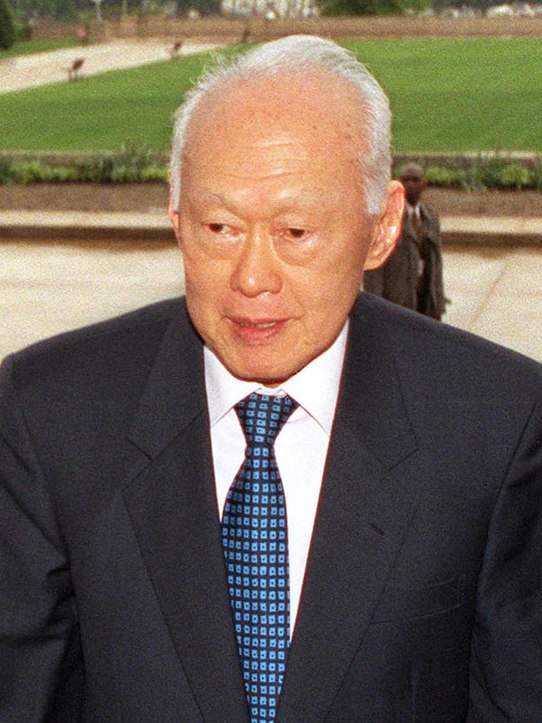 to 1990 and is considered by many, especially in Asia, to be one of the smartest political minds living today. Lee created this modern democratic nation rise (as described in his book that I’ve read “From Third World to First : The Singapore Story: 1965-2000” ) through autocratic means, crushing and imprisoning political dissidents. Read the back cover of this book, and you will read the praise from George H.W. Bush, Margaret Thatcher and other former world leaders stating how smart and capable Lee is. And if you have studied and followed the history and background of Singapore like I have, I think you will find it fascinating as well.
In any case, in the article and interview, Lee sees perils for Singapore’s (as well as the United States & the world) future in China’s rise, the world economy and climate change.
“As the United States focuses on the Middle East, Mr. Lee said, the Chinese are busy refining their policies and building the foundations of more cooperative long-term relationships in Asia. “They are making strategic decisions on their relations with the region,” he said. And this is where tiny Singapore sees itself as a model for China, the world’s most-populous country. “They’ve got to be like us,” Mr. Lee said, “with a very keen sense of what is possible, and what is not.” Every year, he said, Chinese ministers meet twice with Singaporean ministers to learn from their experience. Fifty mayors of Chinese cities visit every three months for courses in city management.”
Anyways, I have always found Lee and the country of Singapore to be fascinating and thought some of you out there might be interested in knowing a little bit more about this city-state.


