
8 Asians

  • About us
  • Write for 8Asians
  • Advertise
  • Contact
  • Suggest |
  • Podcast
  • Events
  • GASP!
  • POP 88
Pete Hoekstra’s Offensive Anti-Asian Super Bowl AdPete Hoekstra’s Offensive Anti-Asian Super Bowl Ad
What I Learned From Posting A Dragon Lady Personal AdWhat I Learned From Posting A Dragon Lady Personal Ad
Jeremy Lin Shows He’s Just What The Knicks NeedJeremy Lin Shows He’s Just What The Knicks Need
Asian Men Have The Highest SalaryAsian Men Have The Highest Salary

The Music Prodigy Market in China

By John | Thursday, May 29, 2008 | 2 Comments

prodigy The Music Prodigy Market in China

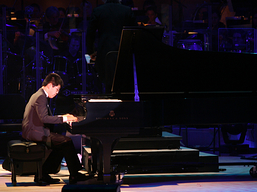
A common stereotype is that Asian Americans play an instrument, often either a violin or piano, or both, and that we’re music prodigies . Well, after reading the Wall Street Journal opinion piece (5/29/08), “The Prodigy Market in China,” I think this stereotype is here to stay for quite a while:

“Thirty-two years after the end of its Cultural Revolution, China is buzzing with once-forbidden Western classical music activity, building world-class concert halls and expanding its conservatory facilities. According to Chinese music-industry executives, more than 40 million youngsters are currently studying the piano or violin. “The joke in some cities,” says pianist Gary Graffman, former president of the elite Curtis School of Music in Philadelphia, “is that if you see a kid on the street who is not carrying a violin case, it’s because he or she is studying the piano…China’s booming economy and one-child policy have created a rising middle class with a passion for education. “Parents have become intensely focused on their child,” suggests Mr. Polisi. “The areas they work on are the sciences, math and music; the musical experience is seen as an important element in the child’s intellectual and social upbringing.”"

40 million kids in China studying the piano or violin alone – that’s more than 10% of the current U.S. population. Because of the large talent pool in China, many music schools in Europe and the United States are recruiting China’s best talent and offering scholarships to study abroad. Apparently, American conservatories are more appealing due to their noted philosophy of expressive freedom relative to European schools and certainly the Chinese schools.

I first took up the trumpet for a year in elementary school, but after a trip to Taiwan, my parents bought me a violin which I played through my junior year in high school. However, I would say that I definitely was not a child prodigy – far from it. For the most part, I enjoyed playing the violin and being involved in orchestra. But many Asian Americans are not, and this story reminded me of a blog posting which I quite enjoyed, “Chinese parents need to stop forcing their kids to play the piano/violin.” I don’t know if it is just Chinese or Asian parents in general, but I think they sometimes pay too much attention and focus too much on making their kids do what they want, despite whether or not it is something they enjoy or are any good at (above and beyond the normal levels of nurturing a child).

Back to my original point – as more Chinese come to study and perform in the United States, there will be the continued perception that Chinese, an Asians / Asian-Americans in general, are good at music, along with math & science. One point I did find interesting and sort of agreed with, was what a Julliard’s Yoheved Kaplinsky, head of the piano faculty at Juilliard and artistic director of its Pre-College division, expressed in the article: ”

“.. because of the subtleties required in reading calligraphy, Asian children develop visual acuity to discern details in musical scores at an early age. Those who speak so-called “tonal languages” like Mandarin Chinese, where fluctuations in vocal pitch help determine meaning, may also benefit from this form of ear training.”

I really do think that the tonal nature of the Chinese language does train the ear to be more attuned to music and pitch. Though this definitely does not apply to me – I must be tone deaf since my brother often complains that I can’t hold a tune. And I had emailed out a Google Video link for an alumni holiday party singing the alma mater – and a friend of mine asked who that awful guy singing was icon smile The Music Prodigy Market in China . Actually, replaying the video, I don’t think we sound all that great as a group either…

MOODTHINGY
How does this post make you feel?
  • Excited
  • Fascinated
  • Amused
  • Bored
  • Sad
  • Angry

Categories:

Current EventsObservations
Tweet

NOTE: 8Asians.com is a community, and we thank you for being a part of it. While we welcome and appreciate differences in opinion, if you're rude or you're promoting spam, we have a right to edit or delete your comment. Read our comment policy for more information.

If you see a comment that violates the 8Asians.com comment policy, you may flag the comment by mousing over the comment and clicking "FLAG."

Sign in
Livefyre logo
  • Comment help
  • Get Livefyre
Post comment as
twitter logo facebook logo
Sort: Newest | Oldest
Bo

Interesting post, John. A few points

1) Studies have found a link between playing music and math/science test scores. There is a theory that the linear natue of music teaches kids skills that can translate to math and science. So it's not necessarily suprising that Asian kids who study music may indeed do better in math and science.

2) There is actually no such thing as tone deaf. If you were truly tone deaf, you would constantly be changing pitch every time you speak - I doubt you do that. Tone deaf people are typically individuals who have a smaller tonal zone of comfort. Lets say the average person is comfortable with a tonal range of 10 notes in a scale, people who are "tone deaf" may only have a range of 3 notes. This is usually not a problem b/c most people speak using only one or two notes - the problem only arises when you sing and you are unconsciously unable to break out of your limited range. You then end up continuously modulating inorder to find a harmonic that works within the song. That's why it sounds like you're always changing keys. Tone deaf people can train themselves to expand their range of comfort - but it takes time.

3) Chinese music traditionally uses a different set of tonal ranges than the US. While western music is based in the Do-Re-Mi scale, chinese music uses a different scale with different intervals between notes. That's why chinese music sounds so atonal to many westerners. When you're trained to hear music through a different scale, you may well struggle to adapt to more western tonal scales.

Can you tell that I was a music minor?

share
  • spam
  • offensive
  • disagree
  • off topic
Like
Bo

Interesting post, John. A few points

1) Studies have found a link between playing music and math/science test scores. There is a theory that the linear natue of music teaches kids skills that can translate to math and science. So it's not necessarily suprising that Asian kids who study music may indeed do better in math and science.

2) There is actually no such thing as tone deaf. If you were truly tone deaf, you would constantly be changing pitch every time you speak - I doubt you do that. Tone deaf people are typically individuals who have a smaller tonal zone of comfort. Lets say the average person is comfortable with a tonal range of 10 notes in a scale, people who are "tone deaf" may only have a range of 3 notes. This is usually not a problem b/c most people speak using only one or two notes - the problem only arises when you sing and you are unconsciously unable to break out of your limited range. You then end up continuously modulating inorder to find a harmonic that works within the song. That's why it sounds like you're always changing keys. Tone deaf people can train themselves to expand their range of comfort - but it takes time.

3) Chinese music traditionally uses a different set of tonal ranges than the US. While western music is based in the Do-Re-Mi scale, chinese music uses a different scale with different intervals between notes. That's why chinese music sounds so atonal to many westerners. When you're trained to hear music through a different scale, you may well struggle to adapt to more western tonal scales.

Can you tell that I was a music minor?

share
  • spam
  • offensive
  • disagree
  • off topic
Like
 
Google
Custom Search
Advertise on 8Asians
Recent Posts
  • Chinese New Year Lanterns
  • Is Kim Jong Un Dead? Assassination Rumors Hit the Internet
  • Help Fight Stereoptypes With Asian Crew Clothing
  • Deftones’ Chi Cheng Wakes Up From His 3-Year Coma
  • SXSW 2012 Has a Nice Handful of Asian Movies
  • Woman In China Gives Birth To 15 Lb Baby
  • Naruto & Dragonball Now Available On Barnes & Noble Nook
Recent Comments
  • LH Lawson: @dcj125 Riiiiiiiiight.... cuz that's exactly what I meant with my comment. – What if Jeremy Lin Weren't Asian?
  • dcj125: Why does Gawker seem to think that random Chinese citizens would know what's going on in North Korea? Seems kind of ignorant. – Is Kim Jong Un Dead? Assassination Rumors Hit the Internet
  • Blamster: I'm only familiar enough on this issue with the Chinese communities in the Northeast so I can only speak to those. Along the I95 corridor... – Bonnie Tsui & “The Changing Face of America’s Chinatowns”
  • Blamster: No one should ever feel "bound by the shackles of" their own heritage/culture. To feel burdened by your roots is to have the wrong attitude... – White Tigers: Being Caught Between Western And Asian Cultures
  • Blamster: Thanks for making my day Akrypti! Too often I see Asian girls with such low self-esteem that they embrace this crap when condescended upon by... – To The White Guy Who Tried To Give Me Pointers On How To Snag A White Guy

APA Events

  • Feb 16: Adam WarRock and Kirby Krackle: West Cost Tour Dates!!!
  • Feb 16: (New York, NY) Amar Chitra Katha: Monica Ferrell, Chitra Ganesh, Keshni Kashyap, and Himanshu “Heems” Suri of Das Racist
  • Feb 17: (Los Angeles, CA) All My Sons
  • Feb 18: (Stanford, CA) Stanford’s 16th Listen to the Silence Conference
  • Feb 18: (San Francisco, CA) NAAAP-SF Lunar New Year Gala 2012
  • Feb 25: (Los Angeles, CA) Past Present I Future Imperatives: Queer Space Time
  • Mar 3: (New York, NY) Vong Pak’s ‘Electric Shaman’ Concert
  • Apr 30: (Sacramento, CA) California Asian Pacific Islander Policy Summit 2012: iAdvocate
Add Your Event
www.8asians.com

Staff and Contributors

  • Editors
  • Ernie Hsiung - Founder, Editor-in-Chief
  • Moye Ishimoto - Co-Editor, Editorial
  • Joz Wang - Co-Editor, PR & APA Outreach
  • Contributors
  • Jeff S.

    LATEST POST: California Shark Fin Soup Suppliers Sue State Over Ban
  • John L.

    LATEST POST: Jay Chen Announces Run for Congress
  • Koji Steven Sakai

    LATEST POST: What LA Thinks Japanese Food Is Vs. What Japanese Really Eat
  • Tina Tsai

    LATEST POST: Naruto & Dragonball Now Available On Barnes & Noble Nook
  • Mary Tam

    LATEST POST: Is Classical Music Alive For Long?
  • Lexington

    LATEST POST: Jeremy Lin Shows He’s Just What The Knicks Need
View all Authors

Other Links

  • AsianFashion.com
  • Get your very own 8Asians merchandise here!
GASP!: A Shopping Blog
  • Mohzy Loop USB & iPhone/iPod Cable
  • My Travel Bunny Bottle Set
  • Color Ink Book, Volume Fourteen
  • “Oldboy”
  • EOS Lip Balm
POP88: A J-Pop and K-Pop Podcast
  • POP 88 #51 – I’m READY, 2012 – Non-Stop Mix
  • POP 88 #50 – Special Non-Stop FemBOTmix
  • POP 88 #49 – Somewhere Between – Interview with dir. Linda Goldstein Knowlton
  • POP 88 #48 – Mixed Bag: Chinese, Japanese, Korean and French (!?) music
  • POP 88 #47 – Back and Ready for 2011
8Asians Tumblr: Beautiful Things
  • jasmined: raeraerae: sympathyfortheartgallery: giant...
  • "I’m riding [Jeremy Lin] like friggin’ Secretariat."
  • Minh is “an emerging Asian-American artist that’s...
  • jasmined: h/t @patrickjd
  • neaato:  legendary L.A. graffiti artist Tony “Tempt” Quan gets...
Advertise | Contact Us | Twitter | Facebook | Tumblr | Privacy Policy