
8 Asians


There has been research studies examining different racial and ethnic groups, highlighting specific health risks for each specific group. However, there is limited research on interracial couples — but as they become more common, there was an interesting study published this month examining Asian-Caucasian pregnancy risks.

A study sample of 858 Asian-Caucasian couples, 3,226 Asian couples and 5,575 Caucasian couples were examined at Lucile Packard Children’s Hospital at Stanford during deliveries of their babies. The results showed that gestational diabetes in the mother was highest among Asian couples (5.7% incidence), with Caucasian couples the lowest (1.6% incidence), and Asian-Caucasian couples right in the middle (4% incidence).

What is surprising? The data showed that the higher incidence of gestational diabetes in Asian-Caucasian couples shows a unique health risk for the mother, no matter if she was Asian or Caucasian. Asian mothers were most likely to undergo a C-section if their spouse is Caucasian, surmised to be due to a smaller pelvis bone of Asian women.

Further research must be done, of course, but these unique health risk profiles just give us a little more insight and scientific evidence on what mothers should expect when they are preparing for their bundle of joy.

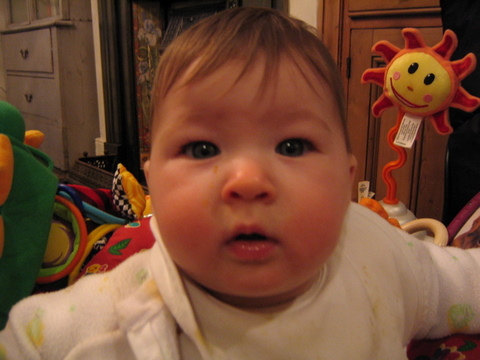
(My cousin Lela is illustrating this post; she is actually 1/4 Korean, but for purposes of this blog entry we can pretend she’s half.)

What next?

  • Subscribe to this feed
  • Leave a comment

  • I think it's cause all the Asian genes are like "we make the cutest babies in the world!!" and the Caucasian genes don't know how to handle it and get all confused. Or something like that.
  • jen
    Moye, I second what you said!

    :)
  • huhu
    Gd, ths st s nthng mr thn wht wrshpng sn wmn wth wht byfrnds (wh ctlly blv thy are ntrrclly dtng bcs thy r pn mndd whn n fct thy r nthr pthic sn grl n th trd, prvrs rltnshp) n Gy sn gys wh r n dffrnt thn th sllt sn grls...N wndr ths st s gng dwn th crpper...
  • We're trying something new here at 8Asians kids! Rather than me dealing with trolls who have the tendency to write the same, UNCONSTRUCTIVE thing every day, I'm going to enable disemvowelling:
    http://en.wikipedia.org/wiki/Disemvoweling

    Have a nice day! -Ernie
  • Rob
    Hrm, it doesn't seem to work with me.

    Since I'm so proficient in speaking "leetish (133715h)" in the gaming community, I could read that with no issues.
  • Hey Rob, not being able to read the comment isn't the point; if that were the case I would just delete the comment all-together. The point is that it now takes effort to read the comment, but only if the comment reader has invested enough energy to read it in the first place.

    This is an attempt to try to draw a line between censorship and what constitutes a good reply, which I'm sure I'll get tons of shit for, but it's worth at least trying. If it fails miserably, we'll do something else.
  • Akrypti
    Disemvoweling seems kind of disrespectful to the commenter, but this is coming from someone who was NOT able to read the comment without its vowels. And yeah. I didn't care enough to try to decipher it.
  • John
    You wrote, "The data showed that the higher incidence of gestational diabetes in Asian-Caucasian couples shows a unique health risk for the mother, no matter if she was Asian or Caucasian."

    That is not true. The mother's risk *is* increased only if she is Caucasian and she carries a baby fathered by an Asian rather than a Caucasian. However, the mother's risk is *decreased* if she is Asian and she carries a baby fathered by a Caucasian rather than an Asian.

    You could have validly written, "The data showed that the lower incidence of gestational diabetes in Asian women with Caucasian mates shows a unique health benefit for these Asian mothers."
  • Really very impressive! thanks for the share.

    Amber
  • A have a got a piece of information regarding this.

    New research indicates that the rates of cesarean deliveries, gestational diabetes, and other pregnancy-related outcomes differ among Asian, Caucasian, and interracial Asian-Caucasian couples.

    "Our study demonstrates that interracial Asian-Caucasian couples represent a population with distinct perinatal risks, with differing risks depending upon which parent is of Asian race," the researchers state in the American Journal of Obstetrics and Gynecology.

    The findings are based on a study of 868 Asian-Caucasian couples, 3226 Asian couples, and 5575 Caucasian couples who delivered at the Lucile Packard Children's Hospital in Stanford, California, from 2000 to 2005.

    Compared to Caucasian couples, Asian-Caucasian couples were 2.4- and 2.6-times more likely to be affected by gestational diabetes, depending on whether the mother was Caucasian or Asian, Dr. Michael J. Nystrom, from Stanford University Medical Center, and colleagues found.

    The risk in Asian couples, however, was even higher at 4.7-times higher than in Caucasian couple,

    The results also indicate that Caucasian couples had larger babies than the other groups. The average birthweight in Caucasian couples was 3400 grams, compared with the next highest weight, 3360 grams, which was seen in Asian-mother/Caucasian-father couples.

    Compared with Asian couples, Asian-mother/Caucasian-father couples were the only ones to have an increased rate of cesarean delivery.

    "Further research into interracial couples may she light onto the effects of genetics vs environment on perinatal outcomes," the team concludes.

    SOUIRCE: American Journal of Obstetrics and Gynecology, October 2008.

    Thanks.
blog comments powered by Disqus