
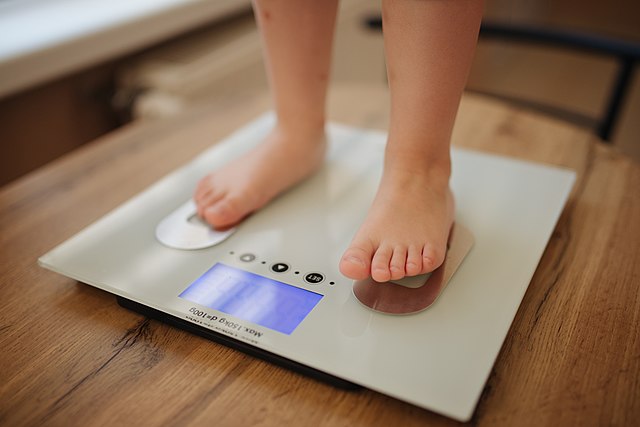
I knew my blood pressure was a problem, but I never took my Body Mass Index (BMI), a measure of body fat, very seriously. I showed my reading, which indicated that I was overweight, to my doctor. “You can’t use that reading,” he said. “You have to use the Asian BMI.” He looked up my BMI on the Asian BMI scale. “You are obese,” he declared.

Amazing! In the span of 10 seconds, I moved from overweight to obese. I felt tremendously frustrated. I have tried hard not be a sedentary overweight Filipino, putting in mileage, lifting weights, stretching, playing volleyball, even dancing salsa. I could accept that my genes have given me high blood pressure despite a focus on exercise, but being labeled “obese” was hard to take.
My doctor, a thin Vietnamese guy with a slight build, calmed me down. He said that these are goals, not hard guidelines for everyone. He said that if in his own personal case he went by the white standards for BMI, it would catch overweight and obese states far too late. This study showed how for the ethnic groups in Singapore, for a given body fat percentage, South East Asians have a lower BMI than whites.
There has been some controversy over the practice of race specific medicine. This commentary asks whether race is now being commercialized, with BiDil (targetted at African-Americans), being just the start. I personally look at these as targetting people with a certain genetic disposition and that it doesn’t have to be race based. Probably more of my frustration is with the BMI measure itself. Arnold Scharzenegger at his Mr. Universe peak would be considered obese under current BMI standards. Body fat percentage seems to be a better measure, and not just because I am normal using that measure. I just hope that I suddenly don’t become obese again through some new Asian body fat percentage scale!
NOTE: 8Asians.com is a community, and we thank you for being a part of it. While we welcome and appreciate differences in opinion, if you're rude or you're promoting spam, we have a right to edit or delete your comment. Read our comment policy for more information.
If you see a comment that violates the 8Asians.com comment policy, you may flag the comment by mousing over the comment and clicking "FLAG."
You need to be referred to an endocrinologist. If he or she says you're fine, and then you are fine.
I am american of pacific islander origin. my counselor said according to asian bmi, i am normal close to underweight. my doctor and my counselor say im fine.
There is no such thing as a 'healthy' or 'unhealthy' BMI. Bone density, muscle mass and body fat composition is different among each individual regardless of race. Since Muscle weights more than fat, BMI is not even a good rule of thumb for measuring one's body weight. What's right for one is not the same for others. Take the word, BMI, out of your vocabulary. It is a poor judge of fitness:
http://productreviewratings.com/2011/01/bmi-scale-...
Actually, your doctor was completely wrong. You needed to consult the Pacific Islander BMI chart. While Pacific Islanders are often lumped in with Asians for racial identification, physiologically they are quite different. While Asians tend to have thinner, less dense bones than blacks and whites, Pacific Islanders actually have thicker and denser bone structures than any other race. So you may actually move from "overweight" to "normal".
So with all this muscle and active lifestyle, I'm a little over one point away from being overweight! Oh joy!
I'm fine with race specific health concerns, just people associate BMI too much with whether or not you're a fatass.
@Madley: Here is a link to the Asian BMI scale:
http://aadi.joslin.harvard.edu/asianclinic/asiancl...
It also has other scales where you can compare.
Oh good grief, I'm already fighting to get my BMI down for transplant purposes and now there's this new scale?! Yikes.
Okay... where is it? Where's that chart (I didn't find one in the article you noted in your post). Gotta know how much more I need to sweat off...
And I'm curious... where do we (Asian-Americans) lie in relation to other races re: BMI?
@joz - thanks for the link.
Here's the link that the tweet is referring to:
My post covers similar ground as that one.
It makes sense to use an Asian BMI. When I look at body fat calculators, they tell me that Asians have less bone density. Hence, our bones weigh less, so when we get on the scales, more of the weight is fat, or muscle. I never thought about it in terms of BMI, but it seems like an important consideration.
Without getting too technical, many forms of biomedical science are looking to see if and how ethnicity are playing a role in how drugs are metabolized, etc., while also looking at how cultural factors play a role in health. That being said, it's been pretty well documented that there's more difference genetically within "the races" than across "the races".
Also, I'm not sure how accurate it would be to use an "Asian BMI" versus other BMI, especially if we're raised in America. The BMI and other scales are generally just used as an initial indicator, but most clinicians recognize that the BMI is seriously flawed since it doesn't distinguish between mass being composed of muscle or fat, hence that'd explain why the Governator would be considered obese. A better indicator would be measuring fat percentage relative to muscle, methinks.
Feb 16: Adam WarRock and Kirby Krackle: West Cost Tour Dates!!!
Feb 17: (Los Angeles, CA) All My Sons
Feb 18: (Stanford, CA) Stanford’s 16th Listen to the Silence Conference
Feb 25: (Los Angeles, CA) Past Present I Future Imperatives: Queer Space Time
Mar 3: (New York, NY) Vong Pak’s ‘Electric Shaman’ Concert
Apr 30: (Sacramento, CA) California Asian Pacific Islander Policy Summit 2012: iAdvocate
[...] diabetes), type 2 can be generally be prevented with a healthy diet and exercise – basically avoiding obesity and watching one’s weight. That’s something we all, regardless of ethnicity or race, can take away from [...]
[...] Asian BMI: How I Became Obese in Ten Seconds – “I showed my reading, which indicated that I was overweight, to my doctor. ‘You can’t use that reading,’ he said. ‘You have to use the Asian BMI.’ He looked up my BMI on the Asian BMI scale. ‘You are obese,’ he declared.“ [...]
[...] men desperately needing rest watched by 22,000 desperately needing exercise.” Diabetes and obesity are real problems in the Asian-American communities and beyond. Overemphasis on winning, as seen by [...]
[...] buy a product just because they show Asian Americans or use a language that’s familiar to me (my Asian BMI doesn’t need any Big Macs), but doing so does get me to notice, which is half the battle in [...]
[...] website. http://aadi.joslin.org/ contains such tools as an Asian BMI calculator (calculating Asian appropriate Body Mass Index values), the Interactive Wok (looking at nutrition), and Ask the expert (providing a Q&A Forum). [...]