
 Now that I’m living in an actual “third world” country — instead of just studying about one — I find it important to be aware of what I’m seeing and how it connects to the ideas and “truths” I learned in college about countries like Cambodia. The country’s unemployment rate as of 2007 was at 3.5% and the poverty rate as of 2004 was at 35%. In talking about poverty reduction and economic growth, measurable figures — like employment levels and individual economic activity — is always part of the picture and influences how development policy is made. But looking at countries through such a lens obscures significant social conditions and fosters a certain kind of discourse on how those of us living in Western countries tend to talk about those in the “third world.”
Since moving to Phnom Penh in August, I’ve taken up a flat of my own. Most foreigners rent houses or flats which have someone coming to clean them, and if not, they hire someone to do housework. Khmer women, of course, are the usual domestic workers hired for this. My flat didn’t come with a cleaner and I didn’t really want to go looking for one. I figured cleaning my own flat myself wouldn’t be too hard.
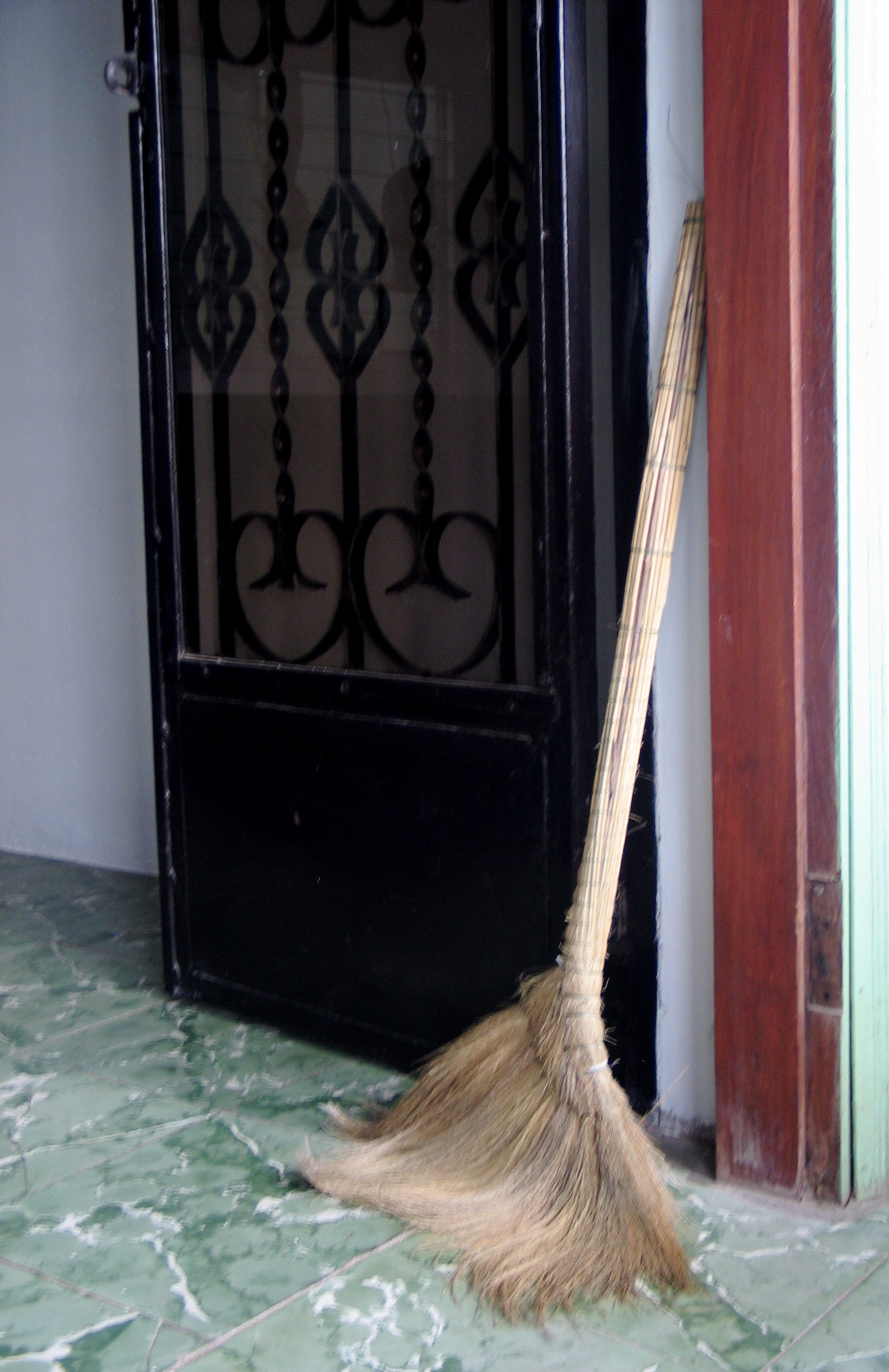
Once I week, I move around furniture and attempt to sweep all the dust that’s collected the past six days. I have this short broom to use for sweeping before I mop the floor and then scrub down the bathroom. I know, sounds like a really easy thing, and yeah, it isn’t too hard. But I’ve realized that it takes about a good chunk of time to really clean everything. And bending halfway down because the broom handle is a bit short gets my back kind of disjointed after a while.
When I sweep my flat, I think of my mom and the fact that she’s cleaned a lot in her lifetime. As a teenager, I vacuumed while she would clean the kitchen, often wiping the floor on her knees. I used to wonder why she spent so much time cleaning the house. Similarly, a lot of people, particularly those who make economic development policy, do not see the importance of domestic and reproductive labor.
Cooking, cleaning, taking care of children, going shopping, and other household tasks take up the vast majority of most women’s time, but because such labor is unpaid, women are considered as economically unproductive and “unoccupied.” Figures from 1999 show that unpaid workers constituted the largest category of employment in Cambodia. 65.3% of Khmer women were unpaid workers compared to 29.1% of Khmer men. In Cambodia, the poorest households rely on unpaid labor, in which women are the majority of unpaid family workers. Because unpaid work is, well, unpaid, the labor of the majority of Khmer women is accorded no value. Such devaluation of unpaid work is a main contributor to the higher rates poverty of Khmer women and women elsewhere in the world.
In talking about women house cleaners with a couple other volunteers while flat searching, one made the point that those of us with money are doing a good service to hire someone who otherwise wouldn’t get work. We would be helping someone keep their job or give someone else an opportunity to work and get paid. Another volunteer replied that hiring a woman to do housework only maintains a gendered hierarchy that defines housework as women’s work (and thus not important and something to ignore in economic analysis). Considering this makes the issue of women’s domestic labor much more complex: women can get paid to clean someone else’s house but not their own.
I don’t think this post can handle the question of how to negotiate the market economy and social hierarchies, but it doesn’t take much reflection for us in the United States to know that a lot of our moms leave the house each day to go work in a grocery shop, the local post office, an elementary school, or a nail salon only to return to take up a second shift in raising and caring for us, their kids. That’s work too — and it’s hard. The fact is that women’s work is rarely counted, but it is work we count on in order to survive every day of our lives.
Photo is taken in Jude’s Phnom Penh flat and is the very broom he writes about in this post.
- Excited
- Fascinated
- Amused
- Disgusted
- Sad
- Angry