
8 Asians

  • About us
  • Write for 8Asians
  • Podcast
  • Events
Hip to be Asian American?Hip to be Asian American?
Do Asian Women Have The Smallest Vaginas?Do Asian Women Have The Smallest Vaginas?
Report: Asian-American Subgroups Among Nation’s PoorestReport: Asian-American Subgroups Among Nation’s Poorest
Asian American Dad: Is Your Daughter Adopted?Asian American Dad: Is Your Daughter Adopted?

Why Are There So Few Filipino American Entrepreneurs?

By Mike | Tuesday, August 23, 2011 | 46 Comments

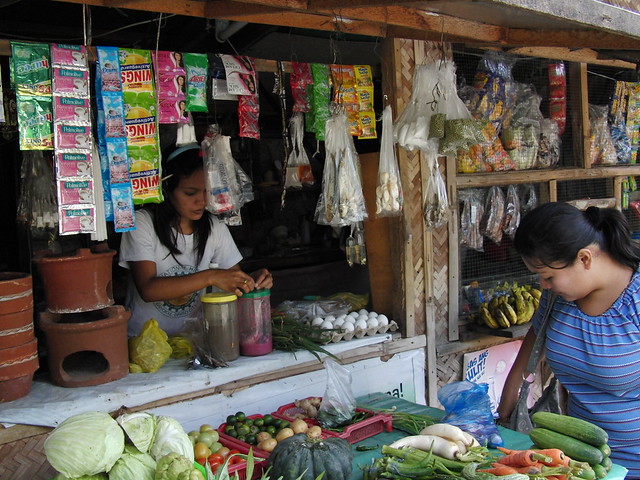
3015570800 17b71fba2f z Why Are There So Few Filipino American Entrepreneurs?
I co-founded a web development agency several years ago with a Filipino American buddy of mine. While talking about some industry news one day, he wondered out loud why there weren’t more Filipino American entrepreneurs. “I read about Chinese American, Taiwanese American, Japanese American, and Vietnamese American entrepreneurs in the news all the time. But I have yet to see any Filipino Americans.”

We latched onto this topic and did a few Google searches. Perhaps this was our own ignorance and there are plenty out there that just haven’t made it into the general business news. But our searches were fruitless. We found plenty of Filipino entrepreneurs in the Philippines, but no Filipino American entrepreneurs. Though we started our searches in the high tech industries, we expanded them to include restaurant owners and shopkeepers, anyone who owned his/her own business, such as this article referred to me by 8Asian’s very own Jeff.

Next, we went through our own contact lists. He knew of only one other who also owns his own business. And that was it. “Why are there so few of us?” he asked. We didn’t know for sure, so I decided to dig deeper.

In the last few months, I’ve tried reaching out to colleagues to look for and interview Filipino American entrepreneurs. I even reached out to my co-founder’s friend. Sadly, none of them ever came through for an interview; perhaps they were all too busy. Then fate gave me a hand. This past weekend, I randomly met a Filipina American who co-founded a large IT services company with her husband. I spoke with her at length and got some great insights.

Below is a list of possible reasons given to me by my co-founder, the IT services business owner I met, and Jeff. Please note that there’s no scientific research to back any of this up; I simply couldn’t find any.

  • Lack of press. Perhaps there are a lot of Filipino American entrepreneurs and they simply aren’t getting much press from both the mainstream media and social media. Or, they are being reported in non-English articles that don’t show up in English web searches. This article could all be a moot point because I simply can’t access the right information.
  • Less tolerance for risk. Everyone I spoke with cited this reason. They believe there’s a culture of risk-avoidance in Filipino culture, especially from older generations. Failure is seen as a major taboo. “Add to that Filipinos’ love of criticism of any apparent flaw,” added Jeff, “and you get Filipinos who would rather get a job working for someone else rather than risk starting a business that could fail.”
  • Less emphasis on education. Jeff said this best: “Many businesses, particularly tech businesses, are started up by professors, researchers, and grad students, of population which contains few Filipinos.” Also, “Filipinos tend to be conformist and have a deep anti-intellectual streak. As an example, ‘pilosopo’ (or philosopher) is considered an insult.”
  • Lack of historical business owners. During the colonial history under the Spanish, most businesses in the Philippines were owned by ethnic Chinese Filipinos (Chinoys) or Spanish rather than Filipinos. With a lack of role models and an absent supportive environment, a culture of entrepreneurship never quite flourished. This may be changing, though most of the well-known Filipino restaurants were started by Chinoys or Spanish, like Goldilocks and Jollibee.
  • Lack of persistence. There’s a culture of great initial enthusiasm, followed by a rapid drop in interest. Someone even pointed me to the Tagalog expression, ningas kugon, meaning “the flame of dry kugon grass, which burns hot and furious at first but rapidly burns out.”
  • Strong family obligations. The family is the most important unit in Filipino culture, as is the obligation to put them ahead of anything else, especially a risky entrepreneurial venture that may require a significant investment of time, focus and money. In this sense, starting a business is seen as a selfish move, rather than one that is ultimately best for the family.
  • Work visa restrictions Many Filipino immigrants arrived to the United States as nurses and Navy crew members on work visas. Those immigrants risked deportation if they left their employers to go start a business, therefore being an entrepreneur was hardly an option. ADDED 5:00pm PDT, HT TienVNguyen

Do you know of any other possible reasons why there are so few Filipino American entrepreneurs? Leave a comment and let me know.

I expect this post to be unpopular. Everyone I spoke with had strong feelings about this, as well as strong viewpoints. One criticism of this list is that other Asian American cultures share some of the traits, such as strong family obligations. Another is that this could apply to other Pacific Islanders as well, which I can certainly see. Others found this list offensive, and I apologize if this comes across as an insult to anyone. That is not my intention. Some of these items come from two books on Filipino American psychology by Kevin L. Nadal, PhD.

It appears that serious research has yet to be done on this topic. I don’t have the resources or know-how to do such a study myself, but my hope is that this post prompts someone to go do one – perhaps as a dissertation. If you do, please let me know. My co-founder and I, as well as many others I’d imagine, would be very interested in your conclusions. My co-founder has even considered forming a Filipino American entrepreneurship association to foster such a community.

What do you think? I would love to hear your feedback. Thanks!

[Flickr photo credit: burgermac]

Thanks for rating this! Now tell the world how you feel - Share this on Twitter and on Facebook.
(Nah, it's cool; just take me back.)
MOODTHINGY
How does this post make you feel?
  • Excited
  • Fascinated
  • Amused
  • Bored
  • Sad
  • Angry

Categories:

8QuestionsBusiness
Tweet

NOTE: 8Asians.com is a community, and we thank you for being a part of it. While we welcome and appreciate differences in opinion, if you're rude or you're promoting spam, we have a right to edit or delete your comment. Read our comment policy for more information.

If you see a comment that violates the 8Asians.com comment policy, you may flag the comment by mousing over the comment and clicking "FLAG."

Facebook Comments (Beta)

  • http://keithpr.com/ KeithPR

    This is an important topic and I hope you get some constructive feedback. One question we want to ask ourselves as well is whether or not there are structural social barriers (e.g. inequities and discrimination) that hinder entrepreneurs who are Filipino, Pacific Islander or other under-represented people of color.

  • http://me.mikelee.org/ mikeleeorg

    @KeithPR Thanks Keith! Great point too.

    I stayed away from possible “solutions” until I could get a more accurate assessment of this issue, but if I can get a lot of constructive feedback, I would love to do a follow-up post – or support someone who may already be thinking & writing about this.

  • TienVNguyen

    I think the main barrier is that Filipino immigrants arrived here via work visas..a lot of which are nurses or Navy members..and those kind of visas require you to be fully employed or risk deportation.

    Therefore the risk of drifting away and starting your own business was not even an option.

    This is compared to Vietnamese, and for that matter Koreans who came over here during wartime and were able to do so via political asylum and were granted stays and free to do whatever they want–rather than have to be employed at a specific position to avoid deportation.

    My dad for example (Vietnamese) came here at 38 years old after the war and worked several odd minimum wage jobs despite his engineering background–and eventually started his own gardening business. I too grew up influenced by this and ended up co-founding an ad agency.

    Compare this to a Filipino who has to go through a much more stringent process of coming to the US with his family, are can do so because of a job so their options are much more limited.

    With regards to Chinese–they’ve been here for many more generations and are moreso assimilated than others, and Japanese come from a very prosperous homeland where they have the resources to become entrepreneurs.

  • JasmineCho

    I think this was an important article and am glad you took initiative to gather and put out this info. I think generally speaking, there’s a huge lack of research and data on the Asian American landscape. Your idea for the Filipino American Entrepreneurship Association sounds like a great idea and could probably jump off of some info already collected by existing organizations. Just a thought, but maybe Hawaii is a region you could look into? Not sure if you’d find any more luck there, but since it’s a region known as a melting pot of Asian cultures, I’m wondering if you might find some/more Filipino or part-Filipino entrepreneurs there.

  • shortyshaly

    Definitely interesting article – thank you for posting. As a Filipina American myself with a strong interest in entrepreneurship for my future goals, I’ve wondered the same thing. I’d be interest in joining a FilAm Entrepreneurship Association – even helping to create one, esp here in the LA area. In response to JasmineCho’s comment on Fil-Am businesses in Hawaii, I can definitely attest that there are a decent # of them there. I was raised there, and my dad created his own lawfirm there. I’d have many recommendations of folks to interview if you’d like to further research Fil-Am businesses in Hawaii. – @shortyshaly (twitter)

  • KeithPR

    @TienVNguyen This is a thoughtful hypotheses. I like it especially because it evaluates structural barriers as one cause.

    Regarding Japanese immigrants, most from 3-4 generations ago certainly did not come to the U.S. with any resources to become entrepreneurs. Most Japanese immigrants were farmers who came to work on plantations.

  • http://keithpr.com/ KeithPR

    @JasmineCho Hawai’i is ironically not a good model for many challenges facing Asian Americans, including Filipinos, on the Mainland. Asians in Hawai’i have a distinctly different socio-economic/political history that is difficult to translate into other regions.

  • http://me.mikelee.org/ mikeleeorg

    @shortyshaly Thanks shortyshaly! I really hope you do continue on the entrepreneurship path. I would love to be connected with some of the Fil-Am business owners in Hawaii. I know a few, but they are Chinoys (not that that’s a bad thing; but I had been trying to find non-Chinese Fil-Ams).

  • http://me.mikelee.org/ mikeleeorg

    @KeithPR That’s certainly true, Keith. I probably should have made that distinction in my article. I’d still love to meet some Filipino American entrepreneurs in Hawaii nonetheless.

  • http://me.mikelee.org/ mikeleeorg

    @TienVNguyen That’s great feedback. I’m going to incorporate that into the article. Thanks!

  • JasmineCho

    @KeithPR Agreed. Having lived on Oahu myself, I know Hawaii’s certainly in a category of its own…but still a unique part of Asian America nonetheless. I think they can still be included in a comprehensive study/research maybe even to compare and contrast…might help find the what and why to what Mike’s looking for

  • http://me.mikelee.org/ mikeleeorg

    @JasmineCho@KeithPR Perhaps speaking with some Hawaii-based Filipino American entrepreneurs can be insightful to mainland Filipino American entrepreneurs, whether as role models or mentors, regional differences aside.

  • http://keithpr.com/ KeithPR

    @JasmineCho Certainly does hurt to speak with Fil-Am entrepreneurs in Hawai’i. @mikeleeorg , I will put you in touch with my friend Blair Bautista via FB.

  • sdjm000

    You said: “Another is that this could apply to other Pacific Islanders as well, which I can certainly see.”

    Mike I am sorry to correct you but Filipinos are not Pacific Islanders, a real pacific islander would be insulted hearing this! Filipinos fall short of the Pacific Rim and still located in the Asia Rim, so they are considered Asians…..

  • genemoy

    Mostly what Tien said. It’s been a while since I dipped back into the Asian American Studies space, but one could hardly do worse than look at Pilipino immigration patterns since the 1965 immigration act, here’s an abstract (http://www.jstor.org/pss/2546757). Also there are the preferences and workforce gaps that led to the influx of Pilipino healthcare workers (http://immigration-online.org/103-filipino-immigration.html). By way of comparison, one could compare against the kinds of Chinese, Korean and South Asian immigrant entrepreneurship (for instance, Gujarati motel owners) with their lending circle practices and extended family networks, but it’s an apples-to-oranges comparison, because the social stratification, specifically the kinds of immigrants who come into entrepreneurship are not directly comparable. I will invite my old Asian Am Studies colleagues to weigh in further here as I will not pretend to speak for Pilipino/as.

  • sdjm000

    Among other things the 4 nations Korea, Japanese, Chinese and Vietnamese are the only 4 that are extremely educated and ambitious in their culture. I know this may sound racist but if you observe those 4 countries the majority of them are very ambitious as well. I think education; if anything is the most important factor why there are not as many Filipino entrepreneurs.

    Again, by me traveling all of Asia I have learned that this holds to be true. Please don’t take this as an insult. It really does come down to the culture and mindset of the race. For the few that do make it, you are the exception. Like every exception, you cannot expect the majority (Everyone else)to be like you.

  • genemoy

    But then you could also say that there are many Koreans, Japanese, Chinese, and Vietnamese who are equally uneducated and unambitious in their culture. That is not racist, just an unintelligent, naive, and uninformed remark. Travelling only makes your experience personal. We’re looking for data.

  • KeithPR

    @sdjm000 Before you admonish Mike, you should know that some Filipinos consider themselves more PI than Asian. The Asian/Pacific Islander categorization is a Western concept anyway. And who is a “real” Pacific Islander, anyway? I’m from a Pacific Island, but am not PI.

    Here’s an interesting blog post with more background:

    http://askthepinoy.blogspot.com/2010/11/are-filipinos-considered-asians-or.html

  • Amy Pabalan

    The reasons cited are valid, especially the unwillingness to take risks. Venturing out is met with doubt and criticism. The “crab mentality” at work.

    If you are looking for Fil-Am entrepreneurs, come to Daly City, CA.

  • http://me.mikelee.org/ mikeleeorg

    @Amy Pabalan Do you happen to know any Fil-Am entrepreneurs in Daly City I could speak with? I have some friends there, but none of them knew any. Thanks!

  • L.f.Domingo

    Not commenting so much on the “lack” of Filipino American entrepreneurs, but more so on the degree in which many of their businesses are visible. Many Fil Am business rely on word-of-mouth / family referrals in which to advertise their businesses, so finding them on the internet may be impossible. Also, you should look into the many chapters of the Filipino American Chamber of Commerce available in many cities. You would find that Fil Am entrepreneurs venture into all kinds of businesses — not just as restaurant owners/shopkeepers. “Less emphasis on education” — perhaps in regards to doing business/entrepreneurship. A lot of Fil Am families I know, including mine, encourage their children to go into careers known to be more “stable,” e.g. nursing/general medicine, engineering, IT, etc. This does to along with ‘unwillingness to take risks,’ though. Also, while the the word ‘pilosopo’ does translate to ‘philosopher,’ when used in such way, it is actually meant to describe someone who is being a smart-ass. Hope that helps. :-)

  • aljun81

    There are a lot Filipino dentists practicing in the Bay Area that own their own business especially in Daly City.

  • sdjm000

    @KeithPR

    Pardon my Western influence, but aren’t most of us Asian Americans? And as Asian Americans weren’t most of us taught in the Western System of education and also pushed into its cultural influence?

    It was also by the Samoans, Micronesian and Polynesians that told me this and feel the same way. But I’ll consider your article as it was a good read and filled me in with the whole idea being very subjective. I guess it is all relative either way.

    Pardon my cynicism as I grow tired of hearing the same argument and being called out for not having the right information. At one point I first believed that they were Pacific Islanders, and then I was corrected. Being embarrassed that I was wrong, and it was imperative that I corrected myself with the facts. Now here you are presenting me with a subjective matter that is contained in that article.

    Why is that they are the one of the few Asians with an identity crisis? And are we not discussing them in a website called 8asians.com ?

    I will tell you what. I am sorry to mike for sounding a bit condescending. And I will meet you guys in the middle that Filipinos are API (Asian Pacific Islanders) How does that sound?

  • http://me.mikelee.org/ mikeleeorg

    @sdjm000@KeithPR No worries sdjm000, I took no offense at all. I lose track of the proper PC identifications of ethnicities all the time, so I welcome any and all info to help me keep up-to-date!

    And really, I’m just glad you all are taking the time out of your busy schedules to read my article and think about it :-)

  • http://www.erniehsiung.com/ Ernie H.

    @sdjm000 For what it’s worth, we discussed this on another 8Asians post three or four years ago:

    http://www.8asians.com/2007/12/17/are-filipinos-asian-aka-how-many-asians-does-it-take-to-answer-a-question/

    Let’s keep all comments related to A/PI identity on that thread instead, and have this thread focused on all things Filipinos and entrepreneurial. — The moderator

  • sdjm000

    @genemoy

    Pardon me as that was only just an opinion formed by me.

    I had always believed that experience meant more than just pure data and information. That is like saying I am going to start a business with only data, but learned that experience is completely different from the data I had learned from.

    Just like the same dilemma about stereotypes. Stereotypes are a form of data, but do I act on that and draw a conclusion based on that? No, of course not. I am not going to assume that stereotypes are correct just because of the data; I will allow my experience by talking and living among people to receive the information first hand.

    A good example: Numbers do show that African Americans have the lowest education rate in the United States, but do I immediately say African Americans are not intelligent? No, because I have met many that are well educated, and because of meeting these people by ‘experience’ I cannot draw the conclusion that all or most African Americans are unintelligent.

    I am just trying to throw a curveball and trying to give a different perspective on the topic because it sounds pretty ambiguous to me.

    Unintelligent, Naïve and Uninformed my remark may sound, but I do see what people do not see. Am I right or wrong? Well I suppose I am not that important enough for anyone to care.

  • sdjm000

    @genemoy

    Pardon me as that was only just an opinion formed by me.

    I had always believed that experience meant more than just pure data and information. That is like saying I am going to start a business with only data, but learned that experience is completely different from the data I had learned from.

    Just like the same dilemma about stereotypes. Stereotypes are a form of data, but do I act on that and draw a conclusion based on that? No, of course not. I am not going to assume that stereotypes are correct just because of the data; I will allow my experience by talking and living among people to receive the information first hand.

    A good example: Numbers do show that African Americans have the lowest education rate in the United States, but do I immediately say African Americans are not intelligent? No, because I have met many that are well educated, and because of meeting these people by ‘experience’ I cannot draw the conclusion that all or most African Americans are unintelligent.

    I am just trying to throw a curveball and trying to give a different perspective on the topic because it sounds pretty ambiguous to me.

    Unintelligent, Naïve and Uninformed my remark may sound, but I do see what people do not see. Am I right or wrong? Well I suppose I am not that important enough for anyone to care.

  • Honest Abe Lives

    I thought it was just because Filipinos really like to chill and have bbq’s with their family and friends.

  • JohnNSac

    I don’t know what type of Google search you did, but you have to put much more thought to it than typing “Filipino American Entrepreneurs.” Google “Filipino Chamber of Commerce” and you’ll find a few regional Fil-Am CC’s. Go to their Officers and Board of Directors page, you should be able to find some Fil-Am business owners and entrepreneurs there. Here let me help you out:

    http://www.filchamber.org/about.php

    http://www.fccpnw.org/about-fccpnw/

    http://www.faccsd.com/executiveboard.asp

    Fil-Am Chamber of Commerce Orange County even publishes their business directory. Just scroll through alphabetically. Again, here let me help you out: http://www.faccoc.org/business-directory

    And of course, my favorite, the Eden Canyon Vineyards featured in the Wine Enthusiast magazine: http://www.winemag.com/Wine-Enthusiast-Magazine/De… Late Harvest Cabernet Sauvignon, yum!

  • JohnNSac

    Oops, sorry. The complete link to the Eden Canyon article is: http://www.winemag.com/Wine-Enthusiast-Magazine/December-2006/Like-Father-Like-Daughter/

  • Amy Pabalan

    @mikeleeorg I think I can help you. Just sent you a message.

  • http://me.mikelee.org/ mikeleeorg

    From a Facebook thread about this article: “Got your Entrepreneur right there … Filipino at that … ;) ”

    http://www.youtube.com/watch?v=_pApuzdUo-I

    Just some humor to lighten up the mood :-)

  • aspeenat

    I thought the Guy who started the first SUCCESSFUL yo yo company in the US was Filipino.

  • http://me.mikelee.org/ mikeleeorg

    @aspeenat You are correct!

    http://en.wikipedia.org/wiki/Yo-yo

    http://en.wikipedia.org/wiki/Pedro_Flores_(Yo-yo_manufacture)

    Wow, I had no idea. Thanks for sharing that info!

  • JohnErickPabalan

    My folks were business owners in the LA area for over 15 years. Back in the Philippines, my parents used to own one hotel, and it expanded to five before we immigrated to the United States. Here in the States, they have ventured to having a video store, selling phone cards, cargo box shipments, airline ticket sales, a restaurant, and wedding decorations. Their business pretty much ran from the late 80s to the mid 2000s and catered to the Filipino community. Currently they are not business owners anymore, instead, they are employees and have seeked something that is more stability. Here are some issues that “I” saw first hand that could be issues why there are less Filipino entrepreneurs:

    -Crab Mentality – Filipinos are known to have this. I’ve heard people talked bad about my parent’s business when it flourished. A bad word of mouth travels faster than a good word of mouth. Along with the crab mentality, not every Filipinos seemed to support the mom and pops business. Also, one of my friends decided to open up a T-shirt company displaying Filipino pride, and none of their close friends bought shirts from them, instead, they made non-constructive criticisms about the shirts instead of showing support.

    -Gossiping – I think this is a favorite Filipino past time. When someone fails, Filipinos seem to thrive to talk about someone’s failure or mishaps. I would go to church and hear my fellow Filipinos gossip after mass.

    -Trust issues – Some Filipinos do not trust their own race. This probably comes from the homeland being so corrupt. This provided a lack of unity in the Filipino community.

    I’m hoping that we can hurdle the issues above. It would be great to see a very successful Filipino entrepreneur so that more doors will open up for the rest of us.

  • JohnErickPabalan

    My folks were business owners in the LA area for over 15 years. Back in the Philippines, my parents used to own one hotel, and it expanded to five before we immigrated to the United States. Here in the States, they have ventured to having a video store, selling phone cards, cargo box shipments, airline ticket sales, a restaurant, and wedding decorations. Their business pretty much ran from the late 80s to the mid 2000s and catered to the Filipino community. Currently they are not business owners anymore, instead, they are employees and have seeked something that is more stable. Here are some issues that “I” saw first hand that could be issues why there are less Filipino entrepreneurs:

    -Crab Mentality – Filipinos are known to have this. I’ve heard people talked bad about my parent’s business when it flourished. A bad word of mouth travels faster than a good word of mouth. Along with the crab mentality, not every Filipinos seemed to support the mom and pops business. Also, one of my friends decided to open up a T-shirt company displaying Filipino pride, and none of their close friends bought shirts from them, instead, they made non-constructive criticisms about the shirts instead of showing support.

    -Gossiping – I think this is a favorite Filipino past time. When someone fails, Filipinos seem to thrive to talk about someone’s failure or mishaps. I would go to church and hear my fellow Filipinos gossip after mass.

    -Trust issues – Some Filipinos do not trust their own race. This probably comes from the homeland being so corrupt. This provided a lack of unity in the Filipino community.

    I’m hoping that we can hurdle the issues above. It would be great to see a very successful Filipino entrepreneur so that more doors will open up for the rest of us.

  • jamescerenio

    Good post. Nice comments. This reminds me of the “Why aren’t there more Filipino restaurants” quandary. There are FilAm businesses out there. The percentage of business compared to the FilAm population is probably smaller compared to other As-Am groups. As mentioned, culture, psychology, and timing of immigration all contribute to the smaller numbers of Fil-Am entrepreneurs. But they’re out there and they’re growing. Here are a few Fil-Am started business in the Bay you should check out:

    hoperoadconsulting.com/ (Political consultants. One of the owners is Pinay)

    socialkitchenandbrewery.com/ (Hipster brewery in the Inner Sunset owned by local Fil-Am)

    pinkstripessf.3dcartstores.com/ (clothing & sweet store owned by South Bay Pinay)

    10kgroup.com/ (Web consulting firm owned by Pinay)

    Not to mention, there are dozens of Pinoy owned martial arts businesses, hair salons, restaurants, grocery stores, and the like all over Daly City, S. San Francisco, San Bruno. We may not appear as ubiquitous as the Panda Expresses out there, but the entrepreneurship is there.

  • http://me.mikelee.org/ mikeleeorg

    @jamescerenio This is great info! Thanks!

  • rustymusty

    I think I understand your premise but I am troubled by this post. Or perhaps I missed a prior post and am misreading this one. To answer your question (in the post title): you seem to be saying Chinese-Filipino Americans do not count as Filipino Americans. You also seem to be saying that entrepreneurs only exist in the “high tech industry” but conceded you “expanded [your search for entrepreneurs] to include restaurant owners and shopkeepers”.

    You limited your search to Google (though you did not share with us the search terms you used) and to your contact lists (though you did not mention the scope of your lists).

    Might I suggest a search through the resources from local Filipino American chambers of commerce or the Federation of Philippine American Chambers of Commerce (www.fpacc.com) or perhaps inquiries to FilAm organizations from the National Federation of Filipino American Associations (http://naffaausa.org/).

    The Filipina Women’s Network, for example, has been recognizing the 100 Most Influential Filipina American Women in the U.S. (http://filipinawomensnetwork.org/100MostInfluentialFilipinaWomenintheUS). Many of them are entrepreneurs. Disclosure: FWN’s president is my mother, and I am an FWN volunteer.

    I think the question should be: Why are there so few Filipino American entrepreneurs *on Google search*? Or more clearly, Why are Filipino American entrepreneurs not covered by the mainstream media? Because there *thousands* of Filipino American entrepreneurs.

    cc: pistahan filipinawomen radiantview qtsoozy kalokohan

  • http://me.mikelee.org/ mikeleeorg

    @rustymustypistahanfilipinawomenradiantviewqtsoozykalokohan

    Thanks for the great feedback!

    I did these simple searches:

    http://www.google.com/search?q=filipino+american+entrepreneurs

    http://www.google.com/search?q=filipino+american+business+owners

    And I’ll admit, I had no idea the whole Chinese-Filipino American thing was an issue. It was brought up to me by the few people who gave me feedback on this question. My lack of knowledge and connections on getting good answers to this topic is exactly why I wrote this article, so I’m glad you chimed in. I’ve been looking for people like you!

    If there are indeed thousands of Filipino American entrepreneurs, perhaps it’s a problem of lack of media visibility. You’re the first that’s told me this news, so I’m unfortunately not alone in this perception. Why do you think there’s so little media coverage? Do you have any ideas for the other Filipino American entrepreneurs reading this on how they can change that?

    Thanks again!

  • http://me.mikelee.org/ mikeleeorg

    @rustymusty Also, do you happen to know of any fellow members of FWN who would be wiling to share their thoughts on this topic? And be able to point me to some good & hard data on Fil-Am entrepreneurs? I wasn’t able to find any useful data with the US Census Bureau, US Small Business Administration, NaFFAA, or FWN. There are some great stats on NaFFAA, but I didn’t see any that pertain to entrepreneurs specifically. Thanks!

  • http://me.mikelee.org/ mikeleeorg

    @JohnErickPabalan Thanks for sharing your experiences. A few other commenters have mentioned there being a thriving FilAm entrepreneurial community. Perhaps someone from that community will one day get the mainstream media spotlight and inspire others to get past the hurdles you’ve seen.

  • ArnoldPedrigal

    I have produced a new TV show called “Power ng Pinoy” which is currently airing on GMA Pinoy TV. In the show we feature successful Filipinos and tell their journey to inspire our fellow Kababayans. We had interviewed some of these big names such as (1) Dado Banatao most of you may be familiar with him, (2) Rich Cabael, Founder and CEO of Vuqo, Inc (Premium Vodka from Lambanog) whose company has gone mainstream, (3) Victor Elizaga, President of Pacific Fruit and Beverage Co, distributor of “Simplycalamansi” drinks, (4) Jerry Paraiso, Managing partner and founder of Jway.Com, (5) Christian Cabuay of baybayin.com. In addition we have people in our list for Season2 such as Sheila Marcelo, Founder and CEO of care.com., Winston Damarillo, CEO and Founder of G2iX, a cloud computing company. We do have A LOT of Fil-am entrepreneurs. “Power ng Pinoy” is a new movement which will help expose and showcase these success stories through TV and social media. Please visit us at http://www.powerngpinoy.tv or at facebook at http://facebook.com/PowerNgPinoy. We have an upcoming seminar for Fil-am entrepreneurs on Dec 5 (visit http://pnpseminar.eventbrite.com). For those who want to volunteer, please send me an email at [email protected].

  • jeffat8asians

    @ArnoldPedrigal That’s awesome Arnold. I’m going to add it to our events page.

  • http://www.baybayin.com/ baybayin

    I have no problem with Mike just using obvious keywords to find Filipino entrepreneurs. Not on the 1st few search engine results? In the world today, you pretty much don’t exist. The problem with searching for Filipino American Entrepreneurs or business is that we don’t have a tangible identity. In general, you can walk by a Filipino owned dentistry and not even know it. Walk by a Chinese dentistry, you know it. It’s as simple as using your native writing system.

  • http://www.wistex.com/ WisTex

    Depending on the job, a job in the U.S. can be more lucrative than a comparable job in the Philippines and still have less risk than being an entrepreneur.

 
Google
Custom Search
Advertise on 8Asians
Recent Posts
  • 12 Year old New York Filipina Cites Cyberbulling in her Suicide Note
  • Anime Review: Bamboo Blade
  • The Guillotines: Film Review
  • Anime Review: Psycho-Pass
  • Giveaway: ‘Man of Steel’ Prize Package
  • Report: Asian-American Subgroups Among Nation’s Poorest
  • Rurouni Kenshin Reboot
Recent Comments
  • zdrav: Unless you think all gay men wear rainbow short shorts, have big moustaches, and walk in high heels or something, there's no way to tell... – Asian American Dad: Is Your Daughter Adopted?
  • timat8asians: The ones who know I'm gay don't even ask if she's adopted. It's only the ones who don't know I'm gay that ask, generally complete... – Asian American Dad: Is Your Daughter Adopted?
  • gwumpycat: You're gay and you have a kid. Of course people are going to assume that your kid is adopted. I don't get the outrage here. – Asian American Dad: Is Your Daughter Adopted?
  • gwumpycat: If you want to know more about angemon, google "David Futrelle" - that's his real name. – Mark Twain - Asian American Activist
  • gwumpycat: I noticed the same thing. If you Google "angemon3690" you can find his Reddit account, which links to his blog. What a douche. – Mark Twain - Asian American Activist
  • Confuse_Us: Yes, everyone is a potential customer - even minorities with much less spending power. – Report: Asian-American Subgroups Among Nation’s Poorest

APA Events

  • Feb 21: (San Jose, CA) New Stories from the Edge of Asia: This/That
  • Apr 26: (New York, NY) Front Row: Chinese American Designers
  • May 9: (Los Angeles, CA) East West Players presents CHESS
  • Jun 6: (San Jose, CA) Questions from the Sky: New work from Hung Liu
  • Jun 19: (Aptos, CA) LYF Camp 2013: “Choose Your Own Adventure”
  • Jun 23: (San Jose, CA) San Jose Taiko Public Workshop
  • Jun 29: (Los Angeles, CA) Makoto Taiko Annual Concert
  • Jul 13: (San Jose, CA) San Jose Obon Festival 2013
Add Your Event
www.8asians.com

Staff and Contributors

  • Editors
  • Jocelyn "Joz" Wang

    Editor-in-chief/CEO
  • Moye Ishimoto

    Editor-at-large
  • Contributors
  • Tina Tsai

    LATEST POST: Anime Review: Bamboo Blade
  • Koji Steven Sakai

    LATEST POST: Hip to be Asian American?
  • Tim Chiu

    LATEST POST: Report: Asian-American Subgroups Among Nation’s Poorest
  • Mitchell Dwyer

    LATEST POST: Film Review: ‘Masquerade’ (2012)
  • akrypti

    LATEST POST: Meet the 8Asians: Shako
  • Xxxtine Miguel

    LATEST POST: The Guillotines: Film Review
  • Jeff S.

    LATEST POST: 12 Year old New York Filipina Cites Cyberbulling in her Suicide Note
  • Shako Liu

    LATEST POST: Letter From Pyongyang: More Like A Home Video
View all Authors

Other Links

  • Get your very own 8Asians merchandise here!
Advertise | Contact Us | Twitter | Facebook | Tumblr | Privacy Policy