
8 Asians

  • About us
  • Write for 8Asians
  • Podcast
  • Events
Hip to be Asian American?Hip to be Asian American?
Do Asian Women Have The Smallest Vaginas?Do Asian Women Have The Smallest Vaginas?
Report: Asian-American Subgroups Among Nation’s PoorestReport: Asian-American Subgroups Among Nation’s Poorest
Asian American Dad: Is Your Daughter Adopted?Asian American Dad: Is Your Daughter Adopted?

Language Deficiency & The Asian American Identity

By Guest Writer | Monday, August 13, 2012 | 11 Comments

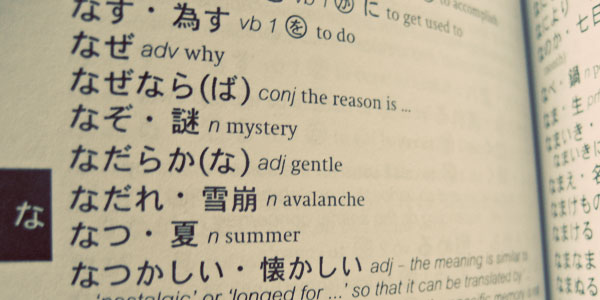
8A language Language Deficiency & The Asian American Identity

By Misa Shikuma

“He who does not know his mother’s tongue does not know where he is going.” – Dr. Jose Rizal

My first introduction to this quote was in preparation for a fourth grade play. At the time I just thought it was funny because I was unaware that “tongue” is a synonym for “language,” but it’s only now that I’m beginning to fathom its true meaning.

I’m half Japanese and half Chinese, but often mistaken for Korean. As fourth generation on both sides of my family, I’m more “American” than many of my friends but, regrettably, don’t speak either language. Instead I’m semi-fluent in French and Spanish. This gap in my cultural knowledge never used to bother me because I assured myself that I would learn them someday. I still haven’t, and now it makes me feel isolated.

I avoid making eye contact with Asian tourists because I know that look: the glint of recognition when they think they’ve found a kindred spirit. And we are kin, in a general sense, but in that moment I’m painfully aware that I can’t give them what they want. This exact situation has played out countless times and it’s always the same. If I’m too slow to look away they approach, only to utter sounds that carry no meaning for me. Sometimes the confusion on my face is obvious enough and they walk away, disappointed. Other times they stand there expectantly until I say, “Sorry, I don’t speak…” I try to look apologetic, and so do they, as they smile half-heartedly and sometimes shrug. I wonder what they’re thinking as they retreat.

I eat sushi as often as possible, annually receive money in red envelopes from my Chinese relatives and grew up on Hayao Miyazaki movies. Once I even went through a phase during which all I listened to was J-pop. I absorb the parts of my heritage that are easily within reach; in other words the superficial things, like an atheist celebrating Christmas. But reaping all of the gratification with none of the comprehension leaves me feeling like a poser.

Recently I moved to Paris where my new school, a mecca for international students, is predominantly Asian and my peers openly express shock at my language deficiency. Despite being regarded by most as “Asian” at home, now that I’m abroad I’ve suddenly become “American.”

It would be naïve to assume that learning more languages would suddenly make me feel “complete,” and yet years of living in cultural ignorance have built it up in my mind as an antidote to my identity crisis. While at home Asian Americans have carved out a unique communal niche, now that I’m five thousand miles away my cultural and national identities seem worlds apart. I feel less “Asian” than ever standing next to my classmates from China or Singapore, but identifying as “American” is an entirely new experience. Other expats say that it takes living abroad to fully appreciate patriotism, so I suppose embracing my roots will have to wait. For now I’m just another Francophile hailing from the land of the free and the home of the brave.

ABOUT THE AUTHOR: Misa is a freelance writer and film fanatic born and raised in Seattle. After graduating from college she left behind her second home, the Bay Area, to pursue her other passion: food. She currently resides in Paris where she’s training to become a pastry chef.


Thanks for rating this! Now tell the world how you feel - Share this on Twitter and on Facebook.
(Nah, it's cool; just take me back.)
MOODTHINGY
How does this post make you feel?
  • Excited
  • Fascinated
  • Amused
  • Bored
  • Sad
  • Angry

Categories:

Observations
Tweet

NOTE: 8Asians.com is a community, and we thank you for being a part of it. While we welcome and appreciate differences in opinion, if you're rude or you're promoting spam, we have a right to edit or delete your comment. Read our comment policy for more information.

If you see a comment that violates the 8Asians.com comment policy, you may flag the comment by mousing over the comment and clicking "FLAG."

Facebook Comments (Beta)

  • Bernie Lee

    Truth. I’m dealing with this as well. I’m first generation Korean American and my parents had heard that speaking Korean at home would hamper my ability to learn English and integrate well into society. When I went to college, I worked at the library where so many foreign students/professors and their families would approach me as someone who could more easily help them find what they needed. It was heart-breaking and embarrassing to half-understand what they meant but unable to formulate a response that they would understand. I was a French student at the time and sometimes inadvertently responded in French just because it wasn’t English.

    I’m going into graduate school studies and determined to recapture that lost part of my heritage and develop a connection to that which feels buried deep within me but longing to engage and fulfill.

    It’s been tough so far but every small bit of progress feels like a great victory. I hope you do take the time to learn the languages of your cultural heritage and find the joy that I’m finding in my journey.

  • http://twitter.com/dragonrider0ne Drew

    I hear ya. I’m first generation American of Chinese ancestry – Cantonese to be exact. I’m in my late 20s and often times I have an internal battle of when I’m around Cantonese speakers there’s this voice inside of me urging me to use the little Cantonese that I know.

    I’ve gotten reactions from “both sides” of the culture: White Americans/Europeans who realize that although I’m American that I’m different, and Chinese speakers who give me dirty looks whenever I try to speak Cantonese (true story!).

    What I’m trying to do now is to intergrate both of these sides in me while mainly focusing of what I want out of my life – independent of the fact that I’m a “Chinese-American” or “American” or “Wanna-be Cantonese that’s American” (or whatever). Hey in this day and age knowing multiple languages gives you a professional edge anyways right? Might as well relearn you ancestor’s language!

  • http://www.facebook.com/people/Ahmed-Sanchez-De-La-Cruz-Kim/58700922 Ahmed Sanchez De La Cruz Kim

    So true. You do get a different sense of yourself when you go abroad.

  • kaej

    So true. Both sides are surprised or dismayed when they discover I can’t speak the language of my face. Even I were to learn the language, there will still be something missing. Besides, I’d feel like a fraudster if I dared to try.

  • A_Lee

    The Asian / Asian-American divide. I’m on the other side, I’m that freak Asian who speaks perfect unaccented English, along with Chinese, and a decent amount of Japanese. (Just hold on, I swear I’m not bragging.)

    Here’s what I tell my AA friends: you’re haven’t done anything wrong. Not knowing the mother tongue is a reflection of your circumstance, not your character. You’re not a bad Asian, you’re an Asian-American. Honestly, I blame the parents. I see this all the time. I’ll meet some of the friend’s relatives or parents when they come into town, and they fall in love with me once they know I speak perfect Chinese. I’ll make polite small talk, but the question inevitably becomes “Why is your Chinese so good?”, and you have to tell them. Even if they don’t outright say it, the way their eyes light up, the way their hand gestures become faster drives home the point – we like your friend, and we like him because he speaks Chinese.

    What I would like to say to the parents, but would never dare, is that they are being unfair to their children. They chose to move to the US. They chose to raise kids here. They can’t expect their children to be fluent in Chinese, raised in America. Weekend Chinese school is a joke.

    So. That’s the problem. Obviously you’re not going to fix your parents – what’s the next step? You’ve got to choose how to build your identity. Some have no intention of being more culturally Asian. They just start walking towards mainstream America and never look back. That’s fine, and I respect that. I have a very good friend who married a white girl, I was a groomsman. It’s the life he wants. But I assume anyone reading this site wants to connect with their Asian heritage in some meaningful way. I’ve seen more successful and less successful ways of doing this. And there seem to be several tools people use.

    1. Asian pop culture. I thought the paragraph about Miyazaki and J-pop was quite insightful. I wrote a college paper about this, once upon a time. Basically, some AA’s use Asian pop are a cultural signifier to differentiate themselves from mainstream America. When I was going to college, the Asian-American cultural activities consisted of drinking Boba, playing DDR and Mahjong, and watching Asian movies and listening to Ayu. It’s easy, it’s effective, but it is superficial.

    2. Language acquisition. It’s hard, and there’s a good chance you’ll never be fluent. Even if you become fluent, you’ll have an easily detectable accent. Trust me. But there really is no choice. If you want to engage with your culture in any substantial way, you have to speak at some level. Preferably, you should be able to read it too.

    3. Social skills. There was a series awhile back about being able to tell Asians from Asian-Americans just by how they dress and walk. It’s true. The body language is different. If you want to get along better with your Asian relatives or Asian friends, try to notice the body language and social norms. Part of the reason the parents of my friends can sniff me out as an Asian (even if I’ve only spoken to them in English), is because I respond correctly to their non-verbal cues. I don’t speak a word of Korean, but the Korean parents have me figured out within two hours. I suppose I could try to ignore them, but it really is very hard. I’m Asian, they’re Asian and older then me, I really have no choice in the matter. That stuff is programmed deep.

    4. Mentality. Some Chinese-American in China said that the difference was that while she was always looking, always searching, always moving towards some goal, the Chinese were comfortable knowing exactly who they are, with no intention of trying to be anyone else. The idea that you can reinvent yourself is a Western concept. So many expats in Asia end in tears because they expected to be accepted the way foreigners are accepted in the West. Different societies, different rules. So just be yourself. If you want to learn Chinese or Japanese, good for you. If not, that’s just as good.

    Now, there are always going to be some Asians who consider it a betrayal and an insult that you aren’t trying harder to be more Asian. You can decide how to deal with that, but my advice is to ignore those assholes, unless they’re your relatives. Then you really should just grin and bear it, if you don’t want to embarrass your parents.

    I know this was long, I hope it didn’t sound patronizing.

  • zdrav

    My advice to Ms. Misa Shikuma,

    Own up to your most recognizable identity (that of an Asian) as much as possible. You will never “escape” your racial identity, no matter how many madeleines you make or how many Flaubert poems you memorize. The best thing you can do then is to try to make the world a place where being Chinese/Japanese is just as desirable as being French or American.

    And don’t be the faux-proud Asian who uses his/her heritage — “Exotic Asian Culture TM” — as leverage in trying to make him/herself more interesting in an exclusively all-white social circle.

  • APBrian17

    Just do it bro. Geez.

  • david0688

    To me, it’s all about give and take. You have to find a balance between your ancestral heritage and the heritage of America. I don’t believe it helps to go to extremes and live as if your family never left Asia.

  • mshikuma

    I wasn’t my intent to imply that I’m ‘escaping’ my heritage and racial identity. Instead what I wanted to express was how confusing it can feel being Asian American and lacking that tangible cultural tie of speaking the language – both at home in the US and abroad.

    Exoticism is never something I try to take advantage of, but as an expat it’s often projected onto me. What I had to cut out of the article was the number of times Parisians have greeted me with ‘nihau’ or ‘ohayo gozaimasu.’ It caught me off guard at first – not just because of my background but because at home many people would find that racist! I’m used to it now but it’s still kind of alienating.

  • KAMIKAZIPILOT

    The author’s story is one I hear all too often, especially amoung asians who grew up in a predominately non-asian environment. Here’s my take. I’m a 4th generation American of Japanese background. To me being Japanese isn’t too different from being Korean or Chinese in America. When I visit asia it matters more but I’m still different because I’m American. I grew up in Hawaii, where asian and polynesian culture dominate. I took japanese language classes in high school but don’t remember much and I’m not ashamed at all of not being able to speak japanese. It’s just my circumstances that result in my only being able to speak english. I mean do 4th generation European Americans (I know most are mixed) speak their original language? Very rarely.

    I don’t like bubble tea, sushi, most asian food, or JPop, KPop or many things commonly associated with asian americans. I like Indian, Mexican and Italian food. However, most of the people in my social circle are asians, both local and overseas. Sometimes they tease me about my interests but it’s all good. I won’t change just to accomadate people’s belief about what I’m supposed to be.

    When I go to Asia (mainly China) of course people are coming up to me speaking Chinese and most are shocked when I respond in English and say I can’t speak chinese. I’ve never had someone get upset or anything like that, just surprised. Besides if they can speak some English it’s a good conversation starter.

    Bottom line, never be ashamed of who you are or try to be something you’re not. You are who you are. If you want to learn your mother language good for you, but don’t feel embarrassed if you don’t and don’t let anyone put you down for it.

  • Rotaryknight

    I feel that many asian americans identify with this identity conflict. I barely know how to speak my language, it gets nerve racking at times, especially when speaking to the elders.

 
Google
Custom Search
Advertise on 8Asians
Recent Posts
  • Anime Review: Bamboo Blade
  • The Guillotines: Film Review
  • Anime Review: Psycho-Pass
  • Giveaway: ‘Man of Steel’ Prize Package
  • Report: Asian-American Subgroups Among Nation’s Poorest
  • Rurouni Kenshin Reboot
  • Product Review: Blackberry Z10
Recent Comments
  • timat8asians: The ones who know I'm gay don't even ask if she's adopted. It's only the ones who don't know I'm gay that ask, generally complete... – Asian American Dad: Is Your Daughter Adopted?
  • gwumpycat: You're gay and you have a kid. Of course people are going to assume that your kid is adopted. I don't get the outrage here. – Asian American Dad: Is Your Daughter Adopted?
  • gwumpycat: If you want to know more about angemon, google "David Futrelle" - that's his real name. – Mark Twain - Asian American Activist
  • gwumpycat: I noticed the same thing. If you Google "angemon3690" you can find his Reddit account, which links to his blog. What a douche. – Mark Twain - Asian American Activist
  • Confuse_Us: Yes, everyone is a potential customer - even minorities with much less spending power. – Report: Asian-American Subgroups Among Nation’s Poorest
  • LTE2: It would serve no useful purpose. . I'll quote the undertaker from the movie The Magnificent Seven: "I treat every man the same, another potential... – Report: Asian-American Subgroups Among Nation’s Poorest

APA Events

  • Feb 21: (San Jose, CA) New Stories from the Edge of Asia: This/That
  • Apr 26: (New York, NY) Front Row: Chinese American Designers
  • May 9: (Los Angeles, CA) East West Players presents CHESS
  • Jun 6: (San Jose, CA) Questions from the Sky: New work from Hung Liu
  • Jun 19: (Aptos, CA) LYF Camp 2013: “Choose Your Own Adventure”
  • Jun 23: (San Jose, CA) San Jose Taiko Public Workshop
  • Jun 29: (Los Angeles, CA) Makoto Taiko Annual Concert
  • Jul 13: (San Jose, CA) San Jose Obon Festival 2013
Add Your Event
www.8asians.com

Staff and Contributors

  • Editors
  • Jocelyn "Joz" Wang

    Editor-in-chief/CEO
  • Moye Ishimoto

    Editor-at-large
  • Contributors
  • Tina Tsai

    LATEST POST: Anime Review: Bamboo Blade
  • Koji Steven Sakai

    LATEST POST: Hip to be Asian American?
  • Tim Chiu

    LATEST POST: Report: Asian-American Subgroups Among Nation’s Poorest
  • Shako Liu

    LATEST POST: Letter From Pyongyang: More Like A Home Video
  • Mitchell Dwyer

    LATEST POST: Film Review: ‘Masquerade’ (2012)
  • akrypti

    LATEST POST: Meet the 8Asians: Shako
  • Xxxtine Miguel

    LATEST POST: The Guillotines: Film Review
View all Authors

Other Links

  • Get your very own 8Asians merchandise here!
Advertise | Contact Us | Twitter | Facebook | Tumblr | Privacy Policy