
8 Asians


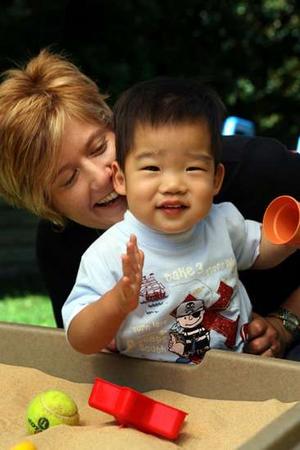
leannelehrer_narrowweb__300x4500For those of us who were not adopted, we can only begin to imagine what it would be like to be raised in a culture completely different from the one we were born into, but this may give us some insight: a new study by the Evan B. Donaldson Adoption Institute finds that among first-generation adopted South Koreans, 78% of respondents considered themselves white or wanted to be white when they were children. The study was based on the responses of 179 SK adoptees with two white parents.

South Koreans make up the largest group of transracial adoptees in the U.S., and they comprise an estimated 10% of the total South Korean population here. The first generations of adoptive parents were told to assimilate the children into American culture without regard for the children’s native culture; as a result, older South Korean adoptees tended to have the mindset of being white or wanting to be white.

Nowadays, adoptive parents are encouraged to maintain ties to their adopted children’s native background. They send their kids to “culture camps” to learn more about where they came from. They take the kids on a family trip to their native country. They enroll them in classes to learn their native language. The adoption mindset definitely shifted in the right direction by encouraging kids to learn more about where they came from — instead of avoiding it.

What next?

  • Subscribe to this feed
  • Leave a comment

Other posts you may be interested in:


  • anna123
    On a more serious note, the "Stolen generation" of Australian aboriginals were also treated in this way, and it destroyed their community. For Asian adoptees, adoption is much better than being raised in a orphanage, but if you have hundreds of thousands of Asian people who do not identify socially or politically as "Asian" instead value whiteness and place whiteness on a pedestal,wished they were white (according to the article), and probably want to marry only white because they are ashamed or do not value other Asians or being Asian(my suggestion) then thats got to be "unhealthy" for a community.
  • I wouldn't know what it's like living as an adopted South Korean child in a predominantly white neighborhood. It must be hard nevertheless, growing up knowing that you weren't born into the family, and being surrounded by white people who pick on you because of the color of your skin. There's the need to fit in with peers.
  • K-Rage
    I'm a transracial Korean adoptee and I identify as Korean/Asian American, not white. No, I'm not ashamed of my heritage. I don't date whites only. I don't wish to be white. So Anna, your suggestion is very very very generalized. Some may fit your description of feeling shame or devaluing Asians and Asian culture, but not all adoptees do. I bet that not all of the adoptees who identified as white feel that way either. Studies ask certain questions and have various techniques in finding an answer and sometimes that doesn't include every factor. It's an individual experience, as it is for any group of people anywhere, so making broad assumptions is what's unhealthy.
    And Simon, even though I lived in a predominantly white neighborhood, the majority of racist comments I ever received came from someone who was non-white. So negativity can occur from anyone.
  • js718
    hmm, there are already a lot of insightful articles regarding adoption including some on this new study. I understand as an AA blog you want to cover all aspects of the community but it's clear your knowledge of intnl/ir adoption is limited based on the sweeping generalizations you've made after reading a few lines of this study. At the very least please change the title of the article.
  • LindaChan
    Hi JS718. Can you clarify what the sweeping generalizations are--so I know, and so other readers know? It might even be helpful if you write a guest post on this topic--I gather from your comment that you may know things many of us don't about international/transracial adoptions.

    As for the title of the article, I prefer to keep it, as I make it clear that the three-quarters statistic is based on the results of a particular study (hence the first two words of the title), and not a general comment on all SK adoptees. Take from it what you will, though.
  • js718
    Well, "78% of respondents considered themselves white or wanted to be white when they were children." does not equate to your title, "New Study: Three-quarters of South Korean Adoptees Identify As White."
    A key part of the first quote is, "when they were children." I do not believe it was the intention of the study to claim 78% of adoptees actually identify as white, that would be false. The point was to show that due to social pressures of living in a homogeneous, most commonly white environment being different was often an issue for adoptees. As I imagine any POC can relate to, if you're being discriminated against because of your race then you would want to become your oppressors race in order to end it. As adults they realize this can not be changed thereby not identifying as white.

    Most people who follow the adoption community agree that adoption agencies and public knowledge still has to come a long way to go (in Korea as well as America). I felt your last paragraph tries to shine a positive light on Korean adoptions. That bothers me a bit because it continues to ignore the real problem. What should be taken from this study IMO is not, "The adoption mindset definitely shifted in the right direction by encouraging kids to learn more about where they came from" but rather lets focus on ending international adoptions from Korea and work towards a system where not so many babies are put through the same thing over and over.
    And it's not that I disagree with teaching adoptees about their culture. It's just that a study shouldn't have been needed to decide that. I hope all adoptees have the opportunity and courage to learn their cultural heritage and have pride in their roots.
  • Shelise
    It really isn't surprising that these Korean adoptees have or are identifying as white. They have white parents, probably grew up in a predominantly white town and no one, especially adoption agencies, were telling the parents that this is a problem. That isolating kids of color in white communities hinders their racial identity, affects their self esteem and alienates them from their cultures of origin. The real question is why is this still happening? Why are we as a society still allowing kids of color to grow up in such racial isolation? There are some Korean adoptees who are already in their 50s and we are just now trying to figure out the best way to help these kids stay connected to their birth culture? I stop here, but just know that this study leaves a lot more to be said about international/transracial adoption.
  • Linda
    Hi again JS.

    You make a valid point on the title clarification. I stand by it, however, because a title can only include so much. I believe that it is important to include just enough to entice the reader for them to read the rest of the story. And taken by itself, the title can stand as is because for a considerable period of time, for even part of their formulative years, these adoptees adapted to a very powerful mindset--that of feeling white, or wishing to be white. We shouldn't diminish the impact of this mindset by saying "well it happened when they were children."

    I disagree with your point about focusing on the changing mindset of SK adoptions. While I agree that there is a huge problem with what causes so many unwanted children to be born and put up for adoption, the fact of the matter is, these children are out there. I applaud efforts to search for the root of this problem, and solutions as well. But this is a complicated issue and it'll take a long time. But for now, with so many families wanting to adopt, I am glad that at least the mindset of "let's try to preserve their native ancestry" is becoming prevalent. I think some parents out there overdo it, forcing culture camp and language lessons on their kids, but I do believe they mean well in their efforts.

    I hope I addressed your major concerns. I do think this is a topic that deserves continued discussion.
  • Right...I sure don't identify myself as white, even though I was raised in a predominantly white environment. I knew I was different. People change, and I don't feel the same way about white people and culture as I did growing up.
    One of the problems with international adoption is that the adoptee is rarely given the chance to speak. It's mostly the (usually) white parents, or non-adopted POC's that, let's face it, don't know a whole lot about adoption, but think they do, because apparently being a POC automatically makes you enlightened to such a subject.
    Adoption is a touchy subject for many, but for those who are adopted, there isn't much they can do (or could have done) about it. They just need to embrace their culture and heritage of birth. I would recommend getting rid of the European-sounding name and go back to the birthname.
  • JC
    I believe its true that most Asian American kids, adopted or not, would rather be white due to the cultural brainwashing of white supremacy. They sense white privileged and they wish they'd have it. Heck, When I was 9 I selected a white name as my pseudonym writing to penpals. Don't tell me you guys didn't do something simliar, either acting white or wishing to be white. If someone like me who grew up surrounded by Asian family and friends in a city with large Asian population can feel this way, I can't imagine what kind of racial hell these adoptees have to go through.

    Screw this crap. I'm not raising my kids in this environment. My kid will be Asian growing up in Asia and not have to deal with all these Asian-American mind-fuck.
  • Jay
    Newsflash for Korean children YOUR NOT WHITE!!! These delusional adopted children who grow up with white parents live in denial of their ethnicity. Some grow up with racist ideas looking down on African Americans, Latinos and even other Asians. . They will only associate with Caucasions . People tell them how special they are. They grow up to be arrogant and unplesant people. This is true of some Korean adoptees.
  • @Jay
    It's also true of some non-adopted Asians as well.
  • js718
    cosign invasion
    i think adoptees and non adopted asians share a lot of the same issues. regardless of being adopted or not we're all asian american so i think that there should be an understanding and unity between the communities
    jay, how may adoptees have you actually met and gotten to know? Did you even read the study before you started to make your insensitive comments.
  • Jake
    K-Rage wrote:

    I’m a transracial Korean adoptee and I identify as Korean/Asian American, not white. No, I’m not ashamed of my heritage. I don’t date whites only. I don’t wish to be white.


    ^ Brother, I'm wonder if there is a gender correlation with this.

    We all know that white people practically do everything they can to welcome Asian females into their midst with open arms while sweeping aside Asian males, so wouldn't this apply doubly, or three-fold with Korean-adoptees trapped in an all-white environment?

    Won't years of aggregate slights and subtle suggestions that they're not really wanted or welcome - both from people in everyday life and by the media - eventually make it more likely for a MALE KOREAN ADOPTEE to reject his initial self-identification with Caucasians?

    I base this guess on a widespread tendency in all patriarchal cultures (which is the majority on Earth) to align along the race of the incumbent males, and Asian males obviously are not compatible with that unspoken (and un-PC) M.O. here in America, which is a decidedly white, patriarchal society.

    And in contrast, won't a lifetime of acceptance by white males (basically as "exotic pussy") and by white females (as the "cool, different oree-ennul gurlfriend") make it more likely for a female Korean adoptee to self-identify as white?

    And even though they grow up and become wiser to those dynamics, won't they feel a greater subconscious, convenience-driven impetus to retain that "honorary white" status, even though they consciously know that they're only being accepted as a racialized sexual & social commodity by their white male/female peers?

    I know this can't be the case, across the board - common sense obviously dictates that, as the experiences of individual Korean adoptees must be as diverse as their individual personalities and life-stories. So please don't take too much offense - I'm just wondering if this dynamic could possibly exist in some or a significant number, or even a majority of Korean/Asian female adoptees.

    I'm extremely curious, as a Korean-American person. I'd love it if some of the adoptees here could share some of their insights with me.
  • Jake
    ^ @ the start:

    "Brother, I'm wondering..."

    Man, I hate typos. More than I hate root canals.
  • Man, I always hate the idea in these discussions that culture is invariably tied to race--that somebody raised by an American white family from infancy is still Korean 4 life. I mean--when Invasian says "[t]hey just need to embrace their culture and heritage of birth" I cringe. This kind of thinking is only supportable if you think culture is something genetic, passed down through the germline.

    But it isn't! Culture is something completely plastic. And these racial categories we use are primarily cultural markers, and thus are plastic as well. Look--Barry O identifies as black, Tiger Woods does not, Scott Fujita thinks he's Asian, and I can't begrudge these people their chosen identifications. Likewise I don't see the point in telling someone raised by white people that they're doing something wrong by identifying as white. Obviously by the same token, Invasian, no one should tell you you're doing something wrong since you indentify as KorAm. But these are private, personal decisions and I don't see what is to be gained by insisting people go one way or the other.
  • JC
    Don't be so damn harsh on the adoptees - they didn't choose this life and they didn't have a choice being surround by white privilege and a pop culture of white supremacy. WE ALL SUFFERED THE SAME WAY, adopted or not. They had it worse because at least we have our own little circles of Asian friends and family to escape to, they had nothing but more examples of whiteness at home. If they were unfortunate enough to be raised by actual racists, then we can only imagine the suffering they have to go through. If you're Asian and you grew up in the West, there is going to be a time in which you've mentally succumbed to the brainwashing. For some folks, it lasts for their entire life - I'm willing to bet you all know an Asian bother or sister who date only whites and wish they're white themselves. That has nothing to do with bring adopted but have everything to do with growing up in a white supremacist society. So get off the adoptee's back - we're all in the same damn boat together.
  • Jake
    It would help if some of these messages were actually directed/addressed toward a specific poster (s). Come on, people. I have no idea whom the above two posters were talking to.
  • anna123
    Youre right, jc, but the article isnt criticising adoptees, rather the white supremacist culture that raises them...


    Even for westernised asians/ AAs, Azns, still face the same forces , orientalised and "othered" in white society any way, as jc said, all suffer the same boat.
  • JC
    Sorry, my message was directed at Jay, who was dissing the adoptees. Only my first comment was directed toward post itself. I personally know an adoptee who tried to fit in with our Asian group in college but was constantly being reminded how "white" he was. The poor guy can't fit in anywhere. So i get a bit overboard when people like Jay start hurt our own brethren without facing the real issue of white people fucking with ours and all other non-white people's mind.
blog comments powered by Disqus