

Over the past year or so, there’s been a growing increase of Hollywood films and major television shows using Asian celebrities from their Asian homeland. From Rain in Ninja Assassin,Jackie Chan in The Karate Kid, Charice in Glee, and now Jay Chou in The Green Hornet, one has to wonder whether the usage of so many imported Asian stars is hurting the bountiful amount of Asian American actors who are already working.
It can be argued that the lack of Asian American actors in Hollywood films is preventing the mainstream media from differentiating the subtle yet distinctive difference between Asians and Asian Americans. There are already a lot of talented actors here in America that can be used, so why must Hollywood use Asian actors from outside the area?
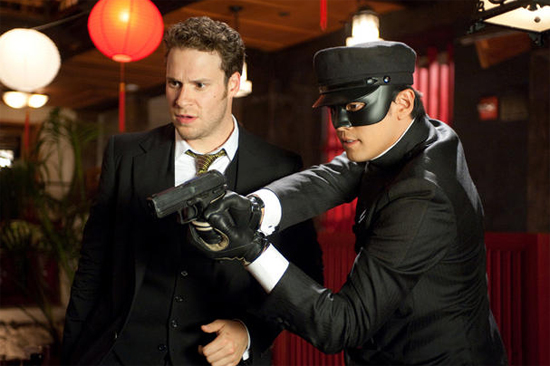
The answer: business. As long as Hollywood is using Asian actors PERIOD, it’s better than not using them at all (ie. The Last Airbender, Prince of Persia: Sands of Time, and the upcoming Genghis Khan). Hollywood is all about making a profit, and by using notable Asian actors who are already a success in their respective regions, Hollywood can rake in more revenue when these films are released overseas. We, as Americans, have yet to come to the point to fully recognize the difference between Asians and Asian Americans. Until that day comes, I would rather see an Asian actor being used than not. I would rather see Jay Chou play Kato than have Will Smith or a non-Asian play Kato.
Ten or twenty years ago, we wouldn’t even see Asian actors play notable roles of importance in Hollywood. The road has been long and winding as we had to deal with roles that were stereotypical and offensive to the extreme, and others where Asians weren’t used at all for Asian roles. While the road is still not without obstacles and dead ends, we are seeing changes happen. I think it is important we recognize the progress that we have made, rather than only point out everything that is neglected or missing. Although we are by no means done with progress to our fullest potential, it is crucial that we think positively and creatively. This is by no means knocking protests over particular movies (as Aly Morita have done for The Karate Kid and Racebending for The Last Airbender) as these protests bring crucial awareness to the issues at hand, whether people agree with it or not.
I got this feeling of excitement and hope as I watched The Green Hornet trailer and read the interviews with director Michel Gondry and star Seth Rogen. I admired how they are treating the character of Kato seriously and how they acknowledge that he is the real superhero between the duo. I love how they are making him a fleshed out character with actual importance, rather than a sidekick or an afterthought.
With that and Ken Watanabe in talks to direct a film about the 442nd regiment, these positive examples are things that we must cherish and use as reminders that we must continue to work hard, hustle hard, and to never, ever give up.
NOTE: 8Asians.com is a community, and we thank you for being a part of it. While we welcome and appreciate differences in opinion, if you're rude or you're promoting spam, we have a right to edit or delete your comment. Read our comment policy for more information.
If you see a comment that violates the 8Asians.com comment policy, you may flag the comment by mousing over the comment and clicking "FLAG."
funny how asian men pin their hopes on bruce lee and asian women make a living as prostitutes. funny funny funny.
I think these are all critical things we have to keep in mind. As much as I appreciate this article I am the type to be more "realistic" let's say, and I do agree that there is a significant difference between Asian actors and Asian American actors.
I think it's plain to see that a lot of these casting choices of Asians instead of Asian Americans is, in addition to money/international circuits, is because Asians are the exotic, they are more interesting. They are not American. They are some interesting Other that Americans are to be fascinated by. Whereas, Asian Americans, are too Americanized (without their accent, etc.) to make an interesting token addition to a story. Like you said, they are "risks". And although it is nice to see that Kato is played by an Asian and not some white actor pretending to be Asian/Bruce Lee. I feel that in some ways, it's a bit painful to see that Bruce Lee's legacy as a groundbreaking Asian American entertainer hasn't really been honored. The bottom line is, there are so so so many talented Asian American actors who could have done this role and other roles, yet they keep getting denied the opportunity because they lack that essential "Asianness"
It is sad that Hollywood could have an Asian American woman like Anna May Wong star in numerous films in the early 20th century (even if they were stereotypical in one way or another), yet almost a century later there are very little Asian stars and about 0 Asian American stars (save for Parry Shen in BLT).
This is a great article though, because we do need to be reminded of how much progress we have made despite persistent discrimination. When I watched the Green Hornet trailer it made me so incredibly happy. I have been dying to see an Asian as a heroic superhero character in a film for a really really long time...even if he is not Asian American. However, it does feel like we are moving backwards sometimes. How could it be that something as great as 2002 Better Luck Tomorrow could be so widely distributed and then we never saw anything like it again after that??? I hope that Asian AMERICANS and their Stories (not just karate, kung fu, etc.) start to come out in more numbers in the mainstream sometime in the near future....
Unfortunately, yeah, we're gonna have to tolerate rubbish like "Forbidden Kingdom" to get to wherever we need to be..
And what's up with having a random unknown white kid as the main hero of the story? The top billing was Jackie Chan and Jet Li but this kid comes out of nowhere. SHEEESH. Okay, rant done.
Good point on the business part that leads to the casting of Asian actors that have box office clout and recognition in Asia.
I honestly can't state that the upcoming "Green Hornet" comes across as progress. It's just a film that I do't want to see even on DVD.
I get the point that having Asian actors (at the expense of Asian American actors) is better than not having them at all, but does it mean we have to tolerate rubbish like the "Forbidden Kingdom"?
@jozjozjoz - I would say an earlier film, "The Last Emperor" (1987) was probably more groundbreaking (but less commercially successful) and definitely intended for Western / American audiences - since the main dialogue was all in English, the director Bernardo Bertolucci was Italian, English, Chinese and American actors and actresses, etc.
Yes, you do make a good point that those actors in CTHD did get a lot of their subsequent success.
In general, that's probably true. But I think it's more complicated than that. I think the move away from the more gritty Hong Kong style of the 70s and 80s to a more polished visual look is eve more important than the "non-Asian" themes you allude to. The sort of effortless effects like the bamboo forest battle etc were there to impress audiences--"Hey! Look at what we can do!"--and is meant to be a single implying: "Asian cinema has arrived and is ready for bigtime."
Personally, there's nothing particularly "non-Asian" about the themes in CTHD. It wasn't outrageous enough to be considered very new anyway. Plenty of Chinese folk legends deal with stuff like that and plenty of martial arts novels--including a few rather popular and famous ones also touch on more interesting topics in any case.
I think people tend to over simplify the cultural differences between east and west, and want to boil it down to some very obvious and digestible points, when it's more complicated than that. I don't think 'unrequited love' is all that unique to Western art/cinema/literature.
On the other hand, I do think many Westerners and my American friends don't seem to be too cognizant of other issues not often discussed by Western media, such as Chinese nationalism, and its more subtle cousin, Han superiority and chauvinism. Those who are aware of it have a surprisingly shallow take on it...
This is something that CTHD hardly even touches, while more conventional Eastern cinema/television (even in the most mundane way by HK television) regularly deals with.
No, CTHD wasn't explicitly intended for American audiences-- but Ang Lee's style of filmmaking broke a lot of "rules" for Chinese cinema, opening it up to being more Western. Lee himself talked about some of the themes of the movie which were very "non-Asian" like all the unrequited love business and a lot of "talking about feelings."
My point remains that CTHD was released a decade ago and there was a direct correlation between the success of that film and its Asian actors to getting more prominent (English-speaking) Hollywood roles in the subsequent years.
@jozjozjoz - "But the film was never targeted to Asian markets at first-- it was initially intended to appeal to American audiences."
I don't know about that - any film that requires dubbing or sub-titles is *definitely* not targeted towards American audiences. American audiences are notoriously turned off in general by films NOT in English. The success of "Crouching Tiger, Hidden Dragon" was a nice surprise for the film studio. As opposed to Memoirs of a Geisha - which was all in English.
Another good blog Edward. I'm glad you pointed out the business aspect of Hollywood and to be honest, I can hardly blame anyone who's investing millions and millions of dollars to try to assure themselves a financial return, although not at the expense of the Asian race. Guys like Jackie Chan and Jay Chou are used for their name (they earned it) and have some international appeal vs. say Sung Kang or Michael Idemoto (I love them but lets be serious). However, when they start Airbending us than yes, boycotting and awareness is exactly what it takes to fight their armament of cash.
There ARE examples of Asian Americans having "leading heroic roles" going back more than a generation. Everyone knows the success of the original Karate Kid was because of Pat Morita's Mr. Miyagi.
And for the record, Pat Morita got second billing for the original KK movie, but got TOP billing in the subsequent sequels. We know they weren't as successful as the original but the fact that there were THREE sequels shows you something.
I, too, am happy for small victories. I am merely pointing out that this isn't anything "new" as you intimated in your opening line.
I'm talking about Hollywood films where the FIRST name billing is an ASIAN person. While there are Hollywood films that have Asian stars in the top leading position, only a few of them are those that aren't dependent on martial arts.
Progress doesn't happen overnight and while I would rather have Asian Americans be on the big screen 1520% more often, I am taking each small victory as a stepping stone to where we can truly be.
I also want to point out that no one is suggesting that it's better to have a non-Asian in a role that could go to an Asian (American or not). I'm just saying that people think it's great "progress" to see an Asian face in a role that could/should be taken by an Asian American-- and the fact is that it's not that simple.
If the role is by definition something that either requires and Asian actor (who has an accent) or Asian American (who can play an accent), for instance, then let's think again about these roles.
I don't think this is just about audiences "accepting Asian faces." It's about the roles and opportunities that are available to Asians & Asian Americans alike.
I just want to point out that this is not a "year long" trend, as you stated at the top.
This has been going on for well over a decade. 'Crouching Tiger' was an "Asian" film, so it was understandable why they used well-known Asian actors. But the film was never targeted to Asian markets at first-- it was initially intended to appeal to American audiences. The success of this film catapulted Asian actors like Michelle Yeoh, Zhang Zi Yi, Chow Yun Fat, etc. to even greater international success.
The side-effect was that a number of the most prominent roles following that were their's. See Memoirs of a Geisha, Rush Hour, Pirates of the Caribbean 3, etc, etc.
I don't agree that it's as simplistic as getting "to the point where mainstream audience members can get comfortable with Asian faces in the silver screen, then we can bring in our amazing Asian American friends."
What Hollywood likes is NOT taking risks. And by not giving Asian American actors/actresses because Asians are taking those same roles means that Asians are the "sure thing" and the Asian Americans are the "risks."
Feb 16: Adam WarRock and Kirby Krackle: West Cost Tour Dates!!!
Feb 17: (Los Angeles, CA) All My Sons
Feb 18: (Stanford, CA) Stanford’s 16th Listen to the Silence Conference
Feb 25: (Los Angeles, CA) Past Present I Future Imperatives: Queer Space Time
Mar 3: (New York, NY) Vong Pak’s ‘Electric Shaman’ Concert
Apr 30: (Sacramento, CA) California Asian Pacific Islander Policy Summit 2012: iAdvocate