
8 Asians

  • About us
  • Write for 8Asians
  • Advertise
  • Contact
  • Suggest |
  • Podcast
  • Events
  • GASP!
  • POP 88
Pete Hoekstra’s Offensive Anti-Asian Super Bowl AdPete Hoekstra’s Offensive Anti-Asian Super Bowl Ad
Jeremy Lin Shows He’s Just What The Knicks NeedJeremy Lin Shows He’s Just What The Knicks Need
Asian Men Have The Highest SalaryAsian Men Have The Highest Salary
What I Learned From Posting A Dragon Lady Personal AdWhat I Learned From Posting A Dragon Lady Personal Ad

LA Japantown to become KoreaJapantown?

By Moye | Monday, June 2, 2008 | 29 Comments

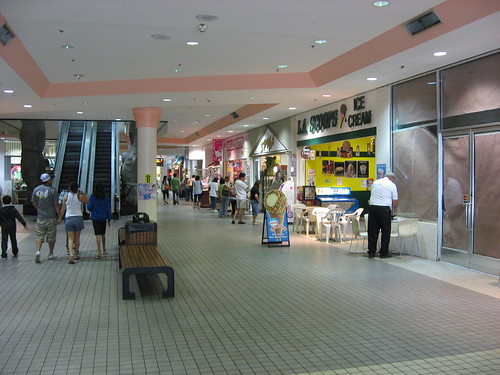
1243875412 735cb1b9d6 LA Japantown to become KoreaJapantown?

LA Business Journal posted an article today about the influx of Korean business owners snatching up property in the aging and not quite dead Little Tokyo neighborhood in Los Angeles.

Most recently, the Little Tokyo Shopping Center, which I can say is probably the largest retail-related building in the area, was bought by Korean-American investors.

So what’s next? While it’s not new that non-Japanese people and businesses have taken stock in Little Tokyo, this will be the first big development aimed at the Korean community who have been moving into the area.

Their plans call for a renovation of the shopping center to accommodate new tenants in three anchor spaces: a Korean market that’s about 30 percent larger than its counterparts in Koreatown; a full-service Korean spa with various herbal steam rooms; and an electronics retailer.

This is a little sad to me. The Mistuwa grocery store (previously Yaohan) has been a staple for the Japanese American community in the area. For as long as I could remember, my grandparents, parents and occasionally me (but only for Japanese pastries because I’m fat like that), have frequented the shopping center for all of their cooking/food needs. Granted, we could most probably do the same with a Korean market, but there’s nothing like having a giant Japanese version of Vons in the neighborhood.

Usually, developments that encroach upon Little Tokyo make me mad — but what can you do when it helps foster another (way larger) Asian community? To me, it’s such a historical area and further proof that the Japanese American population has been around for ages. I know there are other better Japanese neighborhoods around Los Angeles, but where else can you walk around a place where fellow Asians have been frequenting since the early 1900′s?

It’s just another sign that the Little Tokyo as we once knew it has slowly been dying away. Sad… but I hope they share the Korean BBQ.

(Flickr photo credit: Steven Williams)

MOODTHINGY
How does this post make you feel?
  • Excited
  • Fascinated
  • Amused
  • Bored
  • Sad
  • Angry

Categories:

Current EventsFood & Drink
Tweet

NOTE: 8Asians.com is a community, and we thank you for being a part of it. While we welcome and appreciate differences in opinion, if you're rude or you're promoting spam, we have a right to edit or delete your comment. Read our comment policy for more information.

If you see a comment that violates the 8Asians.com comment policy, you may flag the comment by mousing over the comment and clicking "FLAG."

Sign in
Livefyre logo
  • Comment help
  • Get Livefyre
Post comment as
twitter logo facebook logo
Sort: Newest | Oldest
Sam Stew

Dear Sirs:

The declining status of the "Japantowns" in both LA and S.F.
are quite obvious from the economic facts of the late
1980's to 1990's.

The average Japanese manufacturing wage has gone
exponentially up from post-WW II (1941 - 1945),
near starvation wages, up to y. 2000 $27.50 [US $/hour],
even exceeding the average US manufacturing wages of
y. 2000 $26.50 [US $/hour] (only exceeded world-wide
by Finland at y. 2000 $28.50 [US $/hour]).

While the post-Korean War average manufacturing wage
has gone up from near 'starvation wages' up to y. 2000
about $16.50 [US $/hour].

The post-Chairman Dung Shou Pang, PRC manufacturing
wages are at y. 2000 $0.50 [US $/hour].

The huge 1960's to 1980's Japanese trade deficit with
the US, has slowly shifted during the late 1980's,
to the lower average manufacturing
wages of S. Korea, and also during the mid-1990's
to 2000's to the PRC. In y. 2007, Japan was at
about 'balanced trade' with the US, only exceeded
by annual 'balanced trade' between Canada and the
US.

The quite massive [US $/year] US Asian trade deficits,
once in the 1960's - 1980's, going to Japanese banks to
re-cycle in the US, are now going to the booming S.
Korean banks, and the PRC opening bank branches
in the US. Japan thus went through a 17 year
recession from 1990 - 2008, itself having to
'export manufacturing labor' to Malaysia, and then
to the PRC, to stay cost competitive with 'Made in
Japan' exports from Japan.

The economic impact from the above,
has 'trickled down' to the Japantowns
in LA and S.F., plus the sansei and
yonsei American-Japanese have chosen
not to live in the Japantowns of their
ancestors, but, like to visit repeatedly
to refresh their history and culture.

In order to keep the 2000's LA and S.F. Japantowns
a highest priority, historic and cultural jewels, and also
economically viable to serve future generations of
American-Japanese, I think it is rational to convert
them to "Pan-Asian Centers: Japan, S. Korea, PRC,
and Asian-Pacific Islander and other Asian such
as Philippino", "A Taste of Asia Centers," or "A
Touch of Asia Centers," making the Japanese
National Museum in LA, the focal point and anchor
of the 'Japanese corner' of the 'Pan Asian Center.'

Txs,

Sam Stew
A Concerned Citizen

share
  • spam
  • offensive
  • disagree
  • off topic
Like
Sam Stew

Dear Sirs:

The declining status of the "Japantowns" in both LA and S.F.
are quite obvious from the economic facts of the late
1980's to 1990's.

The average Japanese manufacturing wage has gone
exponentially up from post-WW II (1941 - 1945),
near starvation wages, up to y. 2000 $27.50 [US $/hour],
even exceeding the average US manufacturing wages of
y. 2000 $26.50 [US $/hour] (only exceeded world-wide
by Finland at y. 2000 $28.50 [US $/hour]).

While the post-Korean War average manufacturing wage
has gone up from near 'starvation wages' up to y. 2000
about $16.50 [US $/hour].

The post-Chairman Dung Shou Pang, PRC manufacturing
wages are at y. 2000 $0.50 [US $/hour].

The huge 1960's to 1980's Japanese trade deficit with
the US, has slowly shifted during the late 1980's,
to the lower average manufacturing
wages of S. Korea, and also during the mid-1990's
to 2000's to the PRC. In y. 2007, Japan was at
about 'balanced trade' with the US, only exceeded
by annual 'balanced trade' between Canada and the
US.

The quite massive [US $/year] US Asian trade deficits,
once in the 1960's - 1980's, going to Japanese banks to
re-cycle in the US, are now going to the booming S.
Korean banks, and the PRC opening bank branches
in the US. Japan thus went through a 17 year
recession from 1990 - 2008, itself having to
'export manufacturing labor' to Malaysia, and then
to the PRC, to stay cost competitive with 'Made in
Japan' exports from Japan.

The economic impact from the above,
has 'trickled down' to the Japantowns
in LA and S.F., plus the sansei and
yonsei American-Japanese have chosen
not to live in the Japantowns of their
ancestors, but, like to visit repeatedly
to refresh their history and culture.

In order to keep the 2000's LA and S.F. Japantowns
a highest priority, historic and cultural jewels, and also
economically viable to serve future generations of
American-Japanese, I think it is rational to convert
them to "Pan-Asian Centers: Japan, S. Korea, PRC,
and Asian-Pacific Islander and other Asian such
as Philippino", "A Taste of Asia Centers," or "A
Touch of Asia Centers," making the Japanese
National Museum in LA, the focal point and anchor
of the 'Japanese corner' of the 'Pan Asian Center.'

Txs,

Sam Stew
A Concerned Citizen

share
  • spam
  • offensive
  • disagree
  • off topic
Like
Fumio

San Francisco Japantown is under a new ownership. We propose design ideas for the future Japantown. www.projectjt.com

share
  • spam
  • offensive
  • disagree
  • off topic
Like
Fumio

San Francisco Japantown is under a new ownership. We propose design ideas for the future Japantown. www.projectjt.com

share
  • spam
  • offensive
  • disagree
  • off topic
Like
sc

Hmm...not really a big deal just look at Chinatown in LA, many stories are now Vietnamese or Vietnamese/Chinese owned. I mean the only people living in the Chinatown are are recent immigrants and the elderly like my grandmother. I rather see the area occupied by other Asian Americans rather than it be shuttered due to changes in demographics.

This is really nothing new demographics change all the time, I'm sure many Japanese have moved to Torrance/Garenda that used to live/frequent JTown, just like Chinese have moved to SGV, Rowland Heights area and Irvine, while Koreans from KTown to Diamond Bar, Garden Grove, Cerritos.

share
  • spam
  • offensive
  • disagree
  • off topic
Like
sc

Hmm...not really a big deal just look at Chinatown in LA, many stories are now Vietnamese or Vietnamese/Chinese owned. I mean the only people living in the Chinatown are are recent immigrants and the elderly like my grandmother. I rather see the area occupied by other Asian Americans rather than it be shuttered due to changes in demographics.

This is really nothing new demographics change all the time, I'm sure many Japanese have moved to Torrance/Garenda that used to live/frequent JTown, just like Chinese have moved to SGV, Rowland Heights area and Irvine, while Koreans from KTown to Diamond Bar, Garden Grove, Cerritos.

share
  • spam
  • offensive
  • disagree
  • off topic
Like
Bo

A 'Little Tokyo' sprouted up around 8th St and 3rd Ave in New York during the last decade to support the community of young Japanese pseudo-artists taking up residents before returning to Japan after a couple of months/years. There is a larger Japanese community Ft. Lee, NJ and a HUGE Japanese grocery store.

share
  • spam
  • offensive
  • disagree
  • off topic
Like
Bo

A 'Little Tokyo' sprouted up around 8th St and 3rd Ave in New York during the last decade to support the community of young Japanese pseudo-artists taking up residents before returning to Japan after a couple of months/years. There is a larger Japanese community Ft. Lee, NJ and a HUGE Japanese grocery store.

share
  • spam
  • offensive
  • disagree
  • off topic
Like
Grace Chu

OMG joz we were writing our responses at the same time and I didn't see yours until today. So (belated) JINX.

share
  • spam
  • offensive
  • disagree
  • off topic
Like
Grace Chu

OMG joz we were writing our responses at the same time and I didn't see yours until today. So (belated) JINX.

share
  • spam
  • offensive
  • disagree
  • off topic
Like
John

Huh, I think the Japantown in SF is still a Japantown. Maybe I am oblivious, but I don't know of any Korean or Chinese restaurant or stores in Japantown SF.

I don't think that many Japanese (relative to let's say China) emigrate to the U.S. anymore since the standard of living in Japan has always been the highest in Asia.

share
  • spam
  • offensive
  • disagree
  • off topic
Like
John

Huh, I think the Japantown in SF is still a Japantown. Maybe I am oblivious, but I don't know of any Korean or Chinese restaurant or stores in Japantown SF.

I don't think that many Japanese (relative to let's say China) emigrate to the U.S. anymore since the standard of living in Japan has always been the highest in Asia.

share
  • spam
  • offensive
  • disagree
  • off topic
Like
Ernie

Hey do you mean that there isnu00e2u0080u0099t the type of critical mass that slows acclimation into the culture (by allowing an insular community to form)u00e2u0080u00a6 or do you mean that, because the Japanese, as a group, has been the U.S. longer than other Asian-Americans, they have, over several generations, integrated into the culture.

The latter. But since you bring up the former, I agree with that point too. But I was inferring the latter.

share
  • spam
  • offensive
  • disagree
  • off topic
Like
Ernie

Hey do you mean that there isnu00e2u0080u0099t the type of critical mass that slows acclimation into the culture (by allowing an insular community to form)u00e2u0080u00a6 or do you mean that, because the Japanese, as a group, has been the U.S. longer than other Asian-Americans, they have, over several generations, integrated into the culture.

The latter. But since you bring up the former, I agree with that point too. But I was inferring the latter.

share
  • spam
  • offensive
  • disagree
  • off topic
Like
jozjozjoz

Chu:

Great minds think alike.

share
  • spam
  • offensive
  • disagree
  • off topic
Like
jozjozjoz

Chu:

Great minds think alike.

share
  • spam
  • offensive
  • disagree
  • off topic
Like
Grace Chu

"Makes sense as there are fewer immigrants from Japan and they acclimate fully into American culture."

Hey do you mean that there isn't the type of critical mass that slows acclimation into the culture (by allowing an insular community to form)... or do you mean that, because the Japanese, as a group, has been the U.S. longer than other Asian-Americans, they have, over several generations, integrated into the culture.

Either way, I'd agree.

share
  • spam
  • offensive
  • disagree
  • off topic
Like
Grace Chu

"Makes sense as there are fewer immigrants from Japan and they acclimate fully into American culture."

Hey do you mean that there isn't the type of critical mass that slows acclimation into the culture (by allowing an insular community to form)... or do you mean that, because the Japanese, as a group, has been the U.S. longer than other Asian-Americans, they have, over several generations, integrated into the culture.

Either way, I'd agree.

share
  • spam
  • offensive
  • disagree
  • off topic
Like
jozjozjoz

Alrighty, I wasn't going to go off on this, but I think I need clarification on Ernie's comment:

"...there are fewer immigrants from Japan and they acclimate fully into American culture."

I read it once and assumed you meant that as each generation of Japanese/Japanese Americans passes, then the "need" for an ethic neighborhood like this decreases...

Then I re-read it again and realized you didn't say anything about Japanese Americans or generations and that I was just jumping to conclusions. Are you implying that (recent) Japanese immigrants come here and acclimate fully into American culture (because America and Japan are similar in certain ways, like economically and technologically)?

share
  • spam
  • offensive
  • disagree
  • off topic
Like
jozjozjoz

Alrighty, I wasn't going to go off on this, but I think I need clarification on Ernie's comment:

"...there are fewer immigrants from Japan and they acclimate fully into American culture."

I read it once and assumed you meant that as each generation of Japanese/Japanese Americans passes, then the "need" for an ethic neighborhood like this decreases...

Then I re-read it again and realized you didn't say anything about Japanese Americans or generations and that I was just jumping to conclusions. Are you implying that (recent) Japanese immigrants come here and acclimate fully into American culture (because America and Japan are similar in certain ways, like economically and technologically)?

share
  • spam
  • offensive
  • disagree
  • off topic
Like
Moye

I always thought it was the opposite. There are Japanese people moving to the US, but they don't acclimate to the culture; their move is only temporary before they return to Japan. Of course, this is all based on my personal experiences so I could be totally wrong.

I think the newer generation of Japanese Americans/Japanese immigrants are totally different from those who have been living here before WW2. I always thought that maybe the heyday of Little Tokyo is just disappearing with the generation that built it.

share
  • spam
  • offensive
  • disagree
  • off topic
Like
Moye

I always thought it was the opposite. There are Japanese people moving to the US, but they don't acclimate to the culture; their move is only temporary before they return to Japan. Of course, this is all based on my personal experiences so I could be totally wrong.

I think the newer generation of Japanese Americans/Japanese immigrants are totally different from those who have been living here before WW2. I always thought that maybe the heyday of Little Tokyo is just disappearing with the generation that built it.

share
  • spam
  • offensive
  • disagree
  • off topic
Like
Efren

joz: Indeed. Come on, Joz, say something. ;)

Besides, up in NorCal, the major JA populations are in San Jose and San Mateo who historically moved there after WW2. The Japantown in San Jose has always been bigger and more sustainable than the ones up here, though it is sad. It reminds me of the barely surviving Manilatown in South of Market here in SF, since most of the Filipino immigrants are elsewhere in the City, with only a small portion there.

share
  • spam
  • offensive
  • disagree
  • off topic
Like
Efren

joz: Indeed. Come on, Joz, say something. ;)

Besides, up in NorCal, the major JA populations are in San Jose and San Mateo who historically moved there after WW2. The Japantown in San Jose has always been bigger and more sustainable than the ones up here, though it is sad. It reminds me of the barely surviving Manilatown in South of Market here in SF, since most of the Filipino immigrants are elsewhere in the City, with only a small portion there.

share
  • spam
  • offensive
  • disagree
  • off topic
Like
jozjozjoz

"Acclimate fully into American culture."

Hmmm.

share
  • spam
  • offensive
  • disagree
  • off topic
Like
jozjozjoz

"Acclimate fully into American culture."

Hmmm.

share
  • spam
  • offensive
  • disagree
  • off topic
Like
Ernie

And totally already happened in the Japantown in SF. Makes sense as there are fewer immigrants from Japan and they acclimate fully into American culture.

share
  • spam
  • offensive
  • disagree
  • off topic
Like
Ernie

And totally already happened in the Japantown in SF. Makes sense as there are fewer immigrants from Japan and they acclimate fully into American culture.

share
  • spam
  • offensive
  • disagree
  • off topic
Like

Trackbacks

  1. Little Tokyo to get a little littler | Los Angeles Metblogs says:
    June 2, 2008 at 4:22 pm

    [...] h/t: Moye at 8Asians: LA Japantown to become KoreaJapantown? [...]

 
Google
Custom Search
Advertise on 8Asians
Recent Posts
  • Handcrafted “Oswald” Wooden Sunglasses
  • What if Jeremy Lin Weren’t Asian?
  • Jason Wu’s Target Collection Debuts With Super Bowl XLVI
  • Jennifer Yuh Nelson Wins Annie Award for Kung Fu Panda 2
  • Report Reveals APA Gay & Lesbian Organizations Only Receive 0.7% Of Available LGBT Funding
  • What I Learned From Posting A Dragon Lady Personal Ad
  • Hard Boiled Egg Mold for Bento Decoration
Recent Comments
  • C_smoreth: This is stupid, after a civil war, the loser shouldnt be considered a different country. Civil war in America, Ethiopia, Lebanon etc, didn't end with... – NPR / KQED: Why Taiwan Matters: Small Island, Global Powerhouse
  • itzagudwun: @Reechard That's my point... If he weren't Asian, he wouldn't matter (as much). My question is this: Why Jeremy? What makes him special? And what... – What if Jeremy Lin Weren't Asian?
  • Reechard: Also, I think your fear that if he fails it will spur stereotypes is unfounded. Those stereotypes already existed before Jeremy Lin exploded into the... – What if Jeremy Lin Weren't Asian?
  • Reechard: Also, I think your fear that if he fails it will spur stereotypes is unfounded. Those stereotypes already existed before Jeremy Lin exploded into the... – What if Jeremy Lin Weren't Asian?
  • Reechard: I think America pretty much DOES recognize that "LinSanity" is spurred heavily on the fact that he is "Asian-American in a league devoid of them:... – What if Jeremy Lin Weren't Asian?

APA Events

  • Feb 10: (Los Angeles, CA) CAUSE: Women in Power Annual Luncheon
  • Feb 15: (Seattle, WA) Pork Filled Players Enter The Year of the Dragon Spam*O*Rama
  • Feb 16: Adam WarRock and Kirby Krackle: West Cost Tour Dates!!!
  • Feb 16: (New York, NY) Amar Chitra Katha: Monica Ferrell, Chitra Ganesh, Keshni Kashyap, and Himanshu “Heems” Suri of Das Racist
  • Feb 17: (Los Angeles, CA) All My Sons
  • Feb 18: (Stanford, CA) Stanford’s 16th Listen to the Silence Conference
  • Feb 18: (San Francisco, CA) NAAAP-SF Lunar New Year Gala 2012
  • Feb 25: (Los Angeles, CA) Past Present I Future Imperatives: Queer Space Time
Add Your Event
www.8asians.com

Staff and Contributors

  • Editors
  • Ernie Hsiung - Founder, Editor-in-Chief
  • Moye Ishimoto - Co-Editor, Editorial
  • Joz Wang - Co-Editor, PR & APA Outreach
  • Contributors
  • John L.

    LATEST POST: Jay Chen Announces Run for Congress
  • Jeff S.

    LATEST POST: California Shark Fin Soup Suppliers Sue State Over Ban
  • Lily Wong

    LATEST POST: Apply for The CAPAL 2012 Internship and Scholarship
  • Koji Steven Sakai

    LATEST POST: What I Learned From Posting A Dragon Lady Personal Ad
  • Lexington

    LATEST POST: Jeremy Lin Shows He’s Just What The Knicks Need
  • Mihee Kim-Kort

    LATEST POST: Twitter Controversy in South Korea About Posts from North Korea
  • Mary Tam

    LATEST POST: Is Classical Music Alive For Long?
View all Authors

Other Links

  • AsianFashion.com
  • Get your very own 8Asians merchandise here!
GASP!: A Shopping Blog
  • Color Ink Book, Volume Fourteen
  • “Oldboy”
  • EOS Lip Balm
  • Racoon Sake Set
  • Giant Ramune Original
POP88: A J-Pop and K-Pop Podcast
  • POP 88 #51 – I’m READY, 2012 – Non-Stop Mix
  • POP 88 #50 – Special Non-Stop FemBOTmix
  • POP 88 #49 – Somewhere Between – Interview with dir. Linda Goldstein Knowlton
  • POP 88 #48 – Mixed Bag: Chinese, Japanese, Korean and French (!?) music
  • POP 88 #47 – Back and Ready for 2011
8Asians Tumblr: Beautiful Things
  • neaato:  legendary L.A. graffiti artist Tony “Tempt” Quan gets...
  • neaato: kids x ryu and ken
  • "Speaking of clichés, Heejun Han is a model of Asian impassiveness with an odd twist. He tells the..."
  • Photo
  • WALK - Goh Nakamura
Advertise | Contact Us | Twitter | Facebook | Tumblr | Privacy Policy