Chinese vs. English – How the Brain Learns to Read Can Depend on the Language

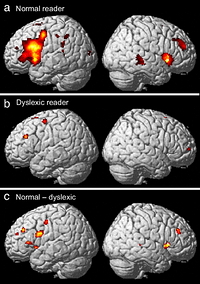
Proceedings of The National Academy of Sciences The images, made using functional magnetic resonance imaging, show brain regions with significant activation during a rhyming task. (a and b) The cortical activation associated with rhyme judgment contrasted in normal and dyslexic Chinese readers. (c) Brain regions showing group differences during rhyme judgment.

As you know, I read The Wall Street Journal and New York Times pretty religiously. Well, I came across this really fascinating article in the WSJ on “How the Brain Learns to Read Can Depend on the Language” where the article describes with the advent of brain imaging (functional magnetic resonance imaging), researchers have determined that different parts of the brain are used for different languages, such as Chinese vs. English:

“Until recently, researchers who study reading abilities focused mostly on Western alphabets. English and 218 other languages, from Alsatian to Zulu, share variations of the same Latin character set. But that set is only one of 60 writing systems used among the world’s remaining 6,912 spoken languages. Even so, those studies convinced many scientists and educators that the brain’s response to the written word, regardless of the language, is universal. The new research suggests they’re wrong. The schooling required to read English or Chinese may fine-tune neural circuits in distinctive ways. To learn the ABCs of English, we essentially harness our listening skills to a phonetic code. To become literate in Chinese, however, we must make much heavier use of memory, motor control and visual-perception circuits located toward the front of the brain. Children can master the 6,000 or so Chinese characters used in Mandarin and Cantonese text only by laboriously copying them out over and over again, until each abstract form becomes second nature. “We have to recognize that the writing system in China is different, the demands on the brain are different and the characteristics of dyslexia are different,” said Georgetown University pediatric learning specialist Guinevere Eden, who is incoming president of the International Dyslexia Association.”

There has been a lot of research being done in functional MRI, including a lot related to behavioral economics. I wonder if the way that Chinese-language brains develop different from English-language brains? Literally, some differences in the way that Chinese and Americans think could be “Lost in Translation.”

Of course, this is an easy and perhaps politically incorrect as well as illogical argument to be made as to some of the differences we find between China and the United States. (Not long ago, the former Harvard president Lawrence Summers president made the argument that the underrepresentation of women in engineering and some scientific fields may be due in part to inherent differences in intellectual abilities – that didn’t get him too far – and in fact, probably helped him to “resign” more quickly.)

It doesn’t surprise me that Chinese and English may indeed use different parts of the brain. Personally, I find memorizing characters a lot more difficult than remembering words spelled phonetically…(although Chinese grammar is so much easier – no conjugation of verbs!)

Posted in Observations | 1 Comment

Why American Chinese cuisine isn’t exactly Chinese

Have you ever noticed how Americanized Chinese food, really isn’t so Chinese?

I’ve found that interestingly enough, the food is… well, coarsely made. I’m not really sure how else to put it, but a lot of it is bigger, the time it’s taken to create the taste isn’t there. Just in general, it’s like the difference between say a burger at a fast food restaurant versus one served at a sit-in restaurant.

But that’s not all. A lot of the foods just aren’t the same, perhaps because the audience differs. It reminds of this one time when I took two of my colleagues to dim sum. They were open to trying the different types of food but in the end they broke down and asked if I could order something they were more used to seeing. The waiter actually asked me in Mandarin if he should bring out the American menu. (Yes, there ARE two different types of menus). From a Cantonese perspective, I would imagine that some people would have trouble swallowing the thought of eating barbeque chicken feet, or thousand year old egg in congee.

There are two different types of fried rice for example. When ordered in a Chinese environment, usually the rice is white and there are usually more vegetables and seems a lot less salty. In more Americanized fried rice, there usually is the tint of soy sauce in the rice itself, pan seared, and a lot more meat and egg. They both taste great, but one differs from the other.

Sorry, hate to break it to those that love it, but there isn’t chop suey, crab rangoon, or even the favorite “fortune cookie“. And I know that last one breaks the heart of one of my good friends to now know that it’s not even Chinese.

Photo Credit: (Slice)

Posted in Food & Drink, Observations | Tagged , , , | 9 Comments

Chat with Classical Guitarist Steve Lin, Part II

In Part 2 of my interview with Classical Guitarist Steve Lin, Steve speaks with me about classical guitar, his passion for modern music, and creating new works for the guitar.

J: Why do you feel it’s so important to commission new music for the guitar?

S:There are two levels:

First, the key is collaboration, and in any good collaboration, you grow and learn as a result. Working with composers is like working with other musicians, except composers tend to hear and experience music differently from performers. One of the greatest things about music is the collaborative process, and we live and learn from each other.

The second has to do with new music itself. We need new music so that we can continue the creative discourse that we as artists are obliged to contribute. New music has the power to challenge our notions and conceptions of what music is and what music can do. I love old music, but as artists, we face a challenge of expressing our own voices of our own generation. It is a struggle that is both frustrating and beautiful.

J: I like how you say it’s a dynamic process creating new works, and that’s great…but as an audience member, the thing I don’t really like about modern music is that much of it simply just sounds weird. What are your thoughts about this?

S: This is a topic for a long conversation, but an important one. There is a lot of bad modern music out there, just like there are a lot of bad restaurants and bad consumer products. Like I said, new music offers both performers and audiences a challenge. Thus, it’s important to ask questions: “Why do something like this?” “What’s the point?” “Could the composer have done it some other way?” The good news is, composers and musicians are actually very accessible and approachable—most anyways—and in most cases we are more than happy to talk to audience members to help bridge as many gaps as possible. Some do things just to be obscure, but more often than not, artists do in fact want to be understood.

Take another analogy: I love stand-up comedy and how random some of it is. In a way, it is similar to new music & art and how seemingly random they are. Some of the funniest commercials are pretty random. If you ever stop on any cross walk and just listen, you’ll be surprised at how crazy the world around you sounds—it’s complex, multifaceted, sometimes completely unrelated, etc. They are sounds that reflect the world of our generation, and that in and of itself is an interesting concept. The most important thing is for music to generate questions and to encourage discussion and new thoughts.

J: I don’t know, Steve. Sometimes I think a lot of modern music is like the Emperor that has no clothes… everyone is clapping because they think they should be clapping, but in reality, it was crap.

Often times it’s really hard to tell good music from bad music. But these are subjective terms. If new music doesn’t speak to you, that’s fine. We don’t hope for everyone to like it, but we do ask that everyone listen to the music with sincerity and, above all, a sense of curiosity.

I guess I’ll just have to trust Steve’s word. Thanks to Steve for speaking to me, and here’s more information about his upcoming concert:

May 10, 2008 at 8PM

St. Andrew’s Episcopal Church
1600 Santa Lucia Avenue, San Bruno, CA 94066
$10 at the door
Directions

His latest CD, Imagen, is available via Amazon.com.

Posted in Entertainment | Leave a comment

Asia Traveling Tips

It’s May. School’s out and summer’s IN.

Which means one thing – it’s travel season! If you’re Asian, maybe you’re making a pilgrimage to the mothership. Even if you’re not Asian, you still might be headed to Shanghai, Bangkok, or some other place where the plagued U.S. dollar would actually buy more than cheap keychain souvenirs and white bread for breakfast.

But before you embark, here are some things to watch out for when traveling in Asia:

1. Getting ripped off. In Asia, haggling is not merely an art-form, but a life and death battle of epic proportions between customers (you) and the vendors (vultures). When shopping in an atmosphere where it’s customary to bargain down a price, aim to pay 1/3 of the initial asking price if you look Asian, and 1/8 of the asking price if you look non-Asian. THEN you might actually get a good deal.

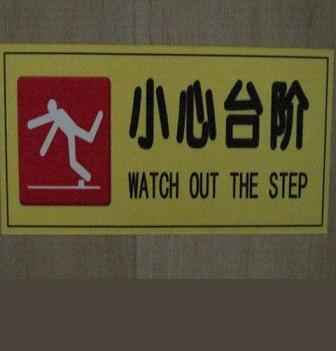
2. Deciphering translated signs that don’t make sense. If you can’t read the native language, be prepared to rely on some funkily translated signs. Here are some pictures from my recent trip to China to illustrate:

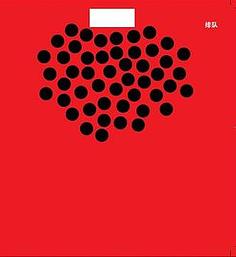
3. Getting mowed down when taking public transportation. Lines are different in the East. Look below (From the Stuff Asian People Like Blog):

The image on the left shows how people line up to take a bus in the West. The right side depicts how people line up to take that same bus in Asia. It’s CHAOS.

So sharpen your elbows, squash any ounce of courtesy you have, and be prepared to kick some ass for a 4-block bus ride… because if you don’t, the granny standing behind you will be the first to beat you down for a seat.

Those are my tips for the time being. Feel free to contribute more.

Posted in Observations | Tagged , , , , | Leave a comment

Mari Inukai Art Show

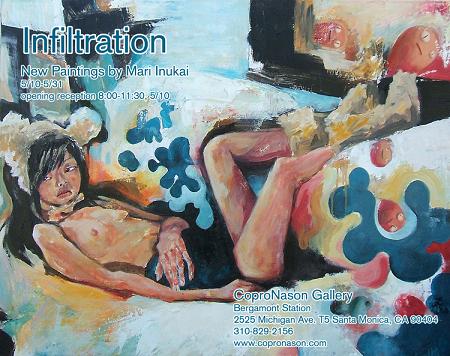
Apologies in advance if the Asian boobies in this show flyer get you in trouble, but I wanted to let everyone know about Japanese artist Mari Inukai’s solo show at the CoproNason Gallery in Santa Monica.

I’m currently gathering Asian American/Canadian/Anything artists for an upcoming show at the World of Wonder Storefront Gallery that celebrates art in our community. And a whole bunch of stuff that I don’t feel like typing up.

Mari is participating in my show, but I thought I’d let everyone know about her own show this weekend, if you’re in the area! The opening reception is Saturday, May 10th at 8:00pm. And how can you NOT enjoy her paintings of giant pink bunnies attacking Japan?

Posted in Current Events, The Arts | 8 Comments

Missiles, Money and the Mainland: The Taiwan Dilemma

I was listening to KQED last night and came across the very interesting program discussing Taiwan, “Missiles, Money and the Mainland: The Taiwan Dilemma.” With all the talk about China these days with the Beijing Olympics coming up, it was nice to hear about Taiwan being discussed and its tenuous relationship with the People’s Republic of China:

“For six decades, Taiwan’s political status has been unresolved. In that time, the small island’s economic dynamism has made it a major player in the global market. But its economic success hasn’t translated into political clout on the international stage. As China’s sphere of influence expands, the island it considers a rogue province is losing friends. Taipei’s occasional gestures towards independence have stroked the ire of China, and the US has backed its democratic ally. But with the potential for serious conflict in the Taiwan Strait between nuclear powers, each side is treading carefully.”

You can listen/download the 50+ minute program here (.mp3)

What really caught my ear was when the program discussed when then Taiwan president Lee Teng-hui (Cornell Ph.d.’68) visited Cornell in June 1995 to give a speech during reunion weekend. As a Taiwanese-American and Cornell alum, I was filled with pride that Lee Teng-hui was able to give his speech, “Always in My Heart.” I would have attended reunion weekend had it not been for my brother’s college graduation that same weekend.

The program reminded me that after Lee Teng-hui gave the speech and returned to Taiwan, mainland China started conducting military exercises and firing missiles in the direction of Taiwan. This lead the United States to send in a second aircraft carrier group to pass through the Taiwan Straits to not only reassure the U.S.’s defense of Taiwan but also warn China to tone things done, which it did.

If you’re at all interested in Taiwan, the program is worth listening to.

Posted in Current Events, Observations, Politics | Leave a comment

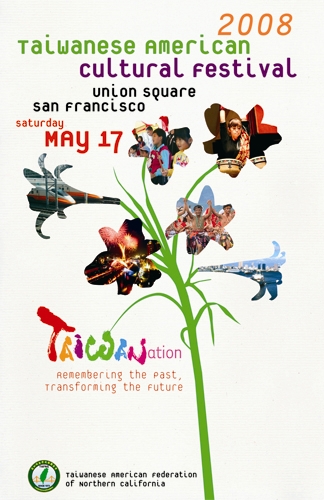
May 17th: San Francisco, Union Square: Taiwanese American Cultural Festival

The annual Taiwanese American Cultural Festival will be held at union Square in San Francisco on Saturday, May 17,2008 from 10AM to 6PM. Mayor Gavin Newsom has also proclaimed May 17th “The Taiwanese Day in San Francisco.” Traditional dance, music, arts and Taiwanese food will be featured. A list of the events throughout the day can be found here.


Posted in Entertainment, Food & Drink | 4 Comments

Chat with Classical Guitarist Steve Lin, Part I

I had the opportunity to chat with classical guitarist Steve Lin and had a fascinating discussion about Asian American issues, music, and being a classical guitar player. He is currently pursuing his doctoral degree at the New England Conservatory of Music, and Steve is one of the founders of the Boston Guitar Project.

In preparation for his upcoming concert in the Bay Area on May 10… I thought I’d chat about him about his unique instrument, practicing, and his background.

J: Why guitar?

S: I got into guitar because of Taiwanese pop. As it turned out, my guitar teacher was a classical guitarist, so before long, he encouraged me to try some classical. It wasn’t a big stretch for me because I had already played the violin and the piano for a few years (soooo Asian), but little did I know that the guitar would be a motivating and inspiring force in my life.

The best thing about the guitar is that the guitar is such an icon, as recognizable as milk. What I mean is, whether your genre is pop, classical, jazz, flamenco, etc., there a kinship that exists among guitarists across the board that can not be found among other instrumentalists. As a guitarist, there’s an innate curiosity that motivates us to tap into world music. In a way I feel very lucky to be a guitarist because it allows me to participate in a variety of genres.

This is reflective of my own life—my parents are Taiwanese, I was born in Connecticut, I lived in California for a while, I lived in Taiwan for a while, I now live in Boston, etc. But I also lived in Italy for a while and speak the language. The notion of crossing boundaries has been a part of my life and my music.

J: With the previous discussion on 8Asians about practicing music and childhood, what are your thoughts about practicing?

S: When I was young, I didn’t really know how to practice. Practice requires discipline and attention to detail, and that is something that is very hard to teach to anyone, never mind a kid. I only began to understand what practicing meant when I was an undergraduate at Cal State Northridge. I went through a phase when I got up at 4AM every morning and practiced for 3 hours. After that, I’d fill the rest of my day with 5 to 8 more hours with the guitar.

Today, I’m no longer college student and my life demands so much more. Instead of just studying and practicing, I now need to teach, to track down performance opportunities, to work on CD projects, etc. Basically, I’ve had to rethink how I approached practicing because I don’t have 8 hours per day to devote to the instrument so I’ve had to get smarter about how I use practice time.

But the greater implication is: we often face challenges and changes that force us to re-structure our lives. For me, these have been healthy changes, because it’s a reflection of my growth as a person and a musician. As a result, I’ve had to modify my routines, and that’s just fine.

J: Do you think you’ll force your future kids to practice?

First, I want my future children (if and when I have them!) to listen to a lot of different kinds of music, not only classical, but jazz, world music and modern….and everything in between. I believe that the world will be incredibly global, that having access to diverse cultures, whether it be through music, art, dance, food, or language, will be very important.

Practicing is not about getting the right notes or memorizing a piece, but it is about issues much larger than just music. It’s about discipline, attention to detail, proving to your self that you can sit down for an extended period of time and focus on a relatively small amount of material.

Again, it’s not about getting up at 4 AM, but it is about finding something you like and setting your mind to it. As with almost everything else, It’s about doing something you love and being the best at it as you can.

Part 2…we chat about modern music, the good and the bad, the weird and the ugly…coming tomorrow.

Posted in Announcements, Music | 6 Comments

How anime and manga has infiltrated Western culture


I remember back in the day, in junior high, when I thought about how strange it was that the great comic book series, Dragonball Z and City Hunter were not available for purchase in the United States except through imports. No, back then all you had were the comic strips in the paper, and your typical Marvel and DC comic books.

Then in 1998, an amazing thing happened. Cartoon Network‘s Toonami block launched Dragonball Z. Yes, I would imagine that the credit from a national influence really started out with them. That was about the time that Sailor Moon also was showing up in the States all edited so that kids wouldn’t be “shocked” by the naked Sailors changing into their super powerhouse costumes.

Things have come a long ways since then. Adult Swim launched in 2001, showing more mature rated anime such as the ever popular Fullmetal Alchemist, Bleach, and Death Note. In fact, there are more and more anime conventions being handled in the United States where popular jrock bands are taking their world tours like the S.K.I.N. launch at the Anime Expo in 2007.

Even the manga industry has literally exploded in the last three years or so. By observation alone, I remember when the bookstore, Borders, only had one single bookcase of manga and that has since grown to six eight foot bookcases in only a couple of years. If a single store can manage to grow that much of this genre, then they’re obviously selling them like hot cakes. This also shows the growth of English manga publishers like Tokyopop which coincides strangely enough within a couple years of the Cartoon Network move towards Japanese animation.

Overall, this niche of Japanese art has single-handedly dominated not only the last decade of toys and entertainment, but will continue to do so for many more to come. Isn’t it flabbergasting how it wasn’t but a couple decades ago that I wondered why the US didn’t have Dragonball?

Photo Credit: (bluemodem)

Posted in Entertainment, Observations | Tagged , , , , | 12 Comments

Myanmar Death Toll May Reach Over 100,000

I haven’t seen the Cyclone Nargis in Myanmar covered here yet, but I just came across the recent CNN article that states the US government is estimating the death count to exceed 100,000, which is five times more than expected. Eek. Plus, it seems like the foreign aid is having trouble getting through to the region, especially as our six cargo helicopters are still awaiting visas in Thailand to enter the country. Eek times a million.

I can’t help but recall the huge tsunami that hit Thailand and Indonesia back in 2004, and the overwhelming amount of press, aid and conversation that it sparked here in the US.

What about Myanmar? I’ve only caught headlines online and very little coverage across blogs. I could be wrong (and do say so) but I’m curious to know everyone’s thoughts about this, especially in lieu of the 2004 disaster. Are we just less aware about global events? The tsunami hit right in the midst of our holiday season–did that create a better environment for Americans to openly address a foreign disaster? Do Thailand’s resort areas cause more concern because there are more likely to be fellow Americans there? Or are we more preoccupied with the upcoming Presidential election? How is the Asian American community responding to this?

The tsunami was clearly a bigger (and totally different) natural disaster, as it’s been reported to have killed over 250,000 people, but I thought I’d seek out your thoughts.

Side note: I also found this article, Burma’s Lucky Escape, about how the country was fortunate to escape much of the damage from the tsunami. Kind of creepy to read now, isn’t it?

(Photo courtesy of AFP)

Posted in Current Events, Observations | 10 Comments

Asian American Professor suing students?

For as long as I could remember, the last job I would ever want to take on was to be a teacher–even if the position was for pre-school and I just had to teach children how to color within the lines.

I think it takes a lot of charisma and self-confidence to be a good teacher. Not only are you in charge of a group of adolescents (well, that all depends on what level you teach at, but you get the idea), but you must also put yourself (personal life included) out in the open for a bunch of students to ridicule.

Okay, I’m taking the negative perspective on teaching but I have many fond memories of teasing, interrogating and attempting to fool my teachers. I remember scoffing at their ideas and methods, or just making fun of their daily outfits. Yes, this was in college and yes, I’m lame like that–but who hasn’t? It’s part of the job, right?

Or not?

Former Dartmouth professor Priya Venkatesan has publicly announced her plans to sue her students for “intellectual distress,” which ultimately led her to cancel classes for a week AND switch jobs to Northwestern. Say what?

The agenda of Ms. Venkatesan’s seminar, then, was to “problematize” technology and the life sciences. Students told me that most of the “problems” owed to her impenetrable lectures and various eruptions when students indicated skepticism of literary theory. She counters that such skepticism was “intolerant of ideas” and “questioned my knowledge in very inappropriate ways.”

Alright. It’s been about five years since I wrote a term paper with words like “problematize,” “bifurcated” and (my personal favorite) “diaspora,” so I have no idea what Venkatesan’s course was about…but I can’t be the only one to be shocked that she would take her student’s behavior so personally?

I thought teaching was also a two-way interaction: teachers provide knowledge but also expect the students to give back. Learning is an exchange between two parties, and what better kind of class is there where you don’t just fall asleep to a professor droning on in a lecture, but can openly discuss the topic at hand with the teacher? I don’t get it.

Venkatesan also blames the “hostile environment” to racism against South Asians, which she claims she wouldn’t have faced as a white, male professor. I do agree that discrimination does exist in the academic world–but to blame the students for making you feel uncomfortable? I would think that it was also her responsibility as a professor to take charge of the situation; she IS the teacher, after all. But is a lawsuit necessary to right her hurt feelings?

Oh yeah. Venkatesan also blames one female student (who she plans to name in the lawsuit) for “incessantly disrupt[ing] class with her nose-blowing.”

WOW.

Posted in Current Events, Discrimination | 7 Comments

AsiaSF goes Hollywood!

One of San Francisco’s best known restaurants, AsiaSF, is establishing a new restaurant in Hollywood, called AsiaSF Hollywood (which kinda sounds like the Los Angeles Angels of Anaheim, but I digress). Aside from the lethal drinks and pretty good small plates and entrees, AsiaSF is best known for their hostesses, who happen to be primarily transgendered male-to-female women and “gender illusionists”, who do fabulous choreographed song-and-dance numbers. It’s also one of the few places in San Francisco where transgendered women can find legitimate work, since many avenues for work are often shut out to them, particularly if they are working class. Many transgendered people, even if they have advanced degrees, are often forced to find other jobs because of the extreme transphobia in many fields, or must turn to sex work and other illicit occupations in order to survive. I’ve known many of the girls who’ve worked at AsiaSF as either former staff of mine when I was working as executive director of a nonprofit, or colleagues when I was doing my grad school research, and many of them look at AsiaSF as one of the first places that respected them for who they are, as people with goals and dreams, and not as something to mock.

One of the most famous hostesses there is Nikki Calma, otherwise known as Tita Aida, who’s been a tireless advocate for the queer and transgendered Asian community in San Francisco for years (and a very dear friend of mine), and who also happens to work full time at the Asian and Pacific Islander Wellness Center as coordinator for a number of outreach programs. Nikki’s also known for hosting charity events showcasing transgendered performers, as well as being a member of the SF Pride Committee for many years.

The San Francisco Chronicle recently wrote an article about the auditions for hostesses at AsiaSF Hollywood, and are also reporting a reality show featuring the restaurant and their hostesses is in the works. Given all the drama and cattiness that they have, but also their sincerity and drive, I’ll probably check it out.

Posted in Entertainment, Food & Drink, LGBT | 2 Comments