8Asians is a collaborative online publication that features original, diverse commentary by Asians from around the world on issues that affect our community. Established 2006.
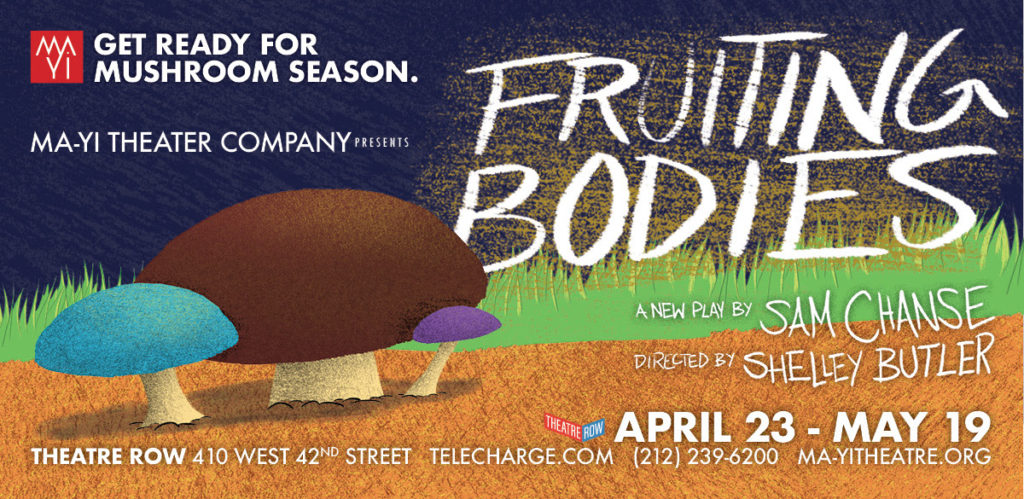
Ma-Yi Theater Company presents Fruiting Bodies, a new play by Sam Chanse at Theatre Row in New York City until May 19.
When an elderly sansei father heads off on a mushroom foraging trip alone, his two hapa daughters are forced to trek into the woods of Bolinas, CA, to find him. Along the way, a Puck-ish boy brings up memories of a missing favorite son while the family fractures along father/child, sister/sister, and husband/wife lines are brought into relief against the forest fog and earthy shrooms.
In Fruiting Bodies, playwright Sam Chanse, director Shelley Butler, and a team of sharp actors are able to bring across a subtle portrayal of Asian American life; one that is grounded in place, history, and a surprising amount of science. At times the background on morel (and other) mushrooms feels like a step into National Geographic, but the underlying themes crept back into my mind in the days after seeing the performance. Chanse is able to weave in new and refreshing nuances of larger overplayed structures throughout: racism as a sansei father questions his ex wife’s new choice of a nisei husband, the daughters revisit their neglect when confronted with their father’s sexist favoritism, an absent son reveals the ways discrimination becomes a structural obstacle both in the political and filial relationship, the Tesla-driving techno-optimist is confronted when her flashy solutions can’t mend fissures, and the angry arty “fuck up” daughter is disenfranchised by the larger systemic forces and doesn’t seem to take care of anyone, including herself.
Fruiting Bodies is a carefully crafted work built on a network of unfair family dynamics, the ever-changing Bay Area, a glimpse into Japanese American experience, and a deep sense of longing and loss. Like mushrooms, the carefully crafted touch points are ubiquitous but only really come into focus when you stop looking.
Tickets are from $32.25 to $42.25 and can be purchased by calling the Telecharge phone number 212-239-6200 or online at www.telecharge.com.
More About Ma-Yi Theatre Company
Founded in 1989 and now celebrating its 29th season, Ma-Yi is a Drama Desk, Obie Award and Lucille Lortel Award-winning, Off-Broadway not-for-profit organization whose primary mission is to develop and produce new and innovative plays by Asian American writers. The Ma-Yi Theater Company website for additional information, www.ma-yitheatre.org. Ma-Yi Theater Company productions have earned 10 Obie Awards, numerous Henry Hewes Award nominations, a Drama Desk nomination for Best Play and the Special Drama Desk Award for “more than two decades of excellence and for nurturing Asian-American voices in stylistically varied and engaging theater.” Ma-Yi Theater is under the leadership of Producing Artistic Director Ralph B. Peña.
***
Timmy Pham was once in a community theater production of King and I where his family were the only Asians. Fake tan and dyed black hair featured prominently. He is grateful for progress in Asian American theatre.
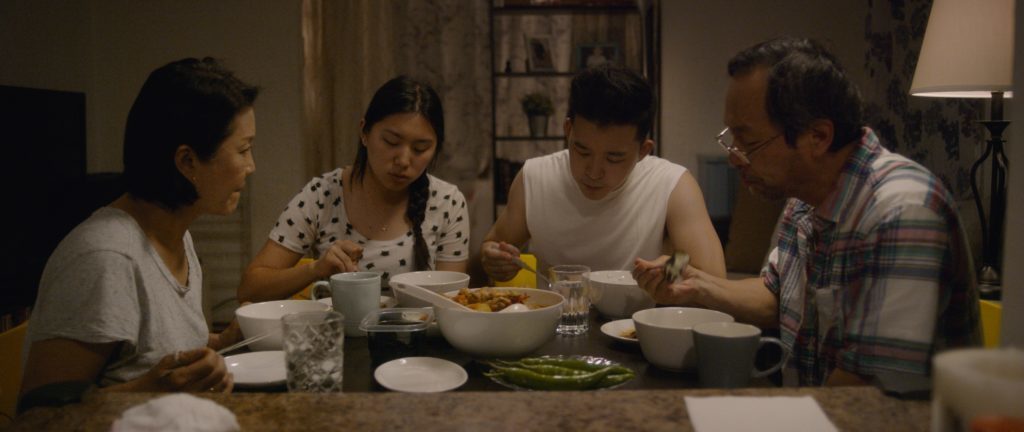
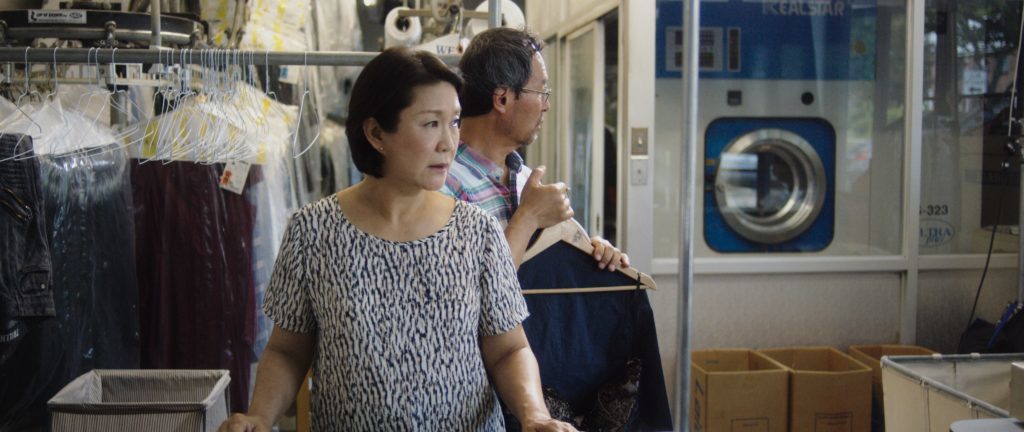
Happy Cleaners (2019) Hyanghwa Lim, Charles Ryu, Yun Jeong, Yeena Sung. Written by Kat Kim, Julian Kim, and Peter S. Lee. Directed by Julian Kim and Peter S. Lee
If it seems (and it does) that new Asian American filmmakers keep making the same film about generational tension, cultural identity, and familial values, I suppose it’s because we continue to deal with these issues, or because there are as many ways to work through them as there are immigrant families: my half-Japanese experience in Honolulu isn’t like someone else’s Taiwanese experience in Southern California, and they are both stories worth telling.
For these reasons, I came away from Happy Cleaners encouraged, because if nothing else, the film’s familiar conflicts for new generations of Asian Americans mean we’re still coming over, still adding color and flavor to a country that appears alternately to have come a long way in embracing us and to have regressed so we’re not being embraced at all.
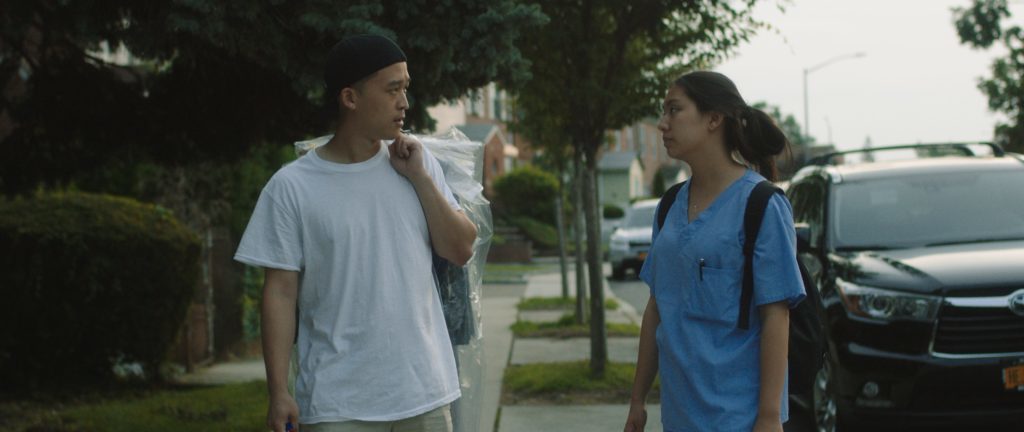
Happy Cleaners is owned by the Choi family in Flushing, New York, and despite the family’s hard work, the struggling dry cleaner may find itself without a lease in a few months, thanks to a weasely new landlord from the Weasely Caucasian Landlord multipack they must sell at Movieland Costco. Daughter Hyunny is some kind of medical professional, and college-aged son Kevin (backward baseball cap, one earring in each lobe) works in a food truck with aspirations of opening his own truck on the West Coast.
Arguments abound. Kevin fights with Hyunny. Hyunny fights with her boyfriend Danny. Dad fights with Mom, and Mom fights with everyone. Chances are you’ve seen this all before, if not in a movie then for sure in real life. Graduate from college first and then you can do whatever you want. My family will never accept you if you continue to work as a janitor. Do you want to end up like me, married to someone who can barely support his family?
I admit I said, “Oh, this again” more than once during the first act of the movie, but the film won me over with very good acting by all four principals and solid filmmaking everywhere else. There are a few self-aware shots, but mostly the camera work is well done. Lighting and sound quality put this well above most other Asian American indie films I’ve seen. Mostly, the directors don’t overdirect, the actors don’t overact, the writers don’t overwrite, and the soundtrack doesn’t oversoundtrack, although the Food Network style sound effects and cutting-board close-ups get a little out of hand more than once.
The use of language in this film sets it apart even from other Korean American movies. I appreciate the writers’ willingness to give us full-on Korean through much of the film, including what the movie’s Kickstarter page calls “a mix of Korean and English … we warmly label ‘Konglish’.” There’s nothing wrong with the Korean-accented English dialogue we usually get (it’s one of my favorite accents), but it’s great to hear the family speak the language these families speak.
I am most impressed by the writers’ delicate touch with conflict resolution. The fights themselves may be pyrotechnic at times, but the make-up scenes are gentle, sympathetic, and utterly believable. One-on-one, characters share a beer, or a bite of rice, or a whole meal, looking right at each other without overdoing the apologies, or sitting alongside each other, or nudging one another with a gentle toe. Physical proximity is an act of love, strong enough to heal the casual wounds of being in a family, something I’ve not seen much of in popular media. And props to the actors for not overdoing these excellent scenes. Shout-outs go especially to Charles Ryu as Dad and Yeena Sung as Hyunny.
Happy Cleaners is a well-made movie, a slight improvement on what seems to have become a genre: the Asian American Generations Movie. Despite my jadedness, I got teary at least twice, so everyone’s doing something right. A fraction of a bonus point for being set in Flushing, where a good chunk of the German-Italian-Irish side of my family lived.
7 out of 10. Check it out.
Happy Cleaners screens at the Los Angeles Asian Pacific Film Festival Wednesday, May 8 at 9:15 p.m. The filmmakers will be in attendance.
It also screens at CAAMFest Saturday, May 11 at 2:40 p.m. and Monday, May 13 at 9:10 p.m. Director Julian Kim is scheduled to attend the May 11 screening.
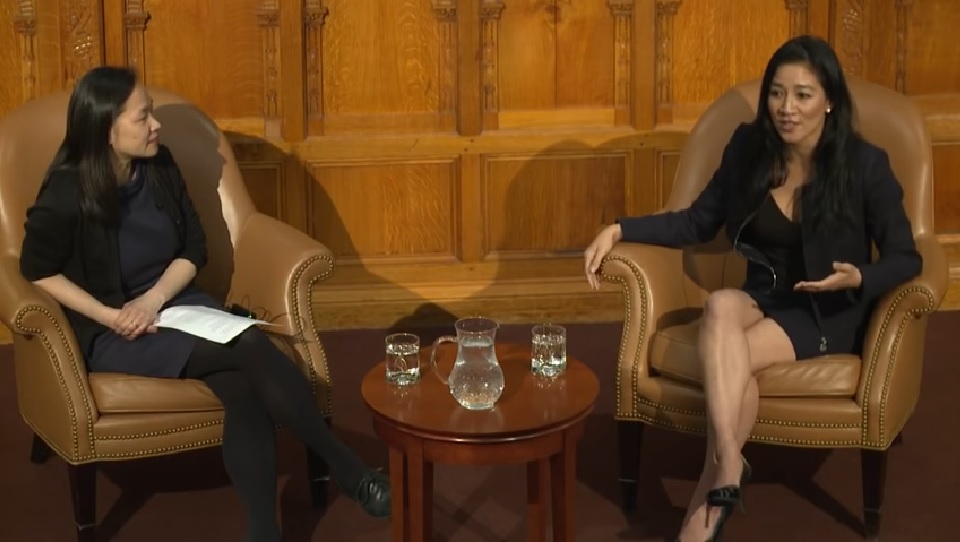
“Michelle Kwan, Chubb Fellow – Spring 2019 will be the honored guest of the Chubb Fellowship and Timothy Dwight College. Ms. Kwan will deliver the Chubb Fellowship Address to talk about her remarkable career as a figure skater as well as her public diplomacy experiences. Details at https://chubbfellowship.com”
I didn’t necessarily learn anything new from the talk that I didn’t know, since I am quite familiar with Michelle’s history in skating (I did see her skate in the 2002 Salt Lake City Winter Olympics) as well as in public service, but I was quite struck when someone in the audience asked in the first question, what was one of the characteristics that lead to her success, and she had mentioned her being ‘scrappy’ – and explained that being from an immigrant family from Hong Kong, she didn’t come from a well-to-do background, and her dad didn’t graduate from high school and her parents had nothing. So it was Michelle’s scrappiness that helped raise money for coaching, where she had to quit skating at times because lessons were expensive, ice time, as well as equipment and costumes, etc. Michelle was able to get grants as well as supporters, and had to borrow costumes (she even made it to Nationals before getting a coach).
I was struck by her comments since oftentimes, we do think that figure skaters have sponsors or come from well-to-do families, but often they do not – something that the film I, Tonya helped shed light on.
I read about the Kids Table from this article from Vice, so I decided to check it out. Mentioned as an Asian American story about friends, it has a lot that I could identify with. Although I am not Chinese American, the series has many things that resonated with me and probably will resonate also with other Asian Americans.
Although I am at an age where I definitely don’t sit at the kids table, our family gatherings and holidays usually end up with all of the young adults at one table and the rest of us non-young adults at other tables. My kids are at an age where they discuss many of the topics in the series at their kids table, such as trying out nontraditional non-safe careers – being a “bad Asian.” I did the same when I ate at the kids’ table.
While this series resonated with me, it had some shortcomings. Sometimes I felt the dialogue felt a little forced, and the ending seemed a little too pat. Still, I ended liking the characters and found myself wanting more after seeing the last episode.
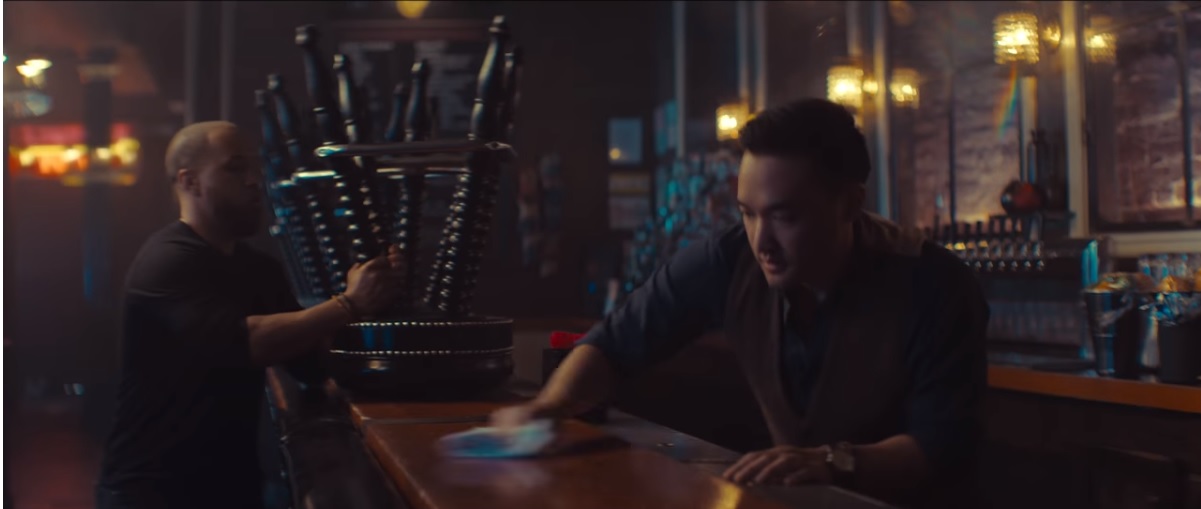
I saw this commercial originally posted/shared on Facebook, with actor Mike Ginn playing a bartender closing up and catching breakfast after a long night:
“No matter how different we are, at McDonald’s, we have more in common than we think.”
I think maybe McDonald’s is trying to counter the feeling of divisiveness in our country generated by Trump and remind Americans that we share a lot of things in common, including simple things for breakfast. I, for one, do like McDonald’s breakfast – especially with the hash brown included in the meals, and of course, coffee!
“In an email to supporters Thursday, Chiang said he’s launching a political action committee aimed at electing Asian Americans and Pacific Islanders across the country, with a particular focus on congressional seats.
“We want to build a more inclusive America. For too long, Asian Americans have not had the political infrastructure like so many other communities to be as successful in the political arena,” Chiang said in an interview.
…
The PAC, ElectAAPI.org, hopes to amass a seven-figure war chest for the 2020 cycle and plans to give directly to federal candidates as well as use independent expenditures to influence races. The group also wants to help mobilize Asian American voters, the fastest growing racial group in the electorate.
Citing what it called “growing racism, xenophobia and intolerance being perpetuated by the GOP,” the PAC’s website said it will support only Democratic candidates.”
I’m a little surprised by Chiang’s move, but glad he didn’t sell out to become a corporate lobbyist, that is for sure.
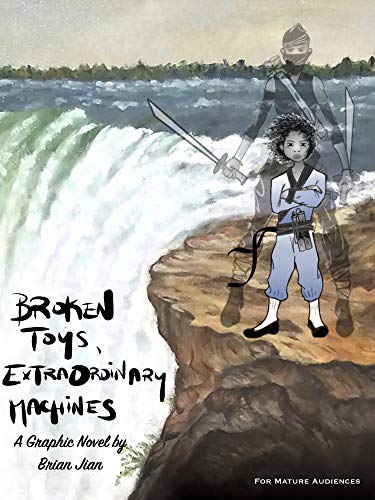
Former 8Asians writer Brian Jian has just published his very first graphic novel, Broken Toys, Extraordinary Machines, so we’re asking him the really important questions (hint: it’s the last one).
1. Your book has a pretty intense plot. What was the inspiration?
I’m not quite sure! The “Cliff Notes TL;DR” version of that answer is “Crouching Tiger Hidden Dragon meets Wu Tang Clan.”
2. I love that you dedicated Broken Toys, Extraordinary Machines to your readers. What do you hope they come away with?
There are so many options now for entertainment. For anyone to take time out of their day and spend it on anything I do, I’m extremely grateful. I’m just trying to tell a story that hopefully resonates with anyone who likes a good story, with characters who seem genuine and relatable.
3. Have you always wanted to create a graphic novel?
I was heavily into comic books and superheroes as a kid in the 80’s and 90’s (this was DECADES before this whole superhero staple in our entertainment diet). Becoming a comic book artist was probably my first career goal, but then school, college, sports, etc. got in the way. Next thing you know, 25 years have passed and I decided, “It’s now or never!”
4. What’s something you wish you’d know before you started the process?
Everything. I self published this book so it was all on my shoulders; from the drawing, writing, researching, editing, lettering, tech support. And copyrights! There was one page where I used the lyrics of a KRS One song (it fit nicely with the narrative of a scene I wrote) but thank god I looked it up and found out lyrics are copyrighted (not just the music) and you can’t print a line from Hey Jude or Hotel California without being sued. Who knew . . .
5. Ok, fun stuff. Broken Toys, Extraordinary Machines is being made into a movie. Who would you cast?
Most the characters in this story tend to skew older than the characters featured in most of the typical properties put out by our youth obsessed culture. That was completely serendipitous and not by design but I do like that it turned out that way. My dream cast would include people like Don Cheadle, Idris Elba, Whoopie Goldberg. One of the main characters is a woman named Amaka who’s in her mid 40’s. I didn’t realize Gabrielle Union was in her mid to late 40’s! She’d be perfect!
6. What are you reading right now?
Just finished “Americanah” by Chimamanda Ngozi Adichie, and just started “X” by Chuck Klosterman.
7. Where can people find your work? What’s next for you?
As I had blogged before, I had attended the “infamous” ‘Love Boat’ back in the summer of 1993 after graduating from college. I think every Taiwanese American has heard of the ‘Love Boat,’ so I am so happy that finally a documentary about the program is finally being release (disclosure: I am a producer, interviewee and provided archival video footage for the documentary).
The Love Boat has a rich history and many famous alumni have passed through the program over the years including US Congresswoman Judy Chu, buzzfeed’s Justin Tan, and singer Wang Lee Hom. Although it started out in 1967 as a small cultural program, over the years the Love Boat eventually became harder to gain entry into than many colleges. There was no marketing budget and the Love Boat’s popularity stemmed from its word-of-mouth reputation. LOVE BOAT: TAIWAN explores the ways that the government of Taiwan used this unique “soft power” program to promote Taiwan around the world which permanently affected the lives of many Asian Americans.
You can purchase tickets at the links above. There will also be afterparties.
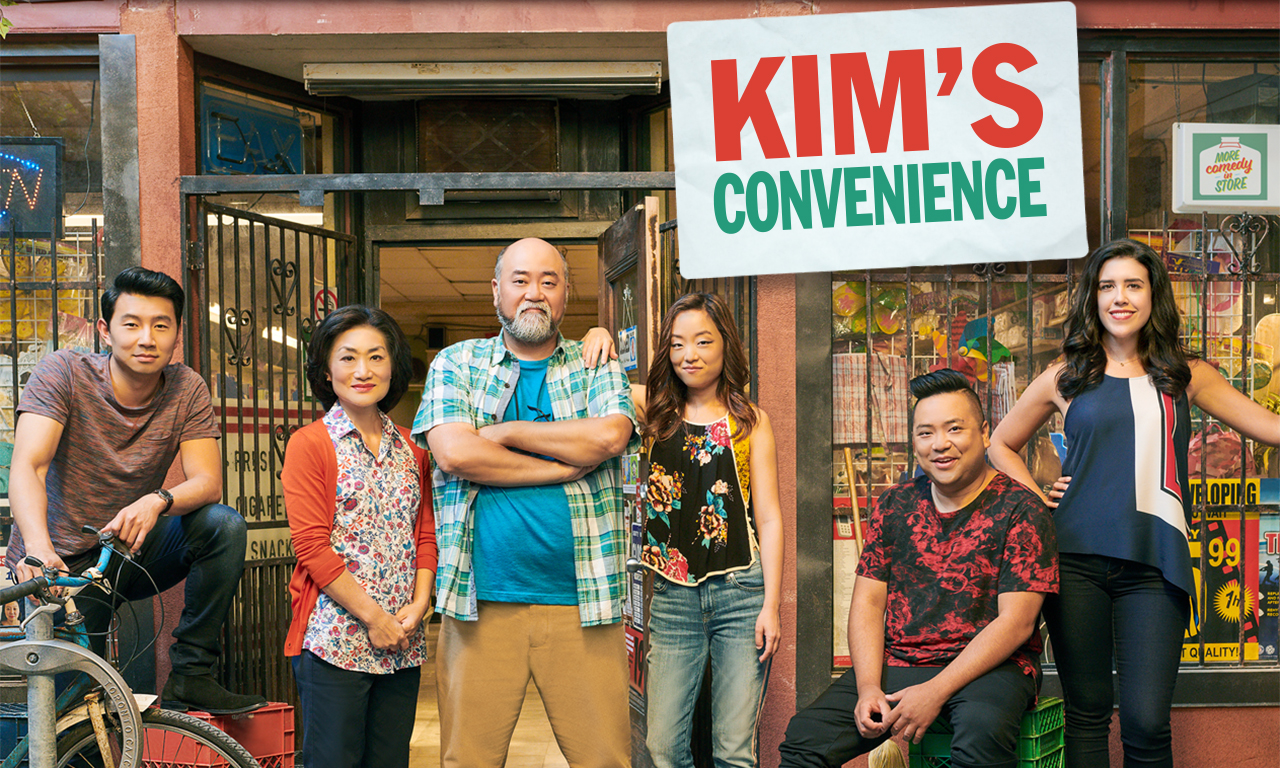
I had heard of the Canadian television comedy Kim’s Convenience a few years ago when it debuted, but never got around to watching it, even when it became available on Netflix last year in the U.S. But after remembering a friend mentioning how great the show was, I got around to binge watching Seasons 1 &2 on Netflix and catch-up to Season 3 through other means … I have to say, the 30 minute (less without commercials) show is pretty hilarious!!!
“… a Canadian television sitcom that premiered on CBC Television in October 2016. The series centres on the Korean Canadian Kim family who run a convenience store in the Moss Park neighbourhood of Toronto: parents “Appa” (Paul Sun-Hyung Lee) and “Omma” (Jean Yoon) – Korean for “dad” and “mom” – along with their daughter Janet (Andrea Bang) and estranged son Jung (Simu Liu). Additional characters include Jung’s friend and co-worker Kimchee (Andrew Phung) and his manager Shannon (Nicole Power). The series is based on Ins Choi’s 2011 play of the same name.
The first season was filmed from June to August 2016 at Showline Studios in Toronto. It is produced by Thunderbird Films in conjunction with Toronto’s Soulpepper Theatre Company, with Lee and Yoon reprising their roles from the play. Scripts were created by Choi and Kevin White, who had previously written for Corner Gas.
The second season premiered on September 26, 2017. The show has been renewed for two more seasons.
In July 2018, the series became available to audiences outside of Canada when it debuted internationally on Netflix.”
Paul Sun-Hyung Lee who plays Mr. Kim is a pure comic acting genius if you ask me, as well as the rest of the cast is top notch. Actress Andrea Bang is terrific and kind of reminds me a little of Korean American San Francisco former City Supervisor and former SF mayoral candidate Jane Kim, especially in her mannerisms and fierceness (or at least her character).
Simu Liu plays a handsome and charming, if not so bright, Jung (which is kind of nice to see the anti-Model Minority). Andrew Phung is also terrifically funny & upbeat Jung’s roommate and sidekick. And I do like the fact that Nicole Power’s Shannon has a crush on Jung.
Williams begins as World War II breaks out and Japan becomes an enemy of the United States. He examines the Japanese Buddhist communities in Hawaii and the mainland, how Buddhism’s role in the community impacted the decision making around who was interred and in what sequence, how Japanese Christians fared in comparison, how internees found ways to adapt Buddhism for strength and survival, how Japanese Americans fighting in the war petitioned for their own priests and proper death rites, and countless individual stories.
This is an academic book, so it’s not for the faint of heart, nor is it what I would suggest as an introduction to the history of Japanese American internment (if you’re here, reading this, I can only assume that you don’t need such an intro), but what it does offer is a detailed, thoroughly researched, and thought-provoking new angle. Religion offers an important lens, understudied and under acknowledged. Williams offers multiple views on its role, from Buddhism being another way in which Japanese were identified as alien, to its ability to offer solace to a Japanese American soldier being tortured in the Philippines.
And though covering a dark chapter in American history, Williams pitches this as a hopeful saga about American multiplicity, religious freedom, and offers a timely call for inclusion over exclusion.
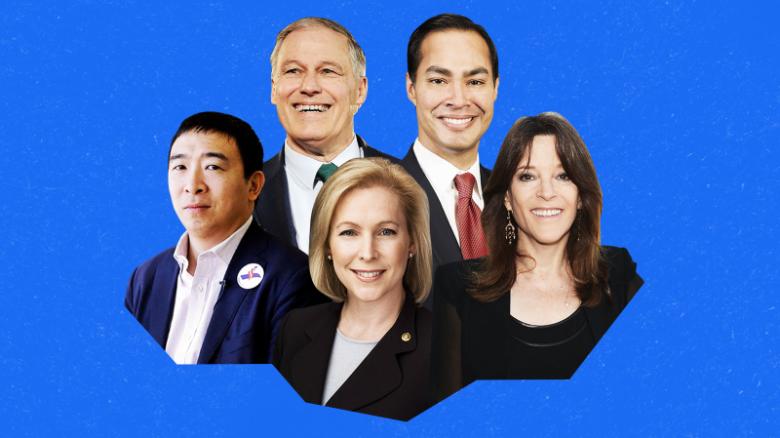
” We just received the news – I am getting a CNN Town Hall on Sunday, April 14th at 8pm EST! This is an enormous opportunity for me and the campaign. Most Americans are just getting to know the various candidates. Together we can make the case to the American people for a new economy that works for people. More info to come about how we will rally the Yang Gang around our national moment. “
” Buttigieg’s standing lands him at fifth and tied with Sen. Elizabeth Warren. Buttigieg is ahead of both Sens. Cory Booker and Amy Klobuchar, who are each at 2%. In other words, the current mayor of South Bend, Indiana, is polling in the same area as a number of candidates who are regarded as having a legitimate chance of winning the Democratic nomination.”
To provide the best experiences, we use technologies like cookies to store and/or access device information. Consenting to these technologies will allow us to process data such as browsing behavior or unique IDs on this site. Not consenting or withdrawing consent, may adversely affect certain features and functions.
Functional
Always active
The technical storage or access is strictly necessary for the legitimate purpose of enabling the use of a specific service explicitly requested by the subscriber or user, or for the sole purpose of carrying out the transmission of a communication over an electronic communications network.
Preferences
The technical storage or access is necessary for the legitimate purpose of storing preferences that are not requested by the subscriber or user.
Statistics
The technical storage or access that is used exclusively for statistical purposes.The technical storage or access that is used exclusively for anonymous statistical purposes. Without a subpoena, voluntary compliance on the part of your Internet Service Provider, or additional records from a third party, information stored or retrieved for this purpose alone cannot usually be used to identify you.
Marketing
The technical storage or access is required to create user profiles to send advertising, or to track the user on a website or across several websites for similar marketing purposes.