8Asians Exclusive: Dallas Wings’ Li Yueru vs. Golden State Valkryies

I was fortunate to attend the franchise opener of the Golden State Valkyries (GSV), the first WNBA expansion since 2008). Given that the Valkyries are based in San Francisco, I’m able to attend the home games. I recently saw the only Chinese player currently in the WNBA, Dallas Wings’ Li Yueru at the Chase Center on July 25th. It was another epic win with the Valkyries coming from behind to defeat the Wings 86 to 76

Li was traded to the Dallas Wings back in June.  Li felt she didn’t get enough playing time with the Seattle Storm. The Wings got Li in exchange for a second-round pick in the 2026 WNBA draft and a third-round selection in 2027. She was in the starting line up against the Valkyries on the 25th and played a total of 13 minutes, scoring a 3-pointer and a free throw, for a total of 4 points.


As you can see from some of the above the video highlights and photos below, as a 6’7″ Center, Li frequently sets screens, protects the rim, and boxes out for rebounding. She wasn’t as nimble or agile as her smaller teammates or opponents, but Li definitely had an intimidating physical presence.

Li boxing out an opponent after a shot is taken:

Li looking for the rebound:

While I went to this game to see Li Yueru, the biggest draw was former UCONN and #1 WNBA draft pick Paige Bueckers. I only realized shortly after looking into who Li played for. I got to see Bueckers up close at the after the game press conference:

Bueckers had some matchups against her former teammate and friend Kaitlyn Chen. I will this write about in a future post.

Posted in Sports | Tagged , , , , , | Leave a comment

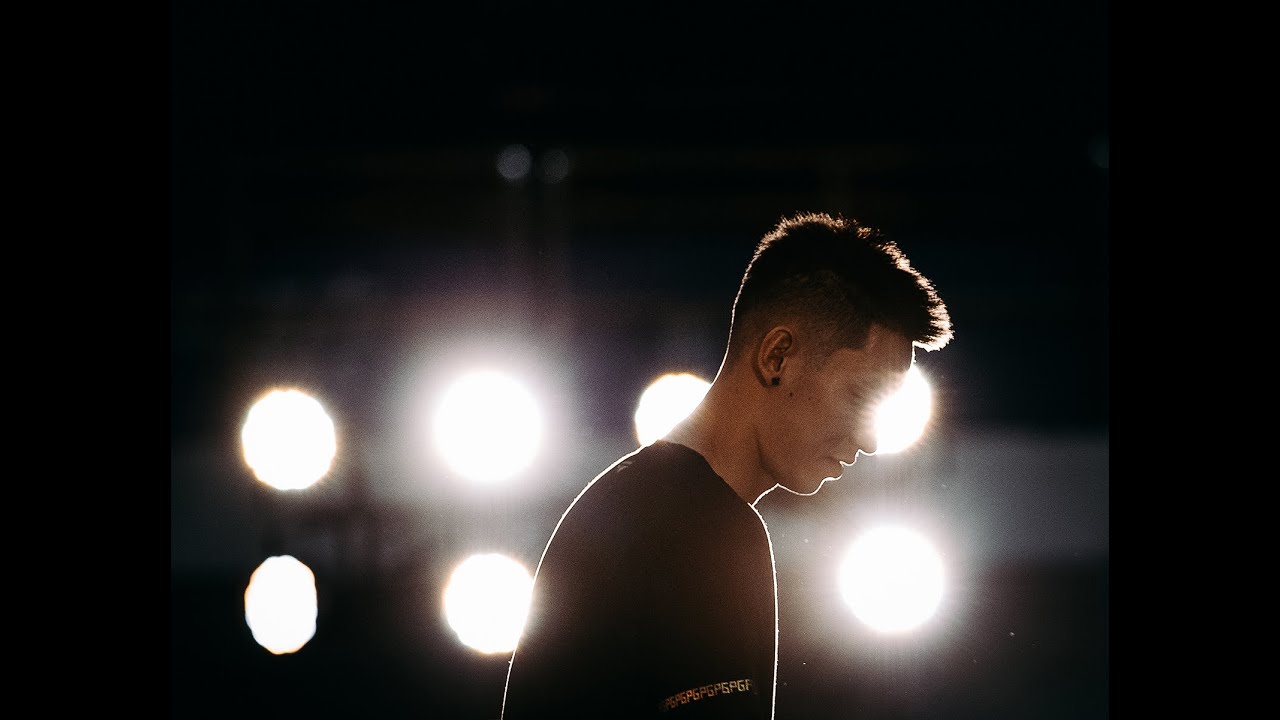
Jeremy Lin is Training the Next Generation of Asian American Basketball Players

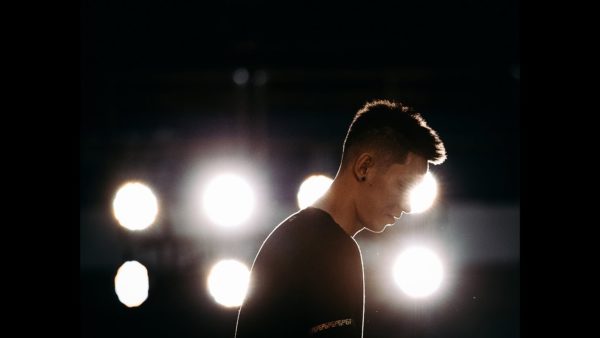
Jeremy Lin’s playing days are nearing an end as he just finished his 15th pro season with the New Taipei Kings. Despite that, he is building on his legacy in a new way. Jeremy Lin is training the next generation of Asian American Basketball Players. The Mercury News reports that Lin recently hosted the JLIN NextGen Basketball Camp. Some of the top Asian American college basketball players attended his camp in Palo Alto.

Coaching is something that interests Lin:

“I definitely see myself getting into this space. To what degree or what that role looks like, I don’t know. But I will for sure be pouring into the next generation and sharing my thoughts. Hopefully, I can import some wisdom. This camp is a big first step. We’ve never done something like this. I guess this is somewhat of a transition for me from being a player to being a coach.”


View this post on Instagram


A post shared by Jeremy Lin 林書豪 (@jlin7)

Stanford basketball player Ryan Agarwal and Ashley Chea of Princeton (featured in the movie Home Court) were among the players who attended the camp. This article in Goldsea has a list of some of the other Asian American basketball players who attended the camp.

Posted in Local, San Francisco Bay Area, Sports | Tagged , , , , , | Leave a comment

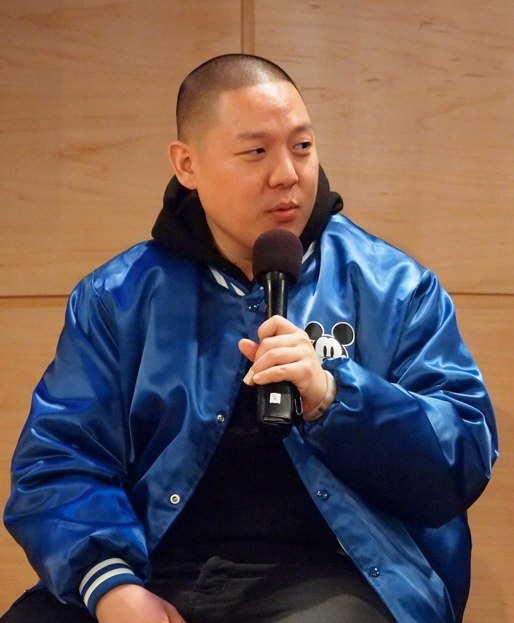
Inside the Rise of Asian American Cooking with Eddie Huang

Eddie Huang is a major player in the rise of Asian American cooking. While the story of his life and his impact of his restaurant has been told in a fictionalized TV Series and a book, I found this summary of his experiences as he rose in prominence to be fascinating. It’s worth reading especially if like me, you haven’t read his book or followed his blog.

To put his account in context, consider the situation of Asian American food before the 2000’s.  I have mentioned in previous posts that the only place you could get Asian food was in urban Asian ethnic neighborhoods.  Growing up, we would have to go to Oakland Chinatown to get Asian vegetables or Asian food. Filipino restaurants were few and far between, requiring a trip to far off Daly City or South San Francisco. Authentic Chinese restaurants could only be experienced in the Bay Area’s Chinatowns.  Taiwanese food was generally unknown.

Reading Huang’s story, I didn’t know about his general thuggish behavior as a young man. To me, that makes his rise to influence even more impressive. He began using the term Gua Bao for the buns he sold, a name that is now used widely.  Taiwanese food seems to be everywhere these days, from countless Boba shops to Taiwanese beef noodle soup places.

I have touched on some aspects of Huang’s story, but definitely not everything. At the end his story, he mentions multiple Asian American restaurants in with multiple origins (from Thai to Filipino, among others) that he finds notable. If you want to see what those are, check out the article in Eater.

(photo credit: May S. Young licensed under the Creative Commons Attribution-Share Alike 2.0 Generic license.)

Posted in Food & Drink | Tagged , , | Leave a comment

Viki J-Drama Review: A Calm Sea and Beautiful Days with You

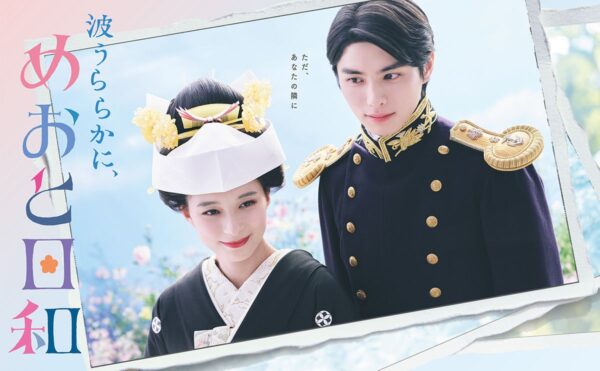
Fuji TV’s period drama A Calm Sea and Beautiful Days With You begins uniquely with a katsudo-benshi or silent film narrator who serves as guide for modern audiences to the Showa 11 (1936) setting throughout the series. The narrator introduces us to the main heroine Natsumi (Yoshine Kyoko), who is suddenly informed by her father that she is arranged to marry a young naval soldier, Ebata Takimasa (Honda Kyoya), in a week, and she has only days to prepare to meet her new husband. 

As you can imagine, this premise immediately raised red flags and made me wonder if I really wanted to put myself through this drama. Forced marriage? World War II? No thank you? In the process of self-studying Japanese, I have been consuming a few hours every day of Japanese language media input. For dramas and movies, if I find the show generally cringy or of low quality story telling, I’ll at least play it in the background while engaged in other tasks, just to keep the language exposure going. I do draw the line at anything that’s too violent or otherwise very disturbing in content, mainly because I don’t want to invite unnecessary stress into my life. 

Though I’m an avid student of history and geopolitics, being immersed in a live-action drama about societally sanctioned human trafficking (arranged marriage) set during one of the most horrific wars in human history (WWII) just isn’t the way I want to spend the moments of my day allotted for my relaxing hobby of language learning. 

The peaceful title of the drama and lighthearted tone and soundtrack of the first few minutes made me decide to give at least the first episode a try, though I was ready to stop if the story veered into wartime atrocities that I didn’t need more of. 

By the end of the first episode, I realized that despite being set in the years leading up to Japan’s entry into WWII, A Calm Sea and Beautiful Days With You is basically a light-hearted rom-com drama that mostly plays out in a beautiful traditional Japanese house and on the streets of a peaceful town. Everyone’s dressed gorgeously in kimono or smartly in early 1900s western styles, and the little home the newlyweds live in feels like a private ryokan bungalow. If I was totally ignorant of the history, I probably could have enjoyed it as a beautiful little story about two very likable young people falling in love against an idyllic rustic Japanese backdrop. 

(photo credit: Fuji TV)

Continue reading

Posted in Entertainment, TV | Tagged , , , , , , , , , , , , | Leave a comment

Asian American Commercial Watch: Beyond, Together | Asian+American from The Asian American Foundation

I’m late for this announcement, but an interview with The Asian American Foundation (TAAF) was recently aired, so in some ways, I am on time!

Back at the end of July, TAAF announced a new campaign:

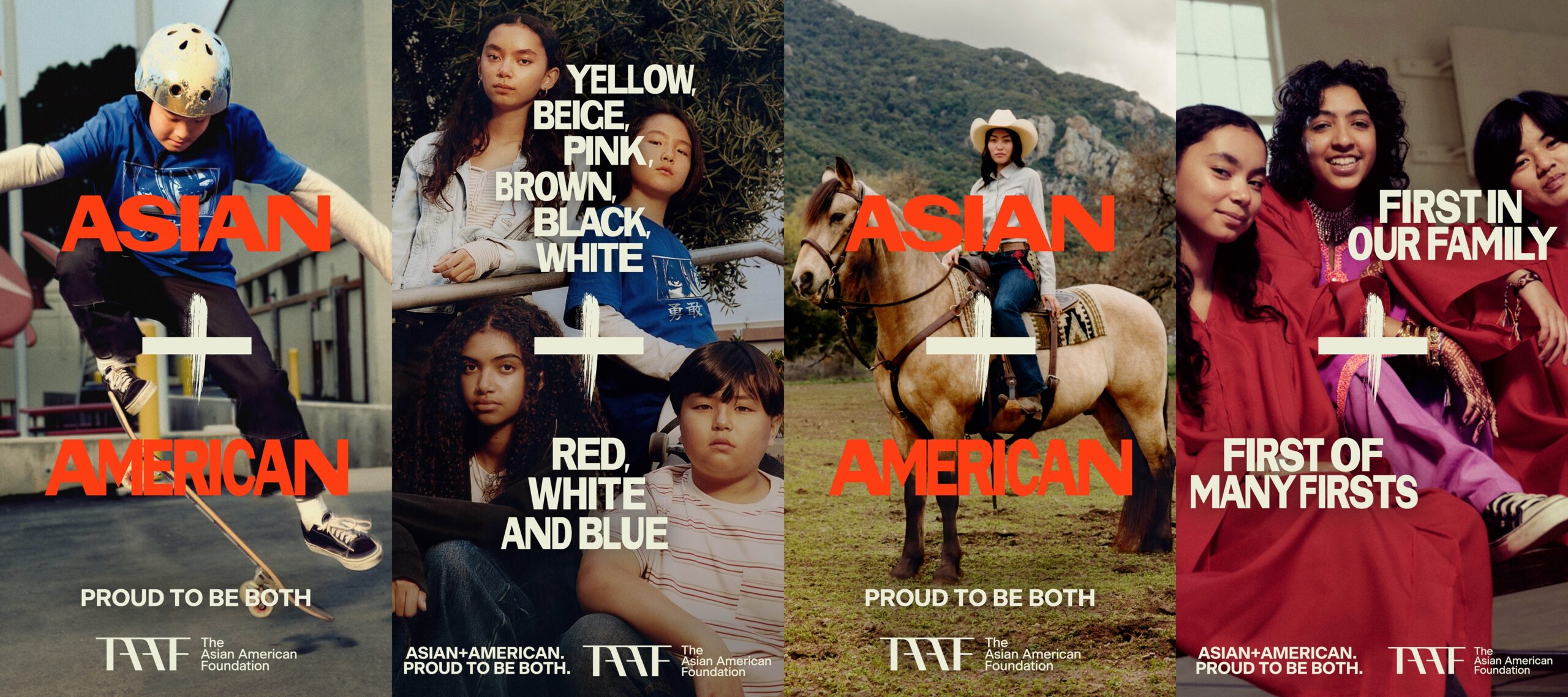
“The Asian American Foundation (TAAF) is unveiling the “Asian+American” campaign, a national PSA initiative that will encourage Asian Americans to celebrate the complexity and beauty of their dual identities. Created in partnership with the award-winning global creative agency Wieden+Kennedy New York, the campaign uses striking visual storytelling and imagery that will blanket everything from billboards to social media—all to foster pride in being both Asian and American. 

Asian Americans are the least likely of any racial or ethnic group to say they fully belong in the United States, and this sense of exclusion is especially acute among younger generations. According to TAAF’s 2025 STAATUS Index, just 20% of Asian Americans ages 16–24 (and 23% overall) feel fully accepted for their racial identity. Following decades of being cast as perpetual foreigners caught in a balancing act of being too Asian or not Asian enough, many have felt pressure to abandon their culture, names, or languages just to fit in, often internalizing shame and self-doubt in the process.

The campaign’s centerpiece, a 60-second short film called Beyond, Together, explores this pressure to choose between identities and offers an intimate look at Asian American individuals embracing their full selves without limits or compromises. Narrated by award-winning actor/producer Sandra Oh and directed by Academy Award–nominee Sean Wang (DìdiNǎi Nai & Wài Pó), who participated in the inaugural Sundance Institute | TAAF Fellowship cohort in 2022, the PSA is paired with powerful portraits taken by photographer Jingyu Lin that will roll out across digital, social, and out-of-home platforms.

From digital billboards in Times Square, NYC to Downtown LA, along with a cinematic short film and a dedicated social media initiative, this campaign will celebrate pride in being both Asian and American. Our hope is that this national campaign speaks to something universal––that no matter our background, all of our stories, while unique, are deeply connected. We are a nation of people with diverse and complex identities, and that is one of our true strengths. Keep reading to learn about the ways that you can be a part of this campaign. I encourage you to join us. We are Asian+American, and proud to be both.”


I also loved  that director Sean Wang, who I have met on a few occasions, directed the  commercial. I caught this news story on CBS Morning News interviewing TAAF co-founding board member, Sheila Lirio Marcelo (embedded below.)

When I saw the TAAF commercial emphasizing Asian + American, I really loved it. Much much more so than the hyphenated Asian-American! I always spell Asian American and Taiwanese American without the hyphen. But maybe now I will write Asian+American and Taiwanese+American …

Posted in Asian American Commercial Watch, Current Events | Tagged , , , , , , , | Leave a comment

The Legacy of Jeremy Lin

By Matthew Heng

Do you remember Linsanity? February 2012 was over a decade ago, but Jeremy Lin’s impact on Asian American culture didn’t end when the headlines stopped. Rather, his most important work might be happening right now, as he’s transformed from a basketball phenomenon to a sustained voice for Asian American advocacy.

During his Knicks moment, Lin was careful about being labeled the “Asian American athlete”. He just wanted to play basketball without carrying the weight of representing an entire community. The pressure was immense, every turnover wasn’t just a basketball mistake, it was somehow a reflection on Asian American capability. He deflected questions about race, preferring to talk about screens and pick-and-rolls.

But something shifted as his NBA career continued beyond the spotlight. The guy who once carefully avoided discussing discrimination became someone willing to speak directly about Asian American experiences. This transformation became most visible during the rise in anti-Asian hate crimes during the pandemic. While many public figures remained silent or offered generic statements, Lin used his platform to address racism head-on, sharing his own experiences with discrimination and calling for community solidarity.

In Instagram posts and interviews, he started talking about being called “coronavirus” on the court, about the subtle and not-so-subtle ways Asian Americans face discrimination in sports and beyond. It was a far cry from his cautious Linsanity-era interviews where he’d diplomatically redirect conversations back to basketball fundamentals. Continue reading

Posted in Sports | Tagged , , , , , , | Leave a comment

Maybe Happy Ending Casting Controversy

"Maybe Happy Ending" nominated for 10 Tony AwardsYou may have heard about the Maybe Happy Ending casting controversy, but in you have not, here is a quick summary. We have mentioned that Darren Criss would leave his Tony Award winning role in the play by August 31.  He is going to be replaced by Andrew Barth Feldman. Two complicating factors in this choice.  Feldman is white.  He is also the offstage boyfriend of Maybe Happy Ending star Helen J. Shen. BD Wong has created this draft letter denouncing the change and asking for signatures.

The producers of Maybe Happy Ending created this reply in response.  They point out that the robot roles were not designed to be specifically Korean. They also mention that the casting decision was not meant to reopen old wounds. A bit late for that! Helen J. Shen released this statement about the casting.

While some commentary on the Maybe Happy Ending Casting Controversy simply dismisses it as bizarre, I appreciated this insightful and nuanced one from Daniella Ignacio. Ignacio does not agree with the casting decision, but brings up a number of key points. One point is that historical context (underrepresentation of Asian actors) is important in understanding the backlash. Another key point of hers: sending hateful comments to Helen J. Shen is not useful. A final point that I would highlight is that wishing that the show folds does not nothing to promote more opportunities for AAPI actors.


Posted in Entertainment, Theatre | Tagged , , , , | Leave a comment

Daniel Dae Kim’s Butterfly Spy-thriller series coming to Prime Video

Daniel Dae Kim’s Butterfly spy-thriller series is coming to Prime video.  Based on Marguerite Bennett and Arash Amel’s graphic novel series of the same name, the story is “a character-driven spy thriller that explores complex family dynamics within the treacherous world of global espionage.” This six episode series was ordered by Prime in 2023.

According to Kim, who not only stars in the series but is an executive producer, the series is uniquely Asian American:

“In the past, neither Asia nor Hollywood were particularly interested in Asian Americans.But we’re starting to see a shift. I’m seeing it in Korea, certainly. They used to laugh and ask, ‘Why can’t you speak better Korean?’ But now that they aspire to become a world leader in pop culture, they’ve begun to see those of us in the diaspora as a unique resource.”

Butterfly was produced by 3AD, a film and television company started by him. It was shot entirely in Seoul.

The release of Butterfly will be another high point in what has been an eventful year for Daniel Dae Kim. Not only was he nominated for a Tony as the lead actor in a play, but he  was chosen to be one of Time magazine’s 100 most influential people for 2025.

The show also features Reina Hardesty, Piper Perabo, and Louis Landau as regulars. All six episodes of Daniel Dae Kim’s Butterfly spy-thriller series will be released on August 13.

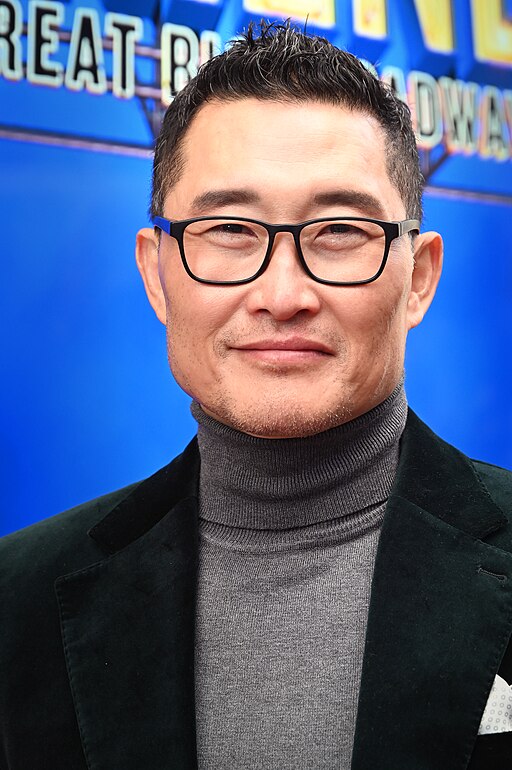
(photo credit: PhilipRomanoPhoto, CC BY 4.0, via Wikimedia Commons)

Posted in Entertainment, Movies | Tagged , , , , , | Leave a comment

US-Born Asian Americans no longer the Healthiest Older Americans

NBC News Asian America reports that US-Born Asian Americans no longer the Healthiest Older Americans, as was found in previous surveys.  This study published in the Journals of Gerontology that the article cites focuses on adults over the age of 50.  Says study author Leafia Ye:

“This study shows that the ‘model minority’ stereotype is wrong about the overall experience of U.S.-born older Asians in terms of health,”

Some doctors think that Asian Americans do not get certain diseases and are generally healthier. In this story, an Asian American woman’s doctor did not believe that she could have breast cancer because “Asian women don’t get breast cancer.” As I mentioned in that article, we know a number of Asian American women who have gotten breast cancer.

Ye and her co-author Hui Zheng found that older US-Born Asian Americans disability rates did not improve compared to all other ethnic groupings. These other groups, including Blacks and Hispanics, improved over between 2005 and 2022. Between 2005 and 2009, US-Born Asians had lower disability rates compared to other ethnic groups. The study also looked at disaggregated Asian American data. They found that Chinese and Japanese Americans had lower disability rates than other Asian subgroups, but the pattern for US-Born Asian Americans no longer the healthiest continued.

The study concludes that a factor is the decline in socioeconomic status amount older Asians.  Older White Americans are now the healthiest, least disabled older American group. The paper defines disability as any condition, physical or mental, that makes it difficult for a person to care of themselves or to live independently.

There is more detail in the NBC News article and the actual published study. Ye and Zheng looked at whether the pandemic and anti-Asian sentiment was a factor. Check out their paper for the answer to that question.


Posted in Health, Lifestyles | Tagged , | Leave a comment

The Trump Administration is Picking AAPI Lawyers for Circuit Court Positions

Patrick Bumatay is an AAPI Lawyers for Circuit Court picked by the Trump Administration

Patrick Bumatay

Bloomberg Law reports that the Trump Administration is Picking AAPI Lawyers for Circuit Court Positions.  While overall diversity is going down, recent judicial nominations include a notable number of Asian Americans and Pacific Islanders. These include Eric Tung for the US Court of Appeals for the Ninth Circuit in California. Tom Lee, Fordham Law School Professor and co-director of its Center on Asian Americans and the Law, commented the following:

There’s actually a large pool of ideologically conservative Asian Americans with the sufficient experience and credentials to make plausible appellate court picks.

This continues a trend started in Trump’s first term.  Trump appointed 7 of the 11 active circuit judges who identify as Asian American or Pacific Islander during his first term. In contract, George W. Bush appointed zero AAPIs to life-long appellate bench positions. Trump’s choices have been surprising diverse, including Patrick Bumatay, a Filipino American who is openly gay.

You can see more information on AAPI Federal judicial appointments in the article, including the track records of previous administrations.

Posted in Current Events, Legal, Politics | Tagged , , , , | Leave a comment

Another Asian American City tops a Best City List

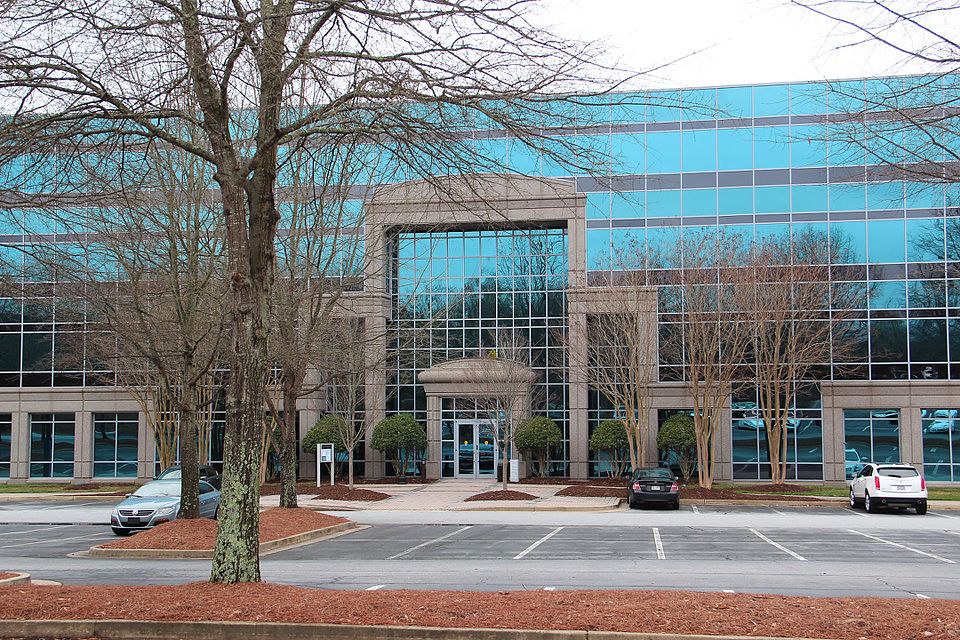
Another Asian American City tops a Best City List - John's Creek Georgia City Hall

Johns Creek City Hall

I was surprised to find another Asian American City that tops a US Best City List, especially one that wasn’t on any of the previous lists that I discussed in the past.  This year, Johns Creek in Georgia was number 1 in US News and World Reports 2025 list of best small cities.  It did even better than that – Johns Creek was the number 1 city for all cities of all sizes. Johns Creek reports its demographics as being 33.2% Asian.

Long time readers of Asian might remember us doing a story on Johns Creek.  We wrote about  white flight from the city as it grew steadily more and more Asian.  This is something common to other heavily Asian American cities that are ranked highly.  The book Tresspassers?: Asian Americans and the Battle for Surburbia talked about this phenomenon in Fremont.

You might wonder why some of the cities that were tops in the WalletHub list (Fremont, Irvine, and San Jose) did not make it onto US News and World Reports’ list.  City selection criteria made the difference. US News and World Report’s selection methodology includes affordability and value.  “Affordable” doesn’t really apply to Fremont, San Jose, or Irvine! In any case, a different Asian American City tops a Best City List!


Posted in Business, Current Events, Real Estate | Tagged , , , | Leave a comment

Guide to A Filipino American Funeral

Filipino American FuneralWhat do all-you-can-eat buffets, butterflies, and taking the long way home have to do with death?  They are all part of the Filipino American funeral practices, at least from what I have seen practiced here in my Silicon Valley ethnoburb.  I am documenting these practices to record what Filipino Americans often do when one of their family members die.  This post is intended to be a guide for people to know what expect at or what they are expected to do for a Filipino American funeral.

One of the first things that typically happens when a Filipino American dies is that their family starts a Novena that evening. Most Filipinos are Roman Catholic, and the prayer sessions starts with the Rosary Prayer.  There is usually a Litany too, in which the petitions are made to Saints and other Holy entities to intercede on behalf of the deceased. It feels like this process is nagging the Saints to help out. This nagging continues for eight more days for good measure.

Food and Drink

The family of the deceased that is hosting the Novena sessions provides food and drink for the attendees. That process can be tiring and a drain on resources.  One thing that has changed over the years is that after the COVID-19 pandemic, the Novena sometimes is shared on Zoom.  In this way, relatives and friends all over the world can take part.

Before the actual burial, the bereaved family often conducts a viewing. This way, friends and family can see the deceased before they are buried. Again, the family of the deceased is expected to provide food for friends and family. In Silicon Valley, funeral homes understand this and usually provide a room or other places in the funeral home for storing the food and where the food can be eaten.

Burial Day

On the burial day or final disposition of the ashes if the deceased is cremated, there is usually a funeral mass. The deceased is often buried with rosary beads.  The rosary must be cut before closing the casket as this is believed to prevent any more deaths in the family. After burial, there is a final obligation for the family to feed friends and relatives.  This is often done at all you can eat Asian buffets! The World Gourmet Buffet is a popular place to host after-funeral meals. Most of the times that I go to an all you can eat Asian buffet is for an after-funeral meal.  I was once happy that I went to the World Gourmet Buffet for a birthday party, but then again, after a few years, the birthday celebrant died and it was back to the buffet restaurant for the after-funeral meal.

Mourners often provide an “abuloy,” which is a donation to the family to offset the costs of the funeral and the costs of providing all of the food that I just mentioned.  When going home after the burial, one should take a longer and not the usual route home, so the deceased spirit will not follow them home. This does not always work, though. Butterflies that are seen afterward are associated with the spirits coming to visit.

40 Days and After

Tradition has it that the spirit of the deceased wanders on earth for 40 days.  At the end of 40 days, another prayer session is held. After that, every year on All Saints day a celebration call “undas” is held. It is similar to the Chinese Tomb-Sweeping Day or the Mexican Day of the Dead. Filipinos go back to the graves or their loved ones to clean up the graves and spend the day there, often as a picnic.  Cemeteries in the Bay Area who have many Filipino Americans interred there can get jammed on those days. Sometimes special events are planned by the cemeteries on those days. We often see people we know when we go on those days to cemeteries where our families are buried, as many people in our ethnoburb have family buried there.

You might want to compare how these funeral rituals and customers compare to Chinese American ones. Tim gives a pretty good description. I hope that people find this useful for holding a Filipino American funeral.  If there is anything I missed or got wrong, please let me know in the comments.

Posted in Family, Lifestyles | Tagged , , , | Leave a comment