A Short Review: Fine China

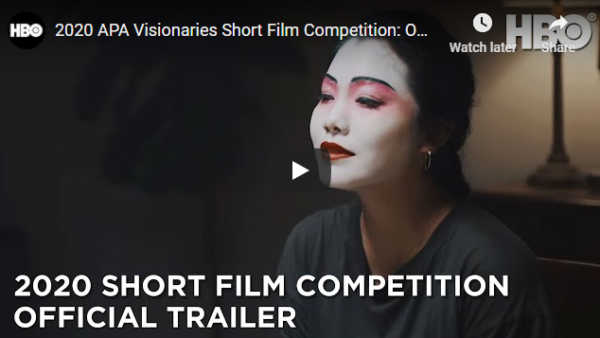
As she says in the interview above, Tiffany So, the director of the Fine China short that was a finalist for the 2020 HBO Visionaries contest, loves musicals.  I do too, and so Fine China was a pleasant surprise.  I first found some of the “traditional Asian” style music annoying and almost stereotypical (you can hear some in the video above), but as the story went along I realized that was deliberate musical choice.

So says she modeled her work after Chinese families, but the issues that confront this family are common with many families, not just Chinese or Asian ones.  As a parent, I am really glad that she didn’t descend into the “hates their parents” trope.  The way So shows the passage of time and its eventual healing touch is something to look forward to.

Overall, I recommend Fine China, especially if you like musicals. You can see more about the other 2020 winners on the HBO Visionary web siteFine China is available to stream on HBO Max.


Posted in Entertainment, Movies | Tagged , , , | Leave a comment

Nielsen Report: Asian Americans are a Huge and Attractive Media Market

After reading about HBO’s 2020 APA Visionaries contest winners, I was reminded of another annual Asian American media event, Nielsen’s annual report on Asian American consumers, 2020 edition.  Nielsen claims that Asian American content from performers who are also content makers such as as Ken Jeong, Ali Wong, and Awkwafina, has led to increased Asian American viewership, a potential $1.2 trillion market.   I like the idea that including Asian Americans into mainstream media roles and decision making is not just about diversity but good business sense also.

Through the years, Nielsen has pointed out increasing Asian American buying power .  We talked about one of their reports from 2012, and Asian American consumer market has almost doubled since then.  Nielsen’s report doesn’t mention the impact of the pandemic, though, which has affected Asian Americans economics employment disproportionately.

I didn’t see the report mention this, but what we really encourages me is that Asian American content like Always be my Maybe, The Half of It, and Awkwafina is Nora from Queens seems to be popular with not just an Asian Americans but with a wider audience.  That’s a positive sign for the long term inclusion of Asian Americans in entertainment.

Posted in Business | Leave a comment

HBO APA Visionaries: 2020 Winners of Short Film Contest made available for Streaming

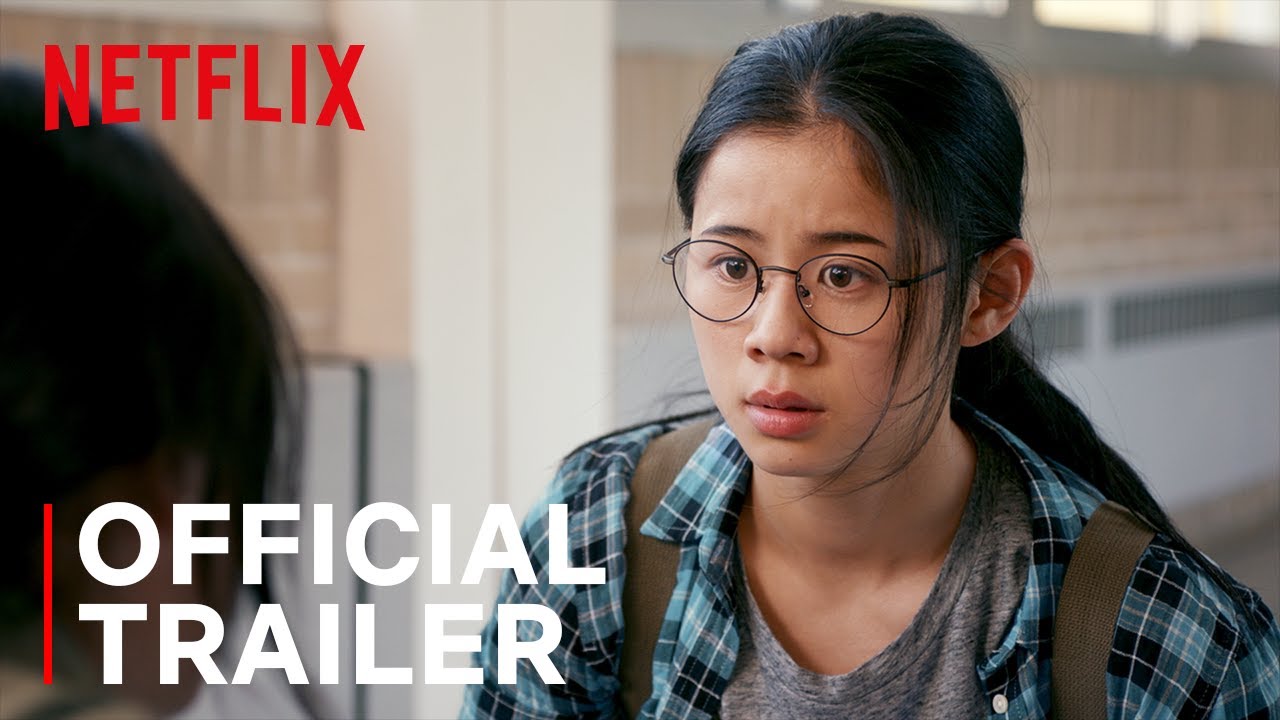
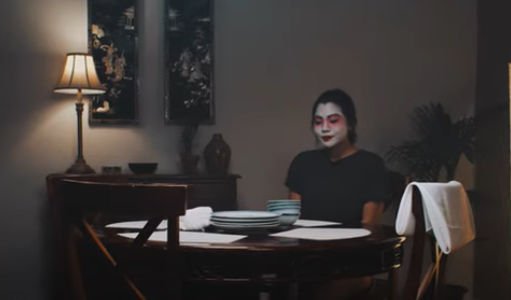
Every year, HBO sponsors a contest for Asian American short films and showcases the winners.  2020’s winners were recently made available for viewing on HBO Max after honoring them as part of the Virtual Los Angeles Asian Pacific Film Festival. The three winners include Fine China, Si, and Lonely Blue Night, and you can see the highlights of each in the trailers above.   You might recognize Ki Hong Lee from the Maze Runner movies as he appears in Si. I have only watched Tiffany So’s Fine China so far and really enjoyed it.  The picture featured below captures a scene from this short.

You need access to HBO Max to see these.  I am looking forward to watching the other two shorts, and will probably post reviews of all three in the coming weeks.


Posted in Entertainment, Movies, The Arts | Tagged , , , , , , , | 2 Comments

Asian American Commercial Watch: The Perfect Meg

These days, seeing Asian Americans on commercials is not that unusual, but two things struck me about this commercial  from Dave and Busters.  First, the goofy fun from actress Donna Park really made me laugh.  Second, it’s interesting how a commercial that was so clearly made before the COVID-19 pandemic can be adapted for use.   I was surprised that they would air an ad like this.

I have many fond memories of parties and other events at Dave and Busters, so it saw that ad with somewhat mixed feelings.  I am happy that they are still in business, but I am not sure sure I would go inside to one of their arcades.  Most of the California branches are closed, but some are still open (tagged with a blue location marker).

Posted in Asian American Commercial Watch | Tagged , , , , | 1 Comment

Congressional Representative Pramila Jayapal bill on South Asian Heart Disease Advances to Full House Vote


US Congressional Representative Pramila Jayapal’s bill H.R. 3131 on South Asian Heart Health has advanced to the point where it can be voted on by the full house.  The bipartisan bill, co-introduced with Republican Joe Wilson in 2019, would fund grants for research and awareness.  South Asian Heart disease is common – South Asians make up 25% of the world’s population but 50% of the world’s heart disease cases according to Japayal’s update on the bill.

Japayal’s district includes Seattle, which with its large technology workforce, has a large number of South Asians.  As I have pointed out before, technology work can be hazardous to Asian American health.  Congresswoman Pramila Jayapal is first South Asian woman elected to the U.S. House of Representatives.

Posted in Health, Politics | Tagged , , , | 2 Comments

Medium: The Potential Power of Asian-American Voters in the 2020 Election

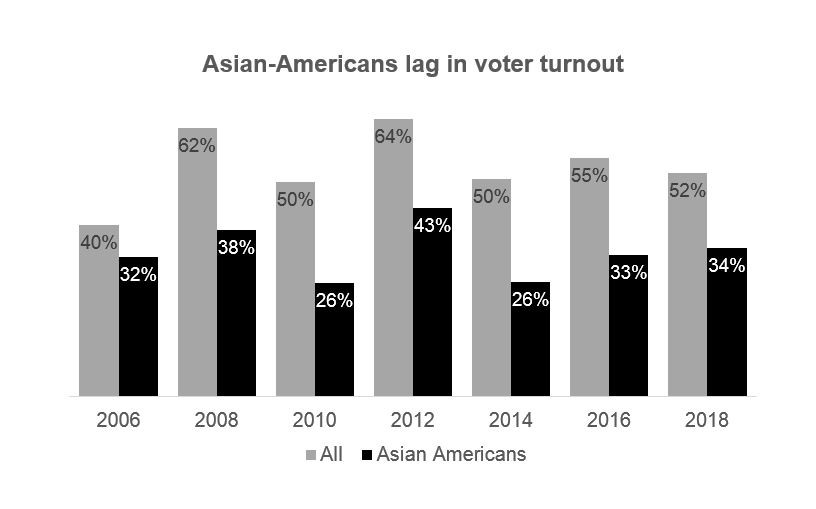
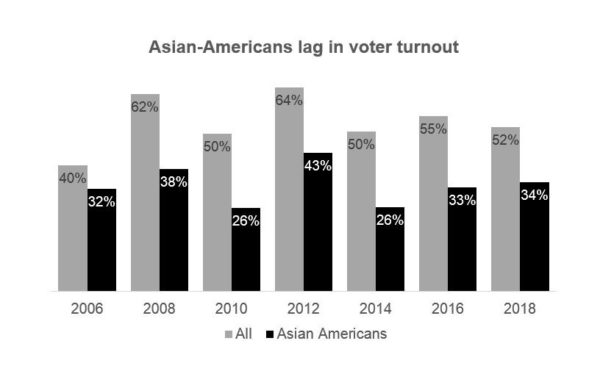
Image source: The potential power of Asian-American voters in the 2020 election

When I saw this Medium article posted titled “The potential power of Asian-American voters in the 2020 election,” I was reminded of and learned some interesting and frustrating facts about Asian American involvement and engagement in politics, which has motivated me ever since I myself became more politically involved starting in 2004 and blogging about it since 2007):

  • Nearly 7 in 10 Asian-Americans don’t vote. According to the Cooperative Congressional Election Study (CCES), only about 1 in 3 (34%) of Asian-Americans voted in 2018. This is on par with average turnout of Asian-Americans from 2006 to 2016 (33%). By comparison, in the same period of 2006 to 2016, national turnout was 53%.
  •  Asian-Americans are not only less likely to vote, but are also less likely to be politically active. Among major racial and ethnic groups, Asian-Americans were least likely to have attended a political meeting, put up a political sign, work for a candidate, attend a political protest, contact a public official, or donate money to a political candidate in the past year. Indeed, despite relatively high wealth, Asian-Americans’ average contribution to candidates was $41, the lowest of all major racial and ethnic groups, and 45% less than the national average of $76.

The voter turnout was what I was really disappointed in. I have blogged about that in the past, but it is always disappointing to read.

Because of low Asian American political engagement, it’s no surprise that Asian Americans don’t donate much, and when they do, donate much less.

Another thing that the article highlighted, and I have read and see myself, is that Asian Americans are the fastest growing demographic in the nation, and within some swing states, can make a huge difference given how close the race is. The example the article gave was:

“In these ten states, Asian-American voters would only need to average 32% turnout to match the margin of victory for each state; but in each of these states, Asian-American turnout in 2016 was lower than that of the state average. For example, in Michigan, the margin of victory was under 11,000 votes (10,704). In 2016, Asian-American turnout was 24%, less than half of the overall turnout (57%). If Asian-Americans had simply voted at the same turnout rate as the rest of the state, over 51,350 votes would have been cast, or nearly 5 times the margin of victory.”

In a recent national poll, Asian Americans favor Biden 52% to Trump’s 34%.  If more Asian Americans are voting, especially in swing states, they can make a HUGE impact even though the relative population may be small (Michigan’s AAPI electorate is 3.5% of the total electorate).

As always, I encourage all Asian Americans to become more civically engaged, because we still have a lot of catching up to do. As the saying goes, “If you’re not at the table you’re on the menu.” If you think America is not paying attention to Asian Americans, maybe not enough Asian Americans are paying attention to what is going on in America.

Posted in Current Events, Politics | Tagged | Leave a comment

“A Sugar and Spice Holiday”, An Asian American Christmas Movie, Premieres December 2020

Lifetime channel is premiering “A Sugar & Spice Holiday,” which is the channel’s first movie featuring Asian American leads, in December 2020.  Tzi Ma (Mulan, The Farewell), Jacky Lai (V-Wars), and Tony Giroux (Motherland:  Fort Salem) headline this feature.   In this story, a young architect (Jacky Lai) goes back home to Maine where her parents (Tzi Ma and Lillian Lim) run a local restaurant.  She teams up with an old high school friend (Tony Giroux) for a gingerbread house contest, who “grew up into a catch.”  You can pretty much guess the rest.

I never saw Asian or Asian Americans in any American Christmas special or movie when I was growing up,  so it’s great that A Sugar & Spice Holiday continues a trend that started last year.  Henry Golding and Michelle Yeoh were in Last Christmas.   Let It Snow from Netflix also had Asian American lead characters, played by Jacob Batalon (MCU Spiderman and Avengers movies) and all around talent Anna Akana (Ant-Man, YouTube).  It was great to see an actual Filipino family portrayed in Let It Snow, and I am happy that Lifetime is focusing on an Asian family in this latest movie.

(photo credit:  Gordon Correll under the Creative Commons Attribution-Share Alike 2.0 Generic license)

Posted in Entertainment, TV | Tagged , , , , | 5 Comments

2020 Asian American Voter Survey (AAVS) Results

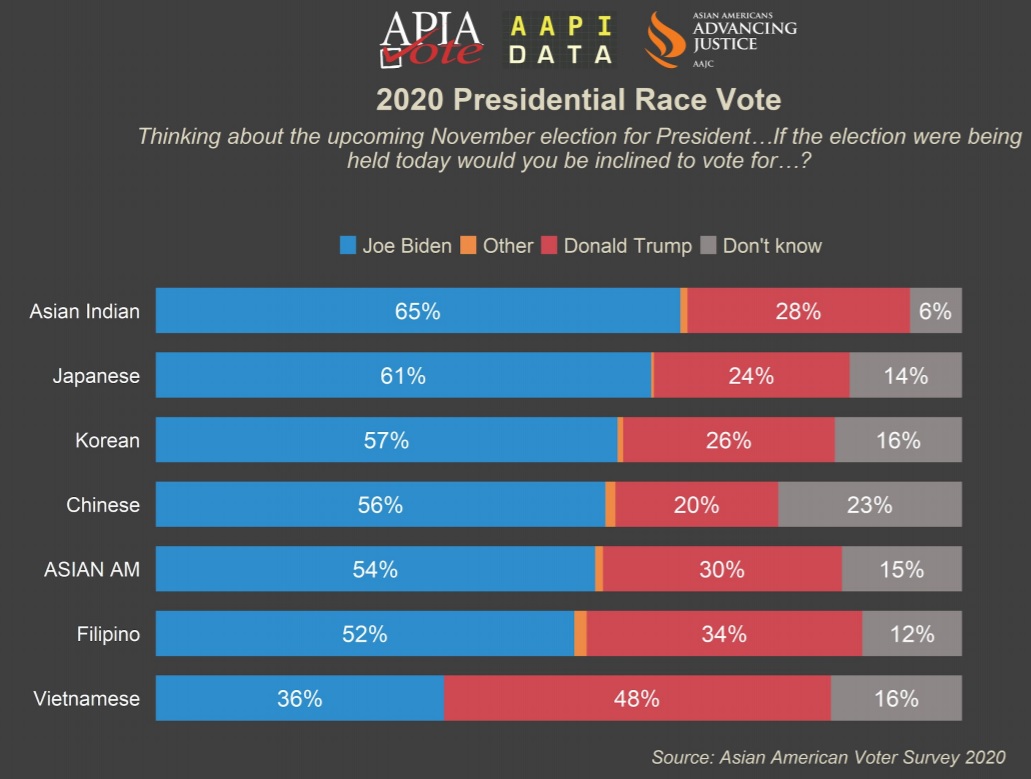
The 2020 election is coming up, and every presidential election cycle the non-profit and non-partisan group AAPI Data does their Asian American Voter Survey (AAVS).  2020 is no different, and AAPI Data released the results of their survey recently.  The two results I’m always interested in are the presidential race and the party identification.

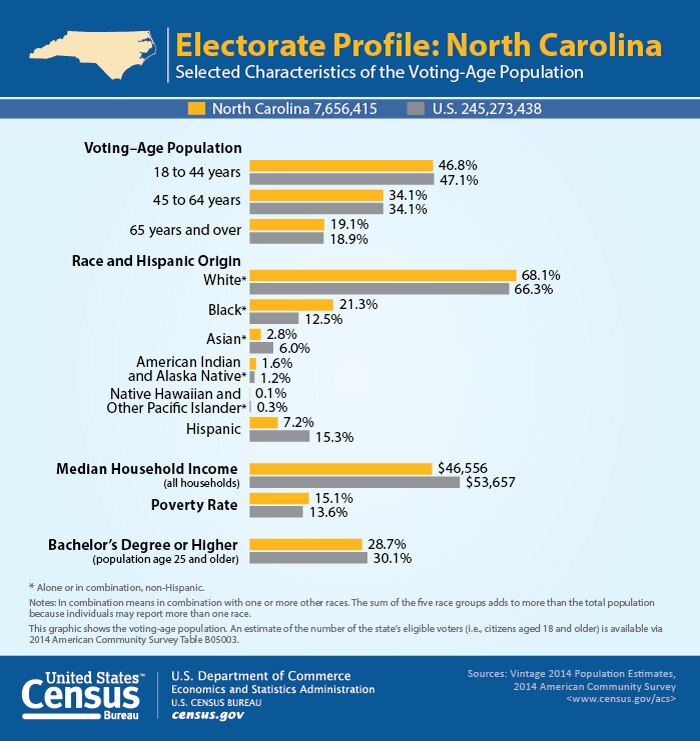
According to AAPI Data, Asian Americans constitute a critical mass in several competitive states, including Arizona (4.3% of the electorate in 2016), Pennsylvania (6.4% of the electorate in 2016), and North Carolina (3.2% of the electorate in 2016). Although the percentages are relatively small, these are swing states. Remember that in 2016:

“The most important states, though, were Michigan, Pennsylvania and Wisconsin. Trump won those states by 0.2, 0.7 and 0.8 percentage points, respectively — and by 10,704, 46,765 and 22,177 votes. Those three wins gave him 46 electoral votes; if Clinton had done one point better in each state, she’d have won the electoral vote, too.”

Asian Americans tend to vote way less than your average American, but then lean Democratic (where in 2016, 69% voted for Clinton where 25% voted for Trump, based on one study).

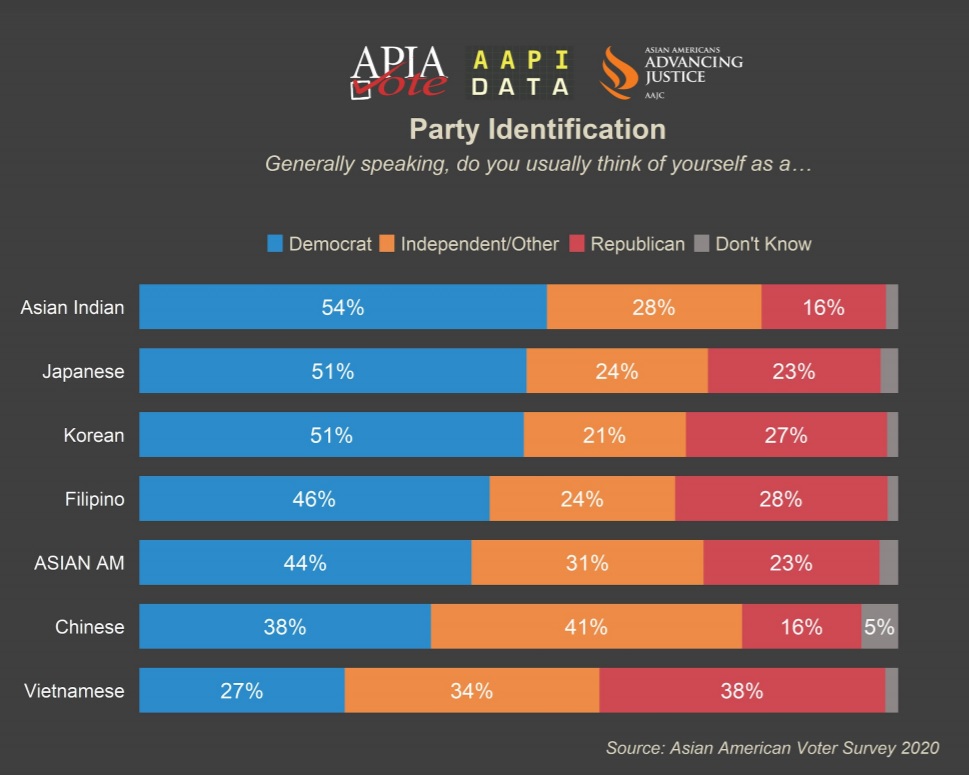
In 2020, it’s no surprise from above that Asian Americans prefer Biden (54%) over Trump (30%), as increasingly, Asian Americans have been voting for Democrats over the past 30 years. Personally, I can’t believe that 15% of Asian Americans don’t know who their preference is … No surprise, Vietnamese Americans prefer Trump over Biden, as I imagine the older generation, having traditionally been very conservative given the Communist takeover of South Vietnam. But I am sure the younger Vietnamese Americans, over time, may become more Democratic in their voting.

Overall, Asian Americans identify more as Democrats (44%) over being Republicans (23%) – with a larger percentage preferring to remain Independent – an increasing trend among younger voters who have dissatisfaction with both parties.

If you want a copy of the summary slides of the result of the survey, you can get them here. – as well as the executive summary here.

Posted in Current Events, Politics | Tagged , | Leave a comment

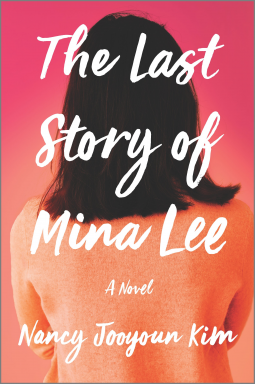
8Books Review: The Last Story of Mina Lee by Nancy Jooyoun Kim

Nancy Jooyoun Kim’s first novel The Last Story of Mina Lee is a thoughtful, heart-wrenching dive into the story of a mother and daughter. When Margot Lee’s mother–the eponymous Mina Lee–stops answering her phone, Margot wonders what could have happened. Until she drives to Los Angeles and finds her mother’s body in the apartment they had shared.

From here, the narrative shifts perspectives between Margot in the present day, desperate to find answers about her mother, to Mina in her first year in the United States as she struggles to find work, a refuge of the Korean War and an undocumented immigrant. Back and forth, the story teases out the threads of these two women’s lives.

It is in many ways a familiar tale, an immigrant mother and her American daughter who had always struggled to understand each other. But the added puzzle surrounding Mina’s mysterious death and depth of character that the author layers onto each as they struggle through the ordinary and the extraordinary keep the novel moving along — an altercation at the grocery store where Mina works, Margot’s frantic calls to the detective working her mother’s case, Mina and her secret grief (no spoilers), Margot and a life spent looking backwards.

On the drive back, her mother had seemed so utterly deflated that Margot didn’t have the courage to ask why they had driven so far. She always assumed that her mother didn’t want to talk about the things that hurt her. But maybe Margot was wrong about that. Maybe now as an adult, she was growing into a woman who could understand and support her mother, despite the different languages they knew.

I get tired, sometimes, of the back and forth narrative, split between two characters. But something about the desperation, of varying kinds, of our two protagonists kept me going. And in the end, this was a one-sitting book for me, let that stand in as the review.

Posted in 8Books, 8Series, Books, Family | Leave a comment

Asian Americans using the Covid-19 Lockdown to learn Family Languages

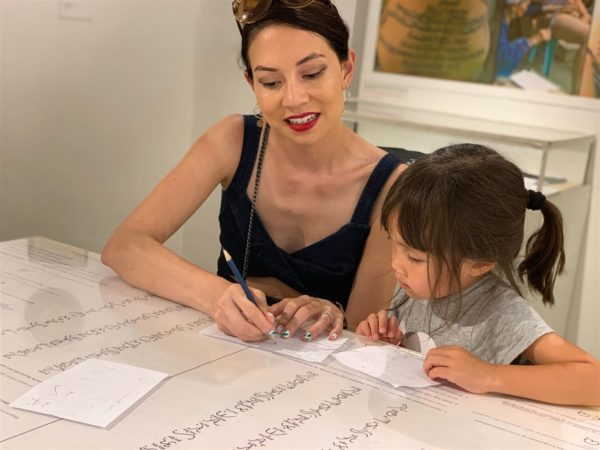
Like a lot of millennials, the Daughter moved back in with us after college.   One surprising result of her move was that she began to pick up Tagalog.  Although she grew up in an Asian neighborhood and some her aunts and uncles live nearby or even with us, only after coming back did she began understanding more of the conversations around her that weren’t in English.  As people are stuck at home in quarantine, this report from NBC News Asian America reports that some Asian Americans are using the lock down to learn their family’s heritage language, including some second generation adults like Danielle Colayco, (pictured above with her daughter) who never learned when she was growing up.

Like with Danielle’s parents, learning Tagalog was not a priority for my own parents.  For many Filipino Americans of my generation who were born in the United States, Tagalog was used, as essayist Jia Tolentino mentions in a book review, as a way that Filipino parents could talk between themselves so their children could not understand.  Attempts to speak Tagalog were usually met by fluent Tagalog speakers with mockery at the unavoidable accent, usually from aspirating Tagalog consonants.  I think it is great to see that Asian Americans, particularly Filipino Americans, trying to learn the languages of their ancestors.  One of the online learning sites mentioned in the article, Tagalog with Kirby, and a number of their classes, which notably are not free, are filled up.  Also encouraging to see are learning resources for kids, which I never saw when I was young.

This article is timely.  I learned to understand Tagalog after knowing only English through high school. I have found that knowledge to be very useful, mostly socially but on one occasion, useful for my career.  Like my parents, The Wife and I have sometimes resorted to using Tagalog as encryption so that the kids and others don’t understand, even with my broken, highly accented speech.  That doesn’t work with The Daughter any more, and I would be happy if it also did not work with Number One Son and Number Two Son.  Since like many tech companies here in Silicon Valley, my company may keep me home until June of 2021, I am wondering whether I should work on becoming fluent.   As other Asian Americans are experiencing, now may be the right time.

(photo credit: Courtesy Danielle Colayco)

Posted in Education, Family | Tagged , , | Leave a comment

Din Tai Fung Las Vegas Opening October 19th

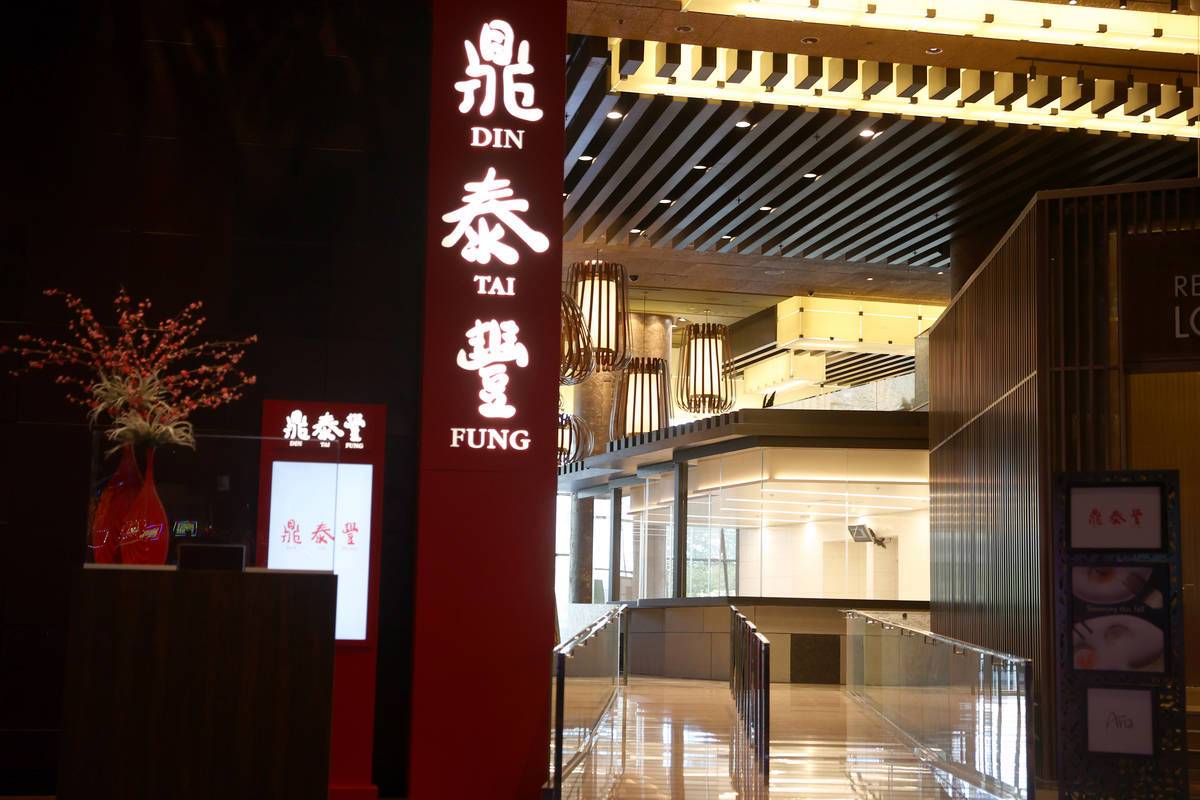
Back in February before the COVID-19 pandemic (which seems like years ago), I was in Las Vegas and had seen and had blogged about Din Tai Fung “steaming this summer” at the Aria. I thought that due to the pandemic, Din Tai Fung’s opening might be delayed indefinitely, but it looks like it’s opening up on October 19th:

“The wait for Kurobuta pork xiao long bao finally comes to an end this fall when the highly respected Taiwanese dumpling specialist Din Tai Fung arrives at Aria. The masters of soup dumplings, which require 18 folds to carefully hold the soup within, open their 13th American restaurant, replacing Aria Cafe, once known as the largest 24-hour café on the Strip, on October 19.

Din Tai Fung takes over 5,580 square feet with a view through the massive tilted windows looking out onto Nancy Rubins’ Big Edge canoe sculpture and Vdara. Aria allocated an estimated $2.2 million in construction costs alone to renovate the dining room and an open kitchen that gives diners a glimpse of the handiwork involved in preparing xiao long bao, steamed pork soup dumplings, precisely made with 18 lucky folds, 16 grams of meat, and 5 grams of dough.

Din Tai Fung originally planned to open in April, but with the coronavirus pandemic, postponed until fall. The restaurant plans to be open from 4 to 11 p.m. nightly. For highly recommended reservations, visit here.”

I really wonder how well Din Tai Fung will do in Las Vegas during this pandemic, as tourism in Las Vegas has plummeted. I’m looking forward to checking this new Din Tai Fung out in the near future!

(photo credit: Las Vegas Review-Journal)


Posted in Food & Drink | Tagged , | Leave a comment

ESPN/ABC Commentator Jalen Rose shares some Filipino Culture during the NBA Playoffs (Walis!)

Even though Filipino and Filipino Americans are known to really love basketball, I was still surprised when ESPN/ABC commentator Jalen Rose pulled out a Filipino broom during the Milwaukee Bucks/Miami Heat pregame show this weekend and said “Walis!”  Walis refers to a broom in Tagalog (there are different kinds), and as shown in the video above from Sports Update PH, he has a history of bringing one out when he things a team will get “swept” in a playoff series from as far back as 2013.

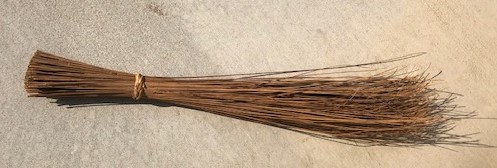
walis tingting

I couldn’t find out why he picked a Filipino reference to brooms, but as I mentioned above, Filipinos love basketball.  Books such as Pacific Rims: Beermen Ballin’ in Flip-Flops and the Philippines’ Unlikely Love Affair with Basketball and Playing with the Big Boys: Basketball, American Imperialism, and Subaltern Discourse in the Philippines.  The Golden State Warriors have a Filipino Heritage Night every year, and they also sell shirts combining their logo and the Filipino Flag.  I have coached a lot of Filipino kids in basketball, and there are a lot Filipinos in pick up games and leagues.

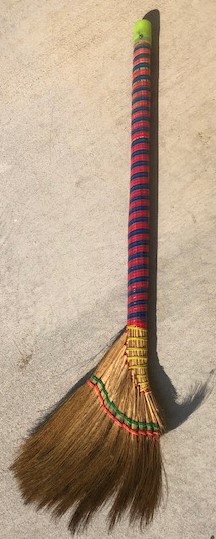
walis tambo

Jalen Rose does get things wrong some times.  There are two types of walis, a walis ting-ting and a walis tambo (I have pictured both in the post), and he will occasionally mention the wrong one or both.  He also got it wrong with the Heat/Bucks game – the Bucks were not swept despite losing their star player, Giannis Antetokounmpo. Coincidentally, the Miami Heat’s coach is half Filipino.  Rose did get some positive responses, such as this tweet from half Filipino NBA player Jordan Clarkson and this one from Filipino American ESPN personality Pablo Torre. Whether Jalen Rose is wrong or not, I like hearing Filipino references on U.S. national broadcast television.

Posted in San Francisco Bay Area, Sports | Tagged , , , , , , , , , | Leave a comment